



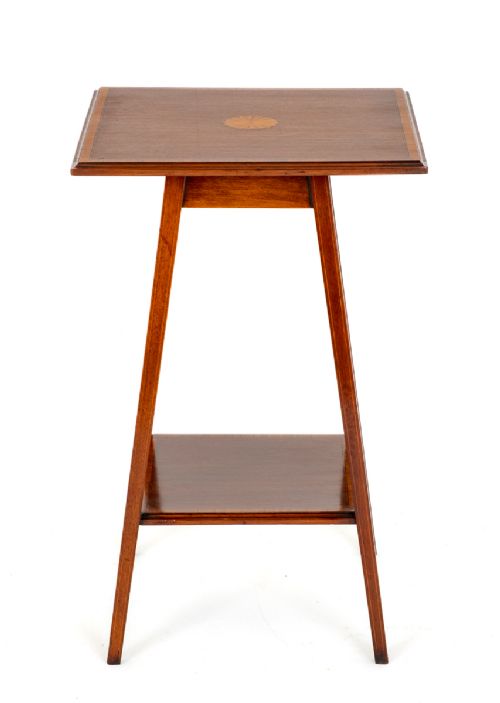


Satinwood Inlaid Lamp Stand
A satinwood inlaid lamp stand is a refined piece of period furniture designed to hold a light, and you will find several fine examples here.
Satinwood Inlaid Lamp Stand
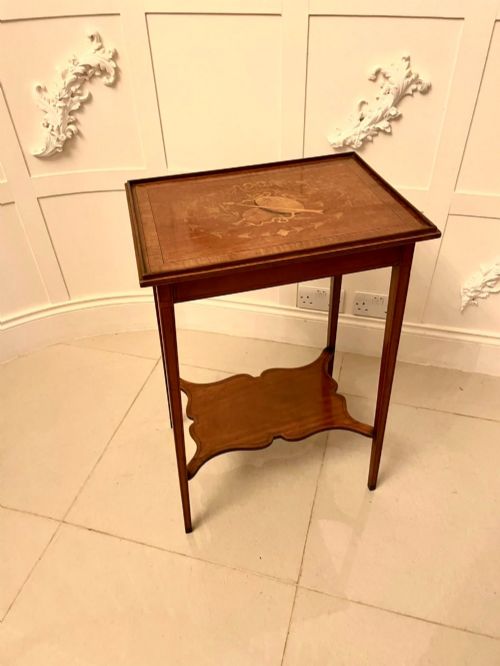
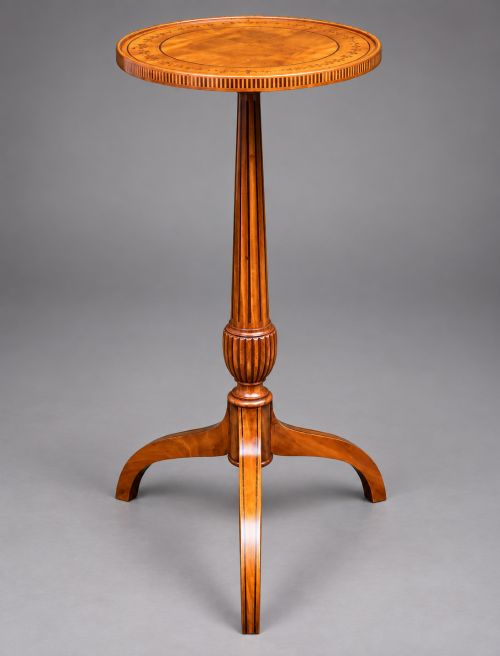
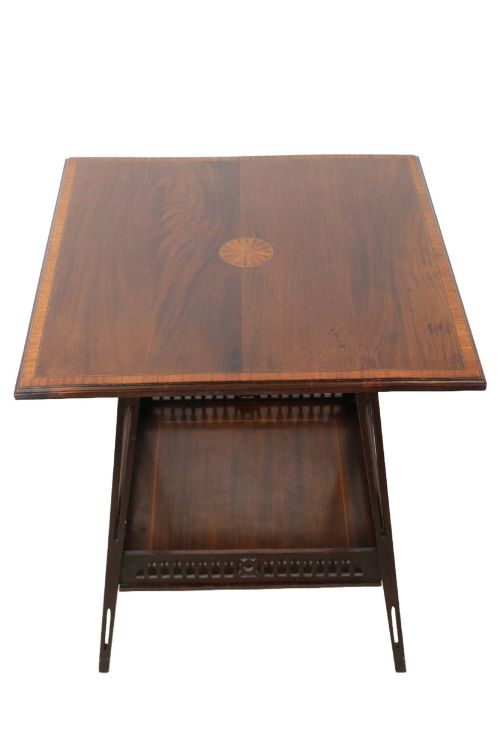
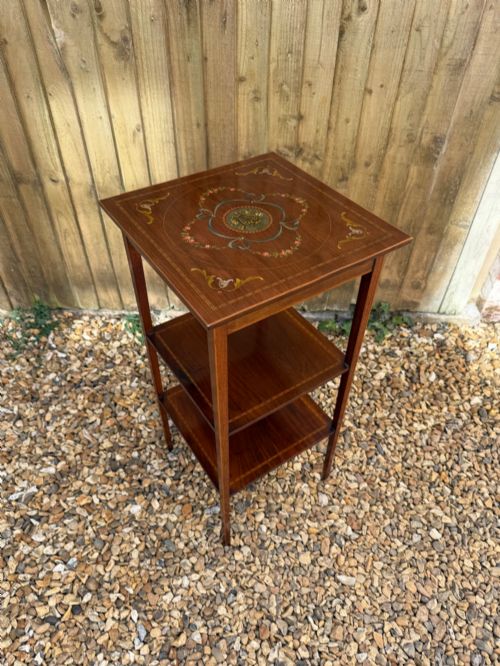
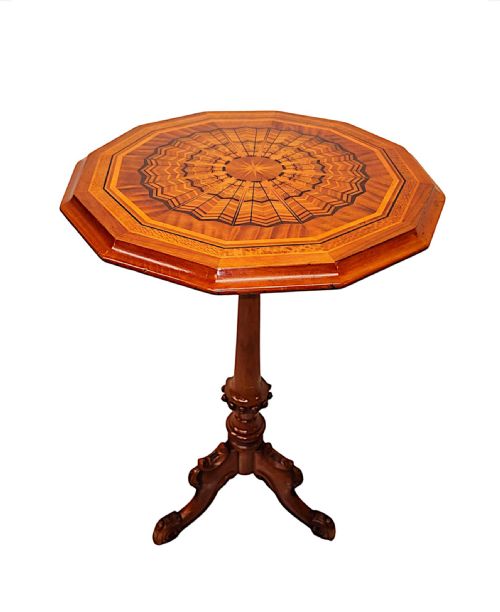
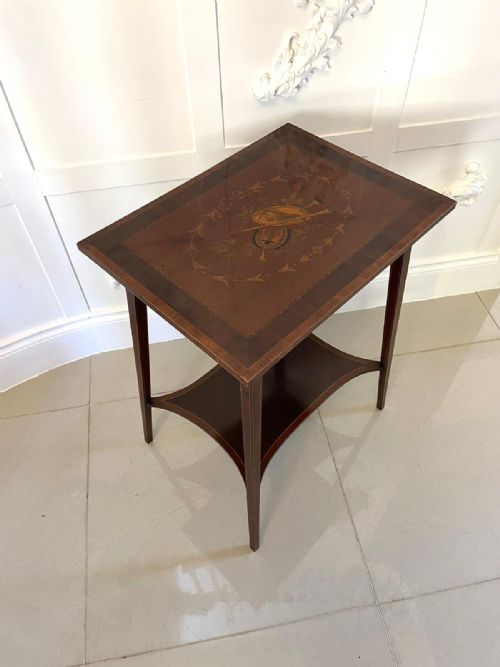
A satinwood inlaid lamp stand brings together light timbers and delicate contrasting details to create an elegant surface for a room. When you search for satinwood inlaid lamp stand, you encounter occasional tables, side tables, wine tables, and corner tables designed for domestic use. The pieces span the 18th century, 19th century, Victorian, Edwardian, and 1900 periods.
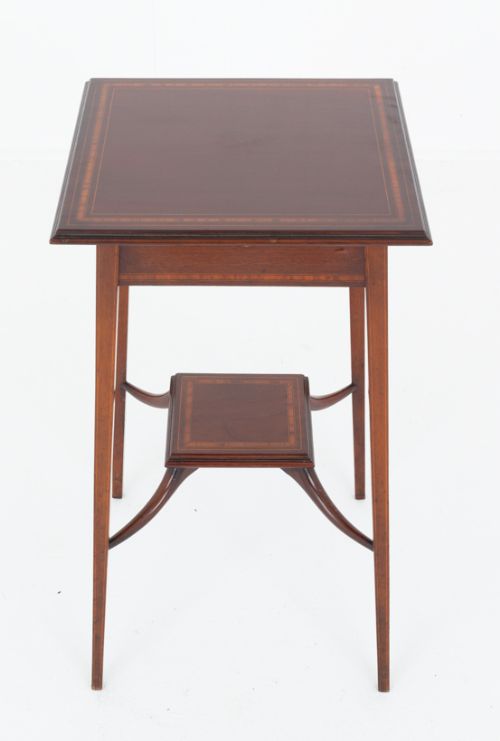
Edwardian and 1900 examples dominate the selection, often combining mahogany carcases with satinwood panels and stringing. Alongside these sit Victorian and 18th century neoclassical pieces that showcase bolder marquetry and richer timber selections.
How they were made
Cabinet makers utilised solid and veneered timbers, pairing satinwood and mahogany with darker accents of boxwood, ebony, and rosewood. These contrasting woods formed intricate inlay and marquetry patterns across the tops and surfaces of the tables.
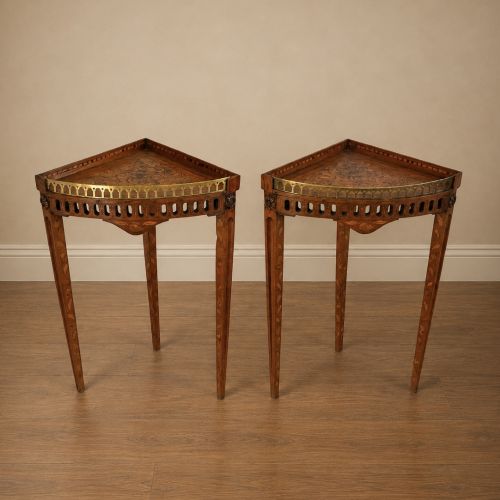
Certain pieces incorporate functional metal elements such as brass galleries to secure items placed upon the top. Construction methods reflect the standards of their respective periods, from 18th century neoclassical workshops to Edwardian production.
Tables were built with octagonal, oval, and shaped tops to squeeze elegance into awkward Victorian and Edwardian corners.
What varies in quality
The precision and complexity of the inlay work dictate the distinction between standard items and superior examples. Fine quality pieces display crisp botanical or geometric patterns executed in diverse timbers without gaps or clumsy repairs.
The choice of primary and secondary woods also establishes the tier of a piece. Richly figured satinwood and well-chosen mahogany command greater attention than plain or heavily restored surfaces.
Trevor Page & Co·Gillows
The Satinwood Inlaid Lamp Stand Glossary
- Satinwood
- A durable hardwood with a lustrous, golden sheen that takes a fine polish. It serves as the primary surface timber or veneer on many tables.
- Marquetry
- The art of applying decorative veneer pieces to a structure to form pictorial or geometric designs. Craftsmen use contrasting woods like boxwood and ebony.
- Sheraton Revival
- A late 19th and early 20th century style inspired by the designs of Thomas Sheraton. It reinterprets neoclassical lightness and inlaid decoration.
- Brass Gallery
- A low pierced metal railing fitted around the edge of a tabletop. It prevents objects from sliding off the surface.
- Occasional Table
- A small, versatile table designed for intermittent use around a sitting room or drawing room.
Satinwood Inlaid Lamp Stand: Frequently Asked Questions
What is a satinwood inlaid lamp stand used for?
These tables provide a stable surface for holding decorative lamps, candles, or small domestic objects within a reception room. Their compact proportions allow them to sit easily beside seating or in corners.
Historically, they added both practical surface area and ornamental refinement to period interiors. Today, they serve the same functional purpose while bringing historic character to a room.
How do I date an Edwardian piece?
Edwardian tables typically date from the early 1900s and often combine a mahogany carcase with satinwood inlay. They frequently reflect the Sheraton Revival style popular during this era.
Construction details and timber preparation help distinguish these Edwardian items from earlier 19th century or Victorian examples.
What is the difference between inlay and marquetry?
Inlay involves fitting pieces of wood into recesses carved into a solid timber base. It often takes the form of thin lines or stringing.
Marquetry covers the entire surface in a mosaic of veneer pieces to create elaborate pictures or patterns. Both techniques appear across the tables in this selection.
How do I care for antique satinwood furniture?
Keep satinwood furniture away from direct sunlight and strong heat sources to prevent the timber and veneer from drying out. Regular dusting with a soft, dry cloth preserves the polished finish.
Avoid using modern silicone polishes, as they can build up and dull the natural lustre of the wood over time.