


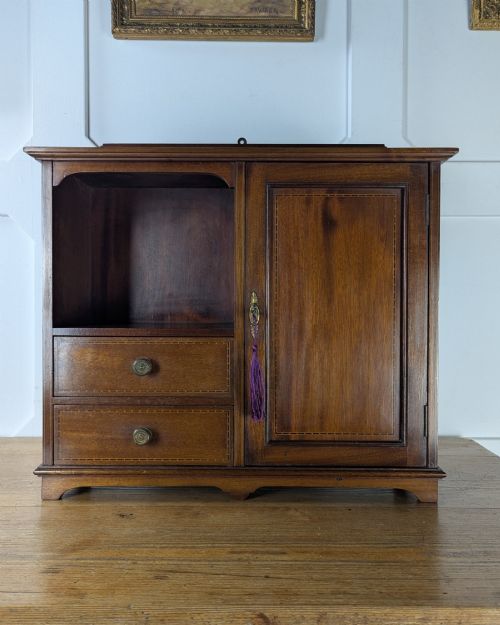
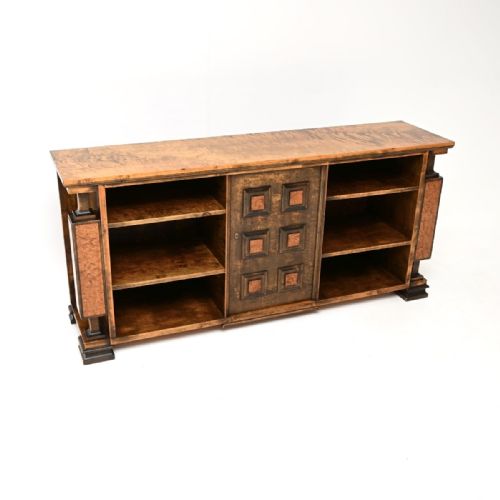
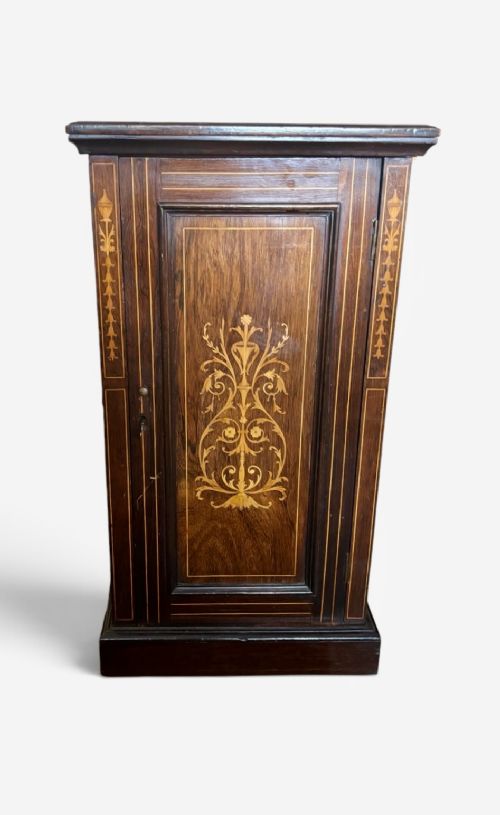
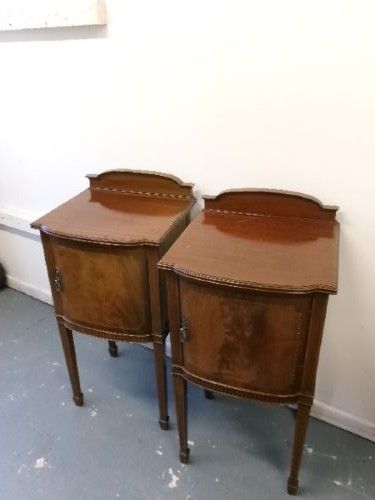
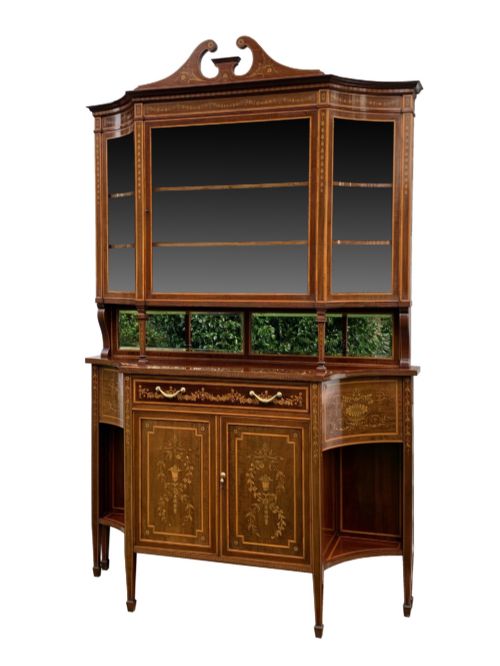
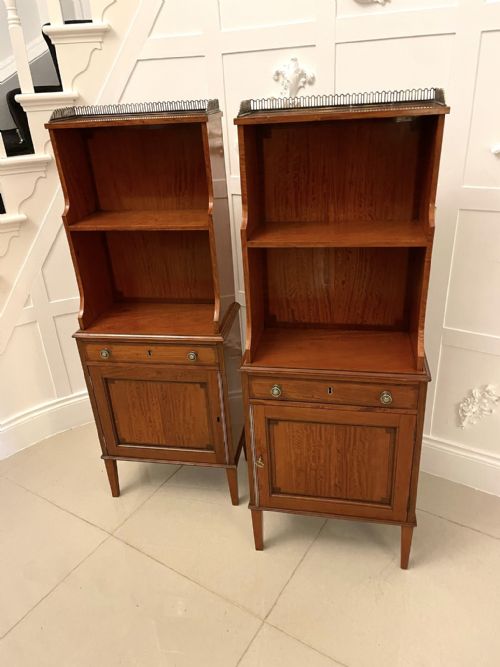
Satinwood Cupboard Cabinet
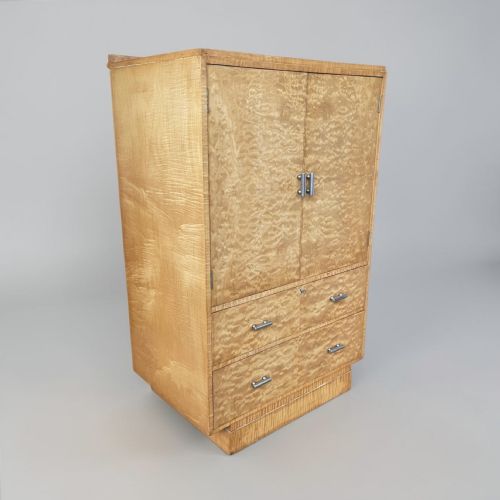
These satinwood cupboard cabinet pieces combine golden timbers with classical lines, offering refined storage for the discerning collector.
Satinwood Cupboard Cabinet
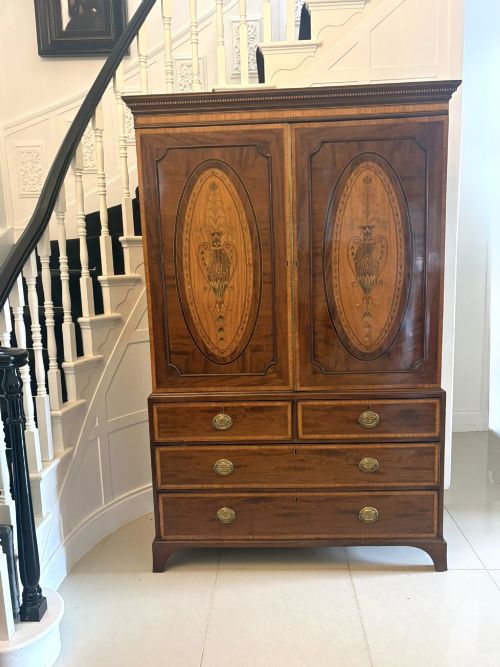
The selection spans several distinct aesthetic movements, notably the Sheraton Revival and the Edwardian era, alongside Georgian originals and later Art Deco designs. These objects served various domestic functions, from bedside storage and linen housekeeping to the exhibition of prized ornaments and books.
How they were made
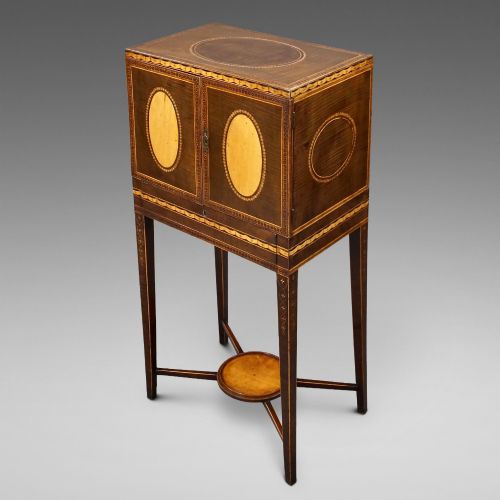
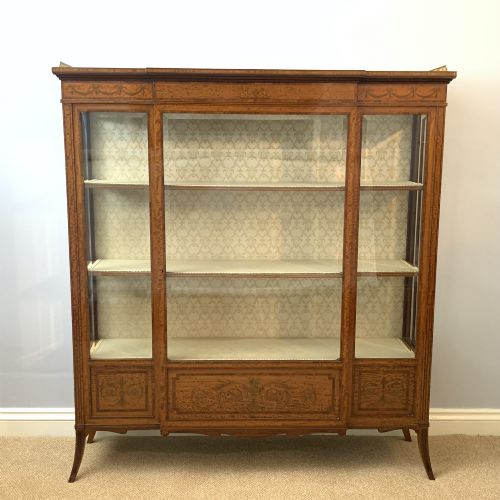
Cabinet makers utilised dense timbers such as satinwood, mahogany, and walnut as the primary structural foundations, frequently enhancing surfaces with contrasting stringing and marquetry in boxwood. Glass panels, mirrored backs, and brass hardware were integrated into display cabinets and bedside cupboards to add functional elegance.
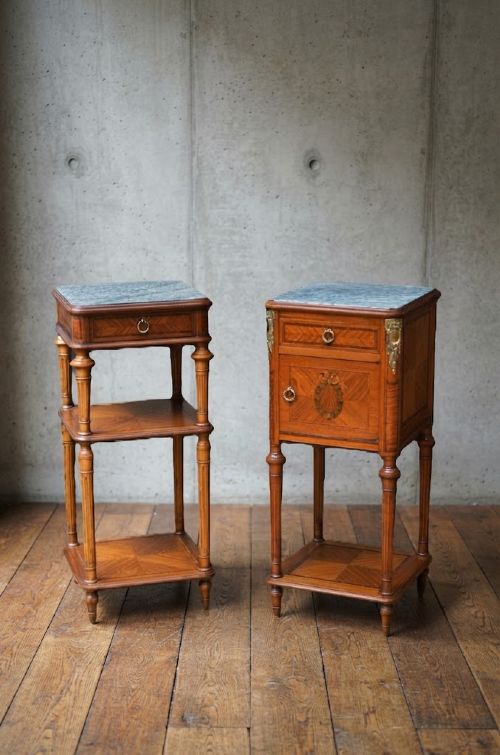
Construction techniques relied on precise joinery to support inlaid veneers and painted decorative panels, particularly within Sheraton Revival and Edwardian workshops. The integration of marble tops on specific bedside pieces demonstrated a fusion of durable utility and refined surface treatment.
Smokers enjoyed dedicated small cupboards with fitted compartments for pipes and tobacco during the late Victorian age.
What varies in quality
The distinction between standard production and exceptional work lies in the crispness of the wood inlay, the precision of the marquetry, and the selection of figured satinwood veneers. Superior examples display harmonious grain patterns across the doors and panels, alongside refined hand-painted detailing.
Structural integrity and the retention of original brass fittings, glazed doors, and mirrored backs significantly influence the standing of each piece. Maker attribution, through stamps or known workshop designs, further separates notable cabinet work from anonymous domestic furniture.
Edwards & Roberts·Gillows·Morant & Co·Maple & Co·Druce & Co·Howard & Sons
The Satinwood Cupboard Cabinet Glossary
- Satinwood
- A durable, dense exotic timber known for its natural golden sheen and lustrous grain, utilised extensively for fine cabinetmaking and decorative veneers.
- Sheraton Revival
- A late nineteenth and early twentieth century design movement that reinterpreted the lighter, neoclassical furniture forms of the eighteenth century.
- Marquetry
- The art of applying pieces of veneer to a structure to form decorative patterns, often utilising contrasting woods like boxwood and mahogany.
- Vitrine
- A glass-fronted display cabinet designed specifically for showing porcelain, books, or small decorative objects.
- Inlay
- A technique where pieces of contrasting material are embedded into the surface of a timber base to create linear or pictorial designs.
Satinwood Cupboard Cabinet: Frequently Asked Questions
How do I identify a Sheraton Revival piece?
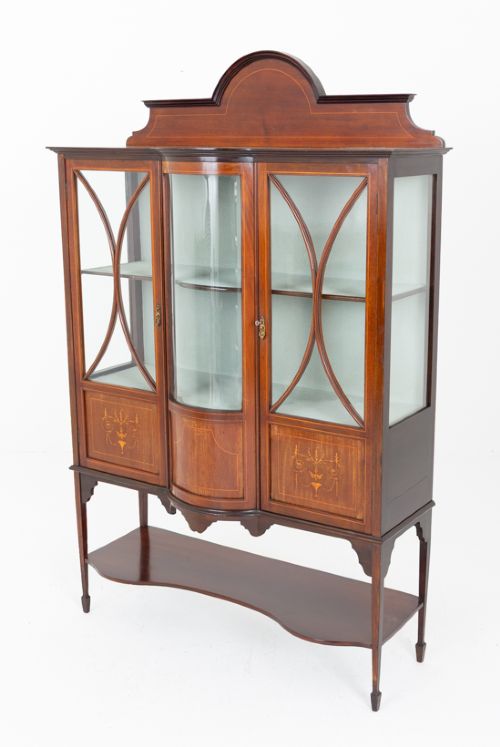
Sheraton Revival items typically date from the late nineteenth or early twentieth century and draw inspiration from eighteenth-century neoclassical designs. They often feature delicate satinwood veneers, painted floral motifs, and straight tapered legs.
Look for refined proportions and crisp inlay work that mimic the lighter forms popular during the Georgian period.
What rooms suit a satinwood bedside cabinet?
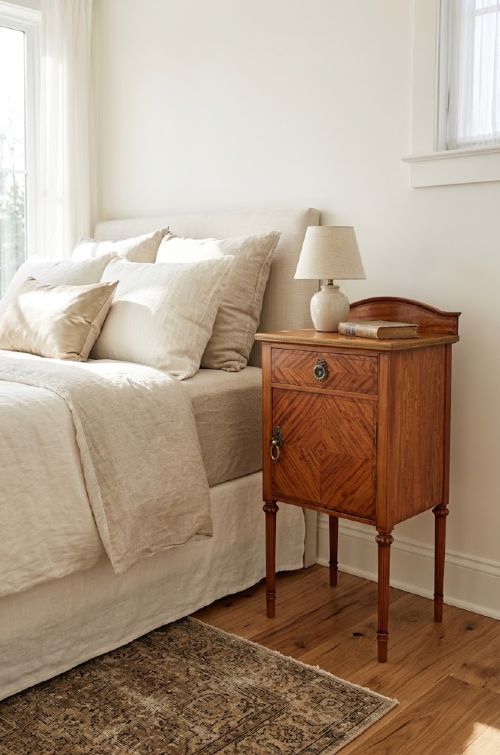
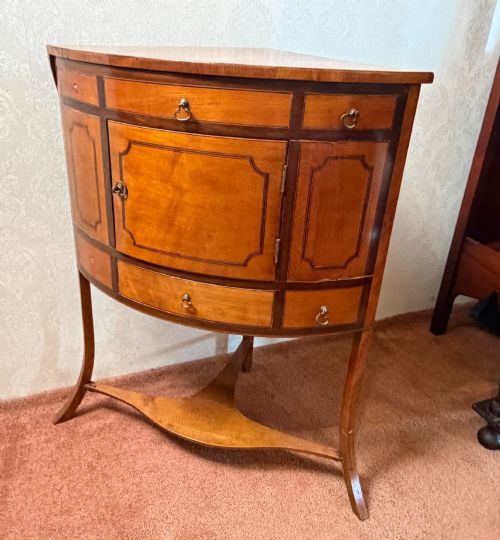
These compact cupboards fit well beside traditional or contemporary beds as practical nightstands for enclosed storage. Their warm golden tones also complement hallways and small reception spaces as occasional side tables.
The varied forms, including marble-topped variants and open shelf designs, adapt easily to different domestic layouts.
Are display cabinets suitable for modern books?
Display cabinets and bookcases featuring glazed doors protect volumes from dust while maintaining visible organisation. Edwardian and Victorian examples offer sturdy shelving within narrow or tall formats.
Ensure shelf depths and heights align with the specific volumes you intend to store before arrangement.
How should I care for satinwood surfaces?
Maintain satinwood by dusting regularly with a soft, dry cloth and avoiding direct sunlight to prevent the golden timber from fading. Keep furniture away from extreme temperature shifts and excessive moisture to protect the underlying veneers and joinery.
Occasional applications of appropriate wax help preserve the natural lustre of the polished wood.