







Hand Painted Cabinet Doors
These hand painted cabinet doors bring surface artistry and storied timber storage straight into a room.
Hand Painted Cabinet Doors
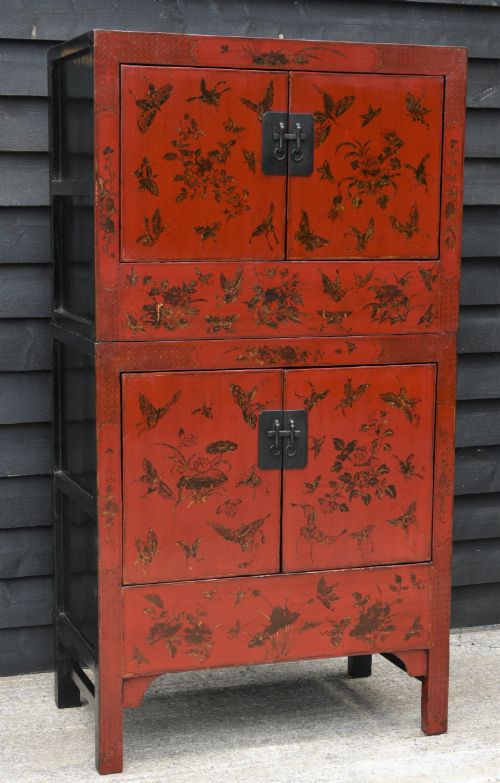
When buyers search for hand painted cabinet doors, they look for architectural timber panels and cupboard fronts carrying brushwork, lacquer, or polychrome decoration. These pieces span centuries of storage forms, from corner cupboards and side cabinets to grand wardrobes and marriage cabinets.
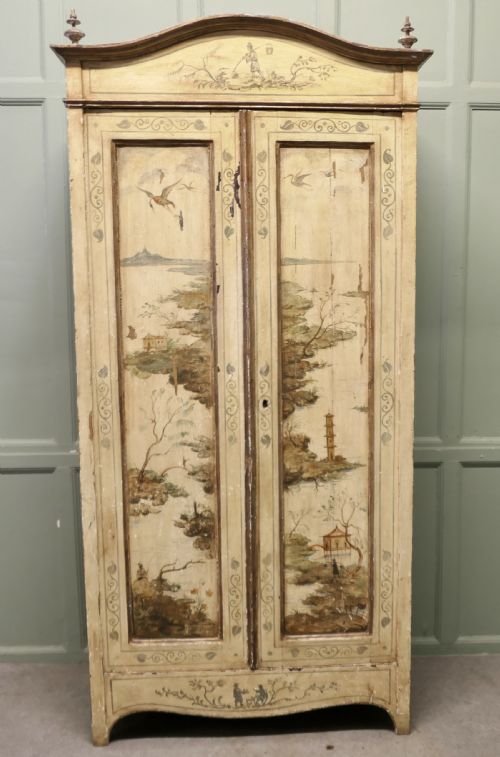
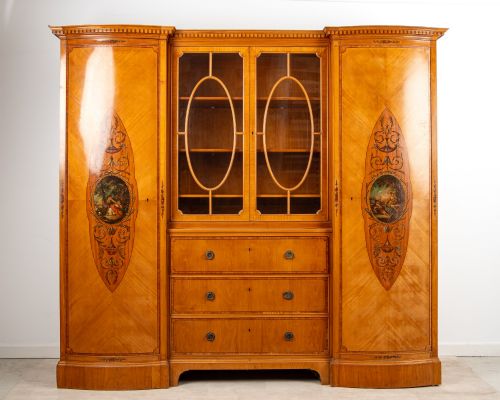
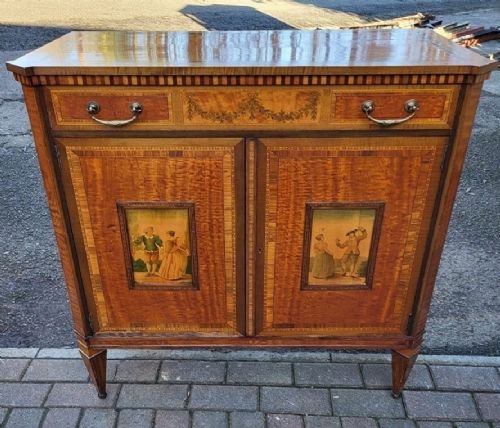
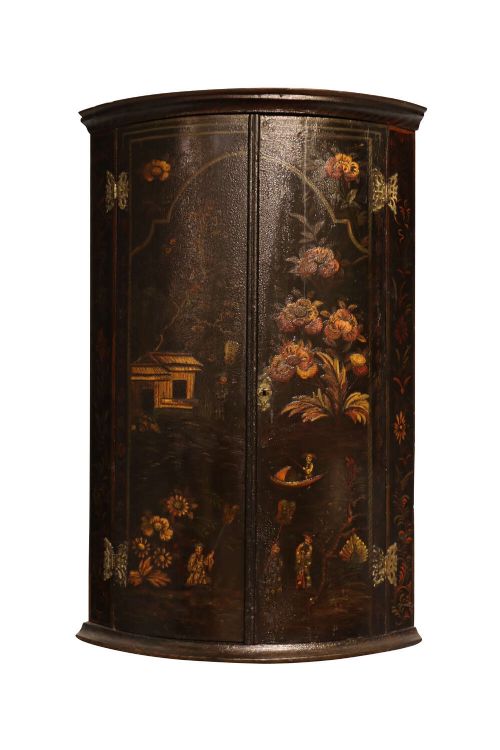
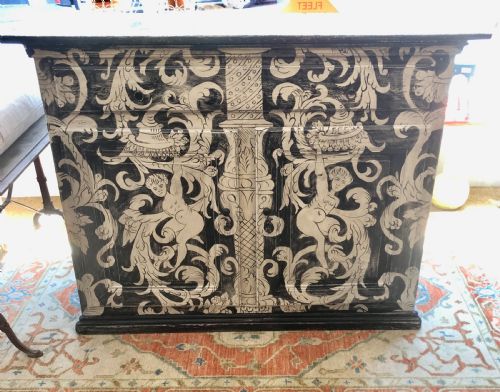
The versions most commonly met on this page originate in periods ranging from the eighteenth century through the Victorian era and into the early twentieth century. Styles stretch across Chinoiserie, Adam Revival, and Italian Country traditions, using woods like satinwood, pine, and maple.
The physical objects include standalone doors, repurposed cupboard fronts, and complete side cabinets where the hand-painted surface transforms utilitarian storage into focal points. Each piece relies on the interplay between the underlying timber frame and the painted narrative across its panels.
How they were made
Makers built these panels using traditional joinery in woods such as pine, satinwood, and mahogany, often applying multiple preparatory layers before any pigment touched the surface. Lacquer work required meticulous building and polishing of resin layers to achieve deep, reflective grounds.
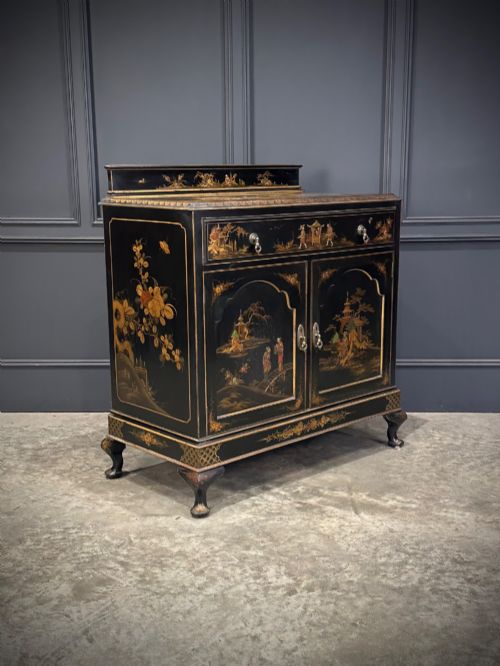
Surface decoration involved hand-applied paint, polychrome detailing, and japanning techniques that built up figures, landscapes, or geometric motifs. Brass and iron hardware, including hinges and escutcheons, secured the timber frames while complementing the painted schemes.
Listings feature pieces spanning the eighteenth century, Victorian era, nineteen-hundreds, and nineteen-thirties.
What varies in quality
The standard of the hand-painted brushwork separates everyday storage from exceptional pieces, with finer examples showing deliberate control in facial expressions, botanical details, and narrative scenes. The depth and integrity of the original lacquer or painted ground dictate how well the surface survives centuries of light and handling.
Construction quality depends on the stability of the timber frame and whether original brass or iron fittings remain intact. Pieces that retain their uncompromised structural joinery alongside well-preserved surface pigment sit firmly at the top of the range.
Maple & Co.·Melissa White
The Hand Painted Cabinet Doors Glossary
- Chinoiserie
- European decorative style reflecting Chinese artistic traditions, often featuring figures, pagodas, and landscapes rendered in lacquer or paint. It gained immense popularity during the eighteenth century and saw revivals in later periods.
- Japanning
- European imitation of East Asian lacquerwork, created by applying layers of varnish and heat-curing them before adding gilt or painted motifs. This technique produced glossy, dark surfaces characteristic of eighteenth and early twentieth-century cabinets.
- Polychrome
- Decoration executed in multiple colours, frequently seen on Italian country pieces and nineteenth-century wardrobes. The method brings vibrancy and narrative depth directly to wooden panels.
- Satinwood
- A lustrous, fine-grained hardwood native to India and Sri Lanka, highly prized for late eighteenth-century and Edwardian furniture. It provided a pale, yellow-brown canvas ideally suited for delicate painted panels and inlay.
- Compactum
- A multi-functional wardrobe or cabinet combining hanging space, drawers, and shelving within a single footprint. Edwardian iterations often integrated painted panels into their doors.
Hand Painted Cabinet Doors: Frequently Asked Questions
How do I clean hand painted cabinet doors?
Dust the surface gently with a dry, soft cloth to remove everyday particles without disturbing the underlying pigment. Avoid modern chemical cleaners or excessive moisture, which can lift delicate nineteenth-century paint or degrade historic lacquer.
Test any conservation grade micro-crystalline wax on a hidden corner if the wood requires nourishment. Keeping these panels away from direct sunlight and radiators prevents the timber from warping and the painted surface from cracking.
Are these panels suitable for modern kitchens?
Historic painted panels add distinct character to contemporary interiors when used as architectural focal points or statement cabinetry. Consideration must be given to their original timber construction, which reacts to humidity fluctuations differently than modern manufactured board.
Placing them away from direct sources of steam and heat preserves the fragile bond between the old wood and the hand-applied paint. Many buyers mount individual doors as wall art or integrate them into bespoke fitted furniture.
How do I identify a Chinoiserie finish?
Chinoiserie finishes typically present dark lacquered grounds overlaid with raised or flat painted scenes depicting pavilions, figures, and flora. The aesthetic borrows heavily from East Asian export goods interpreted through eighteenth-century and Edwardian European workshops.
Close inspection reveals brushwork applied over prepared dark bases, sometimes enhanced with gilt highlights to catch the light. The age of the lacquer layer helps distinguish genuine period work from later decorative revivals.
What is the difference between satinwood and pine pieces?
Satinwood provides a dense, blonde, light-reflecting timber ground favoured for refined Edwardian and Adam Revival cabinets. Its fine grain supports precise, delicate hand-painted panels and marquetry inlay.
Pine serves as a softer, more utilitarian wood, frequently found beneath heavy polychrome paint on nineteenth-century country cupboards and larder units. Pine pieces often display a more robust, vernacular construction compared to formal satinwood furniture.