

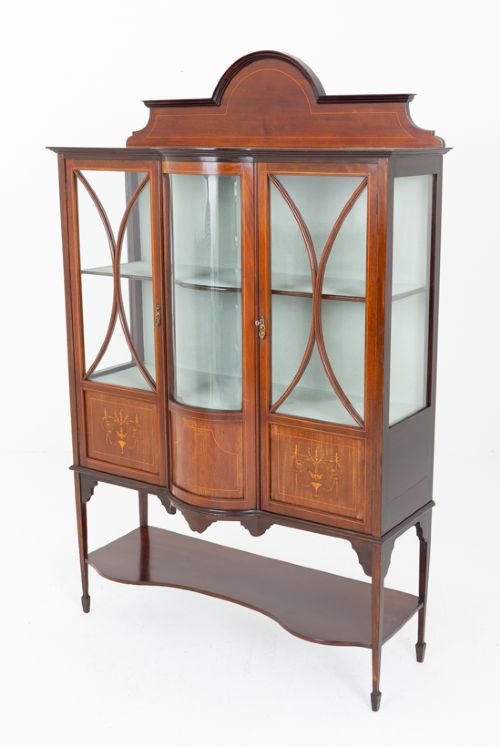
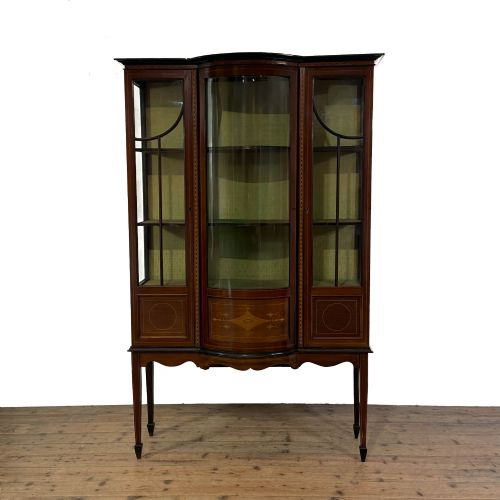
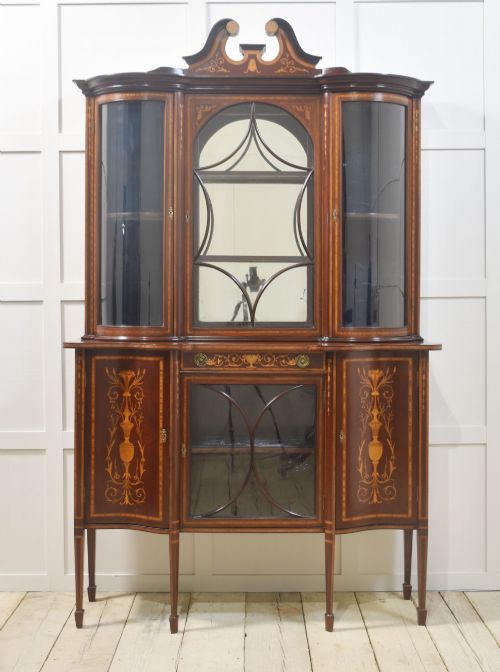
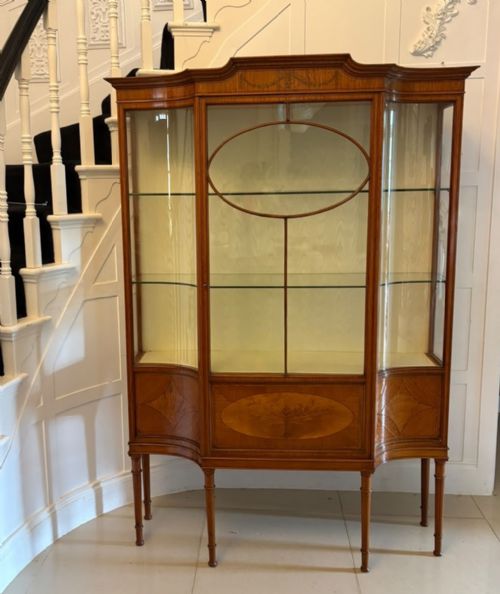
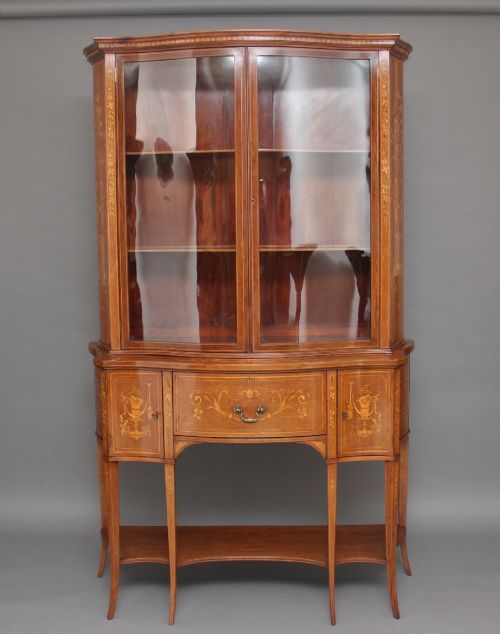


Satinwood China Display Case
These satinwood china display case pieces combine timber and glass to hold porcelain, emerging most often in Edwardian and Victorian forms.
Satinwood China Display Case
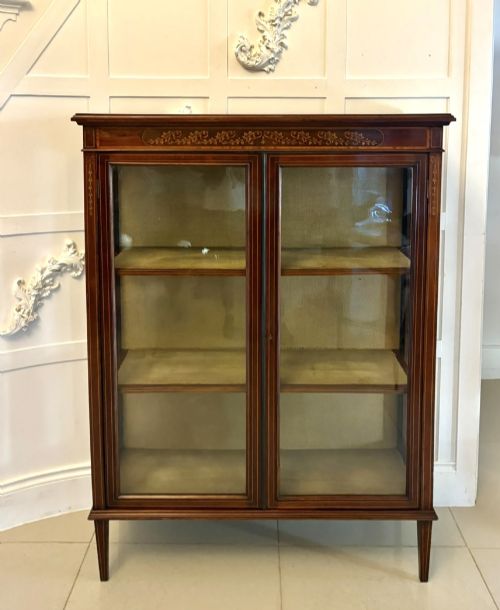
A satinwood china display case serves as a glazed enclosure for ceramics and precious objects, standing in rooms where polite company gathers. Buyers examine pieces originating primarily from the Victorian and Edwardian eras, spanning the late nineteenth century up to nineteen hundred.
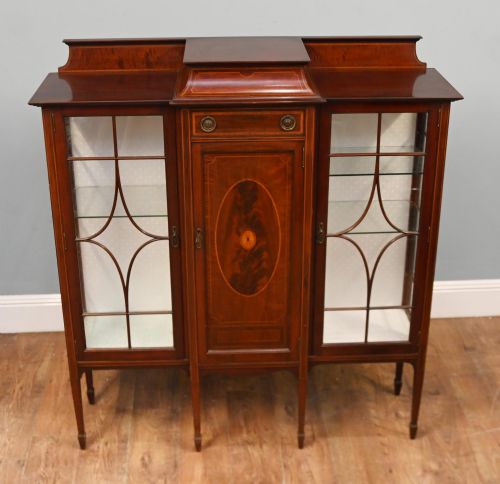
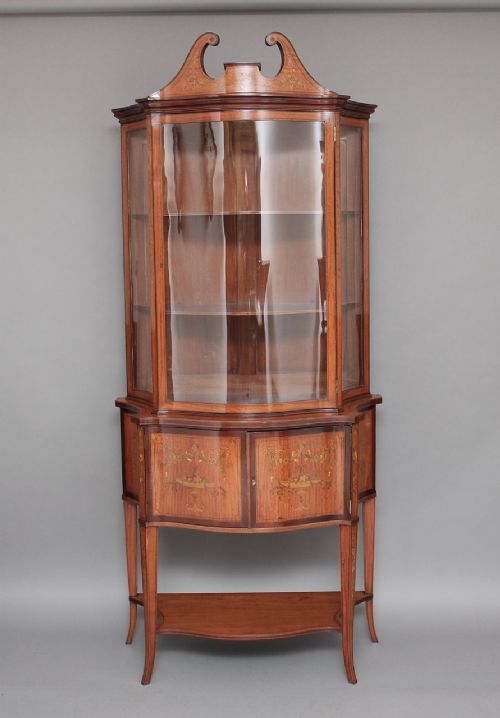
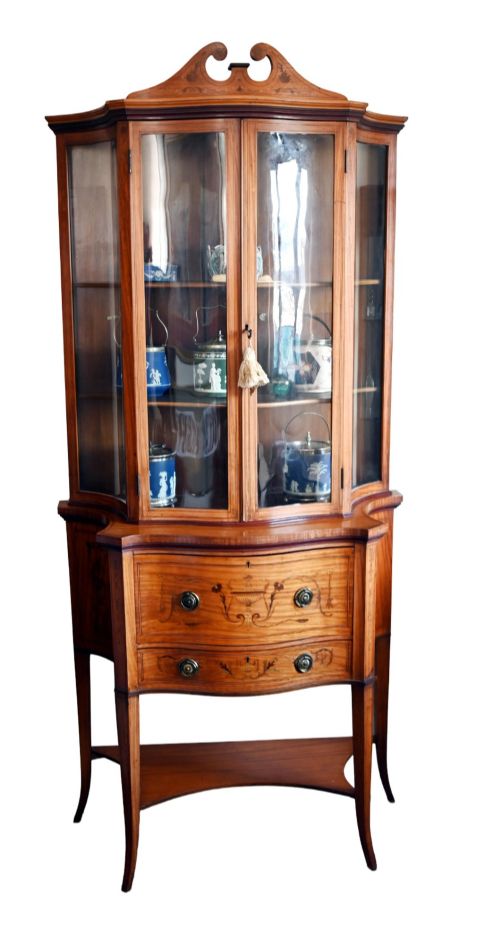
The physical forms vary from single door cabinets and bow front shapes to corner cupboards and standing double height pieces. Makers also produced miniature versions alongside larger freestanding units designed to showcase tableware and decorative items.
Sheraton Revival styles dominate the pieces found on this page, often alongside French Empire influences and Dutch corner cases. These designs look back to eighteenth century lightness, translating classical lines into refined display furniture.
How They Were Made
Cabinet makers constructed these pieces using solid wood frames and panel carcasses, pairing satinwood and mahogany as the primary structural timbers. Glass panels form the principal viewing areas for the cabinet doors and sides, supported by brass hinges and locks.
Surface decoration relies heavily on wood inlay and satinwood inlay, incorporating marquetry and parquetry patterns alongside floral painted details. Fabric lines the interior spaces to provide a neutral backdrop for the displayed china and glass.
Satinwood China Display Case Retail Price Guide 2026
Typical asking prices for satinwood china display case among the pieces listed under this phrase on Sellingantiques today, from the lower quarter to the upper quarter. They describe what is for sale here now, not the wider market.
Miniature display cases offer miniature porcelain a home inside a home.
What Varies in Quality
The refinement of the timber selection dictates the initial visual impact, distinguishing plain construction from finely figured satinwood and carefully matched mahogany veneers. Superior examples display precise control in their inlay work, where contrasting woods form crisp geometric and botanical motifs.
Structural complexity separates standard cabinets from exceptional pieces, particularly in curved shapes like serpentine and bow fronts. The execution of glazed framing and the integration of painted details further mark the division between workshop tiers.
The Satinwood China Display Case Glossary
- Satinwood
- A dense, lustrous tropical timber with a golden yellow sheen used for fine cabinetmaking and decorative veneers. It forms the primary visual surface on many glazed display pieces.
- Sheraton Revival
- A design movement drawing inspiration from the late eighteenth century furniture of George Sheraton. It relies on symmetrical proportions, tapered legs, and delicate marquetry.
- Vitrine
- A glass fronted cabinet specifically designed for displaying porcelain, curiosities, and objects d'art. The term derives from the French word for glass.
- Marquetry
- The art of applying decorative veneer pieces to a structural surface to form pictures or ornamental patterns. Craftsmen use contrasting woods to achieve tonal depth.
- Bow Front
- A convex curved cabinet front that swells outward toward the viewer. This shape requires specialised joinery to bend wood or shape veneers around a curved frame.
Satinwood China Display Case: Frequently Asked Questions
What is a satinwood china display case?
A glazed piece of furniture built to hold porcelain and decorative objects behind glass panels.
These cabinets use satinwood veneers and timber frames to showcase tableware within domestic rooms.
How do I date an Edwardian display cabinet?
Examine the timber, revival style markers, and construction methods characteristic of the years around nineteen hundred.
Edwardian pieces frequently employ Sheraton Revival motifs and lighter satinwood inlays than heavier Victorian equivalents.
Where should I place a corner display cabinet?
Position these units in room angles to utilise empty floor space while displaying collections at eye level.
Corner cabinets fit into domestic layouts where flat wall space is limited.