
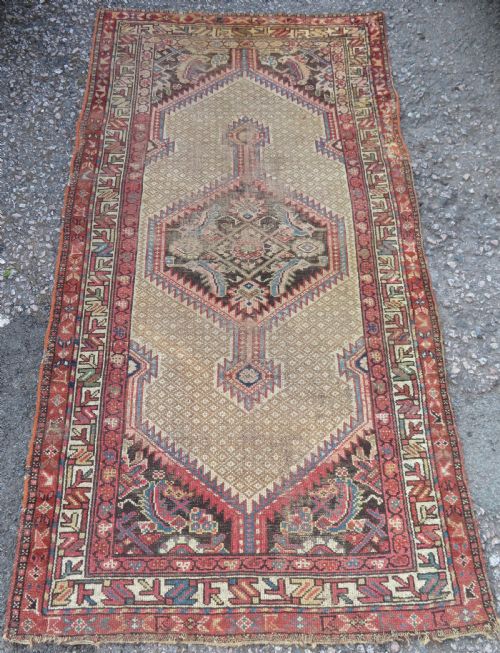


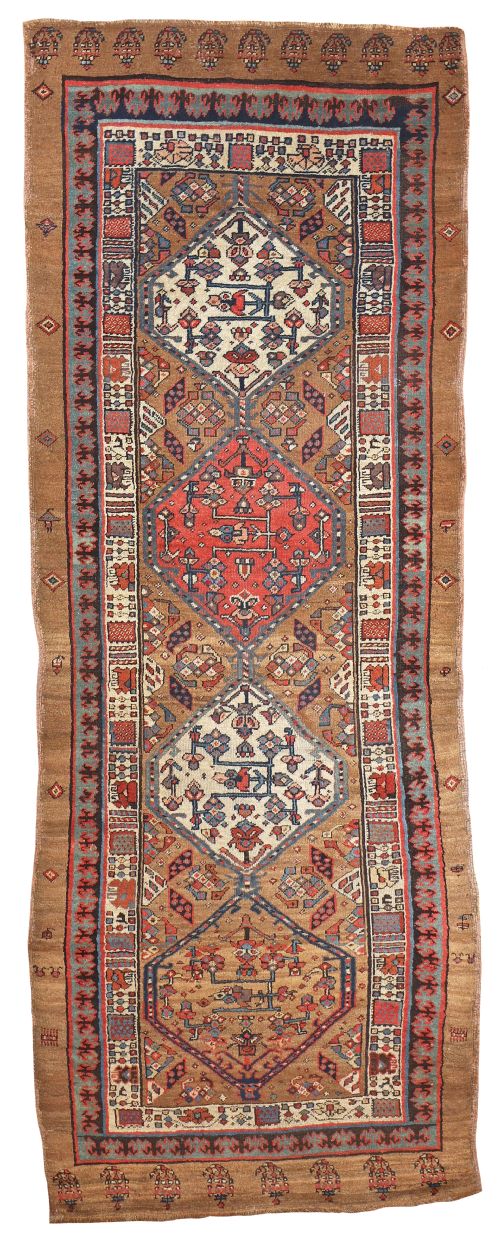
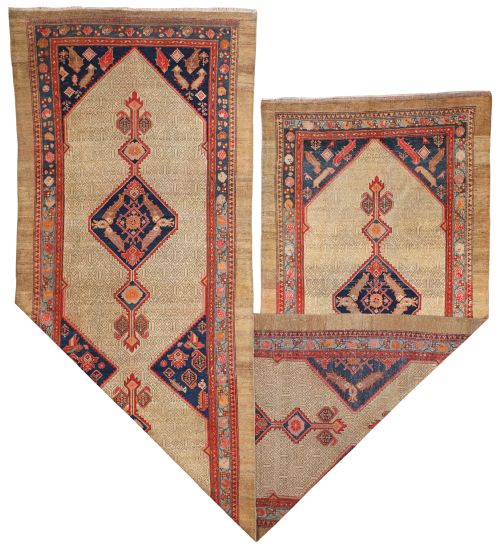


Sarab Runner Rug
A sarab runner rug brings centuries of Persian village weaving into a long hallway, offering enduring foot traffic durability and striking geometric presence.
Sarab Runner Rug
A sarab runner rug is a long, narrow floor covering originating from the villages of north-west Persia, designed specifically to fit corridors and narrow spaces. These pieces emerge from historical periods spanning from the late nineteenth century into the early decades of the twentieth century, including examples dated around 1870, 1880, 1900, 1910, and 1920.
How they were made
These floor coverings are constructed using natural materials recorded in the evidence as wool and cotton, with specific examples also incorporating camel hair into the composition. Artisans in north-west Persia employed traditional hand-knotting techniques on sturdy foundations to withstand daily wear in domestic settings.
The integration of wool and cotton provides both structural stability and a supple handle, while camel hair introduces natural tonal variations directly into the pile without relying on synthetic dyes.
Using genuine camel hair in the weave gives some runners an unyielding, rugged charm that modern synthetics simply cannot replicate.
What varies in quality
Distinction across these pieces rests in the integrity of the weave and the preservation of the material over time, ranging from heavily distressed surfaces to tightly knotted structures with intact village designs. The finesse of the north-west Persian knotting and the balanced proportions of the narrow format dictate the visual stature of each runner.
The choice of foundational materials, such as the inclusion of camel hair alongside standard wool and cotton, shifts the tactile experience and the depth of the field colour, separating standard utility pieces from more nuanced tribal examples.
The Sarab Runner Rug Glossary
- Sarab runner rug
- A long, narrow floor covering originating from north-west Persia, produced in village environments during the nineteenth and early twentieth centuries. These pieces utilise traditional Persian tribal motifs adapted for corridors and hallways.
- Camel hair
- A natural fibre utilised in select antique weavings to provide undyed brown or golden tones within the pile. This material adds organic warmth and resilience to the rug structure.
- Village runner
- A narrow rectangular format woven in domestic rather than urban workshop settings, typically displaying geometric patterns. These items reflect the personal aesthetic choices of Persian weavers.
- North West Persia
- The geographical region encompassing traditional weaving centres such as Sarab, known for distinctive tribal and village production. Pieces from this area are characterised by durable construction and characteristic colour palettes.
Sarab Runner Rug: Frequently Asked Questions
Where were sarab runner rugs woven?
These pieces originate from the village communities of north-west Persia, where local weavers produced long formats tailored for domestic hallways and corridors.
The production methods reflect regional tribal traditions distinct from urban workshop output.
What materials are used in these runners?
The listings show construction in wool and cotton, with certain examples incorporating natural camel hair into the pile.
These traditional materials ensure durability for long-term placement in high-traffic areas of the home.
How do I date an antique sarab runner?
Dating relies on recorded production periods spanning from the 1870s through the 1920s, observed through structural characteristics and wear patterns.
Evidence from past and current examples indicates these timeframes based on historical weaving traits.
Are these runners suitable for modern hallways?
Their narrow proportions and robust construction make them functional for contemporary corridors and long spaces.
They bring historical Persian village design directly into modern interior layouts.