






Sapphire Trilogy Ring
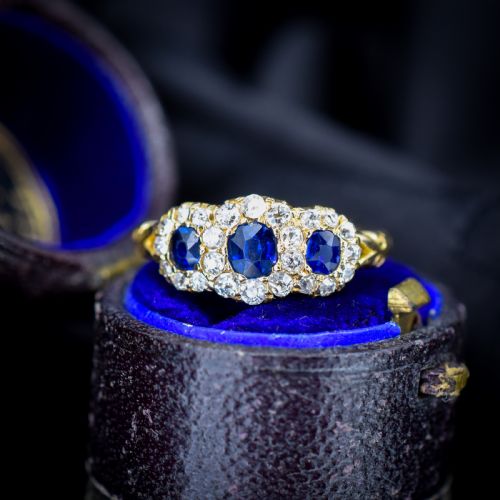
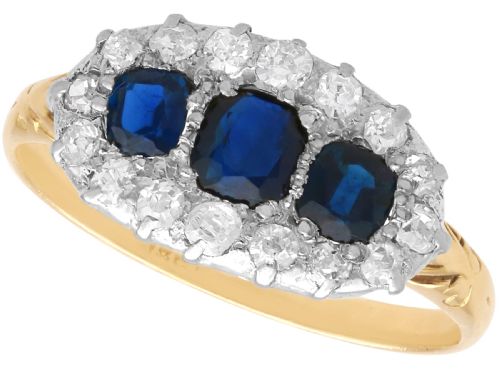
A sapphire trilogy ring brings together three stones of distinct character, offering a symbolic arrangement favoured across the Victorian, Edwardian and Art Deco eras.
Sapphire Trilogy Ring
The selections available span multiple decades, drawing heavily from late nineteenth-century Victorian workshops through to the geometric lines of the Art Deco period and the cleaner profiles of mid-century modern design. Buyers frequently encounter examples executed in yellow gold, platinum or mixed metal settings that highlight the deep blue hues of traditional sapphires.
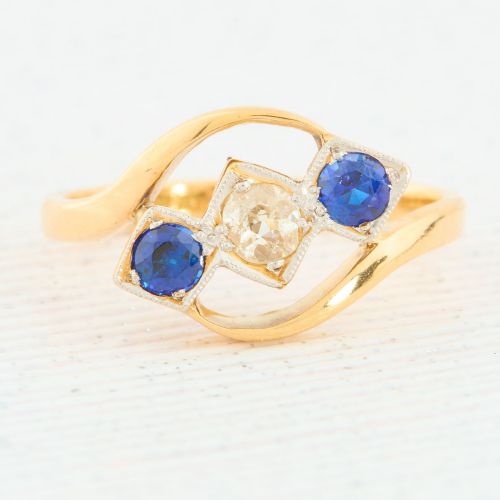
Beyond standard blue varieties, the selections include pink sapphires and stones originating from Ceylon, Burma and Kashmir. These configurations vary from straight linear settings to twist designs where the metals wrap organically around the gems.
How They Were Made
Goldsmiths utilised durable metals such as 18ct gold, 9ct gold and platinum to secure the stones safely while minimising the visibility of the mount. Platinum gained popularity during the Edwardian and Art Deco periods for its strength, allowing delicate claw and rubover settings that maximised light entry into the diamonds and sapphires.
Gemstones in these rings display historic cutting techniques, including old mine cuts, transitional cuts and baguette cuts tailored by hand to fit the proportions of the individual band. Coloured stones were often secured alongside diamonds using claw, bezel or channel techniques designed to hold three distinct focal points securely in alignment.
Sapphire Trilogy Ring Retail Price Guide 2026
Typical asking prices for sapphire trilogy ring among the pieces listed under this phrase on Sellingantiques today, from the lower quarter to the upper quarter. They describe what is for sale here now, not the wider market.
Several rings feature subtle twist bands, designed so the gold appears to hug the sapphire and diamond cluster like an embrace.
What Varies in Quality
The overall standard of a piece rests upon the natural origin, colour saturation and clarity of the sapphire itself, alongside the matching quality of the flanking diamonds. Stones displaying deep, unheated saturation command attention, while the precision of the historic hand-cutting shapes how light moves across the facets.
Metalwork execution defines the finer examples, visible in the crispness of the platinum milling, the integrity of the original hallmarking, and the structural balance of the setting. Master jewellers ensured the three stones sat in strict harmony, with mountings that protected the girdle edges without obscuring the silhouette.
The Sapphire Trilogy Ring Glossary
- Trilogy ring
- A ring featuring three principal gemstones set in a row, traditionally symbolising the past, present and future. This layout is heavily associated with engagement rings from the Victorian era onwards.
- Old cut diamond
- A diamond cut by hand before modern machinery standardised proportions, characterised by a smaller table, higher crown and open culet. These stones catch candlelight with a distinct, softer glow.
- Basaltic sapphire
- A sapphire originating from iron-rich volcanic basalt deposits, typically yielding deeper, highly saturated blue tones. These stones have a robust chemical signature found in specific geographic regions.
- Rubover setting
- A mounting style where a thin collar of metal is pushed over the edge of the gemstone to hold it securely in place. This technique creates a smooth, snag-free profile popular in Art Deco designs.
- Transition cut
- A diamond cut used primarily between the decline of old European cuts and the standardisation of the modern brilliant cut, bridging historic hand-craftsmanship with modern optical geometry.
Sapphire Trilogy Ring: Frequently Asked Questions
What does a sapphire trilogy ring symbolise?
The three stones traditionally represent the past, present and future of a relationship, making the configuration a popular choice for engagements and significant anniversaries.
This meaningful layout was widely adopted by jewellers during the Victorian and Edwardian periods, carrying sentimental value that continues to attract modern collectors.
How do I care for an antique sapphire ring?
Sapphires are exceptionally hard gemstones, but antique settings require gentle handling to protect the historic claws and delicate gold or platinum bands.
Cleaning should be done using warm water and a soft brush, avoiding harsh ultrasonic cleaners that might disturb older stones or fragile metalwork.
What is the difference between Victorian and Art Deco settings?
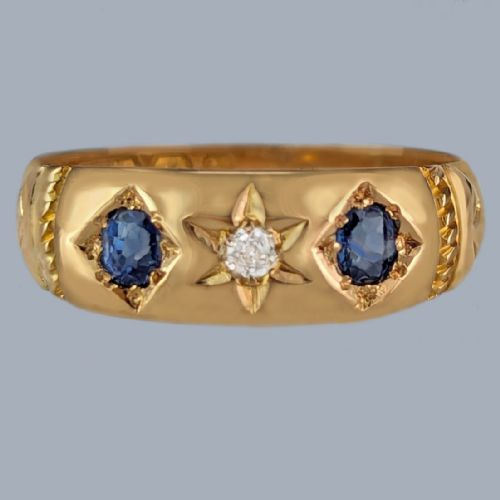
Victorian pieces often feature warmer yellow gold bands, ornate scrollwork and star or gypsy settings that embrace organic curves.
Art Deco examples shift towards platinum, geometric symmetry, and streamlined lines designed to showcase the bright contrast between sapphires and diamonds.
Are unheated sapphires more desirable?
Unheated sapphires have not undergone thermal enhancement to improve their natural colour or clarity, preserving their pure geological state.
Because untouched stones of fine quality are scarcer in the historic supply, they are frequently sought after by collectors who value entirely natural provenance.