





Sapphire Diamond Three Stone
These sapphire diamond three stone rings combine vibrant corundum with brilliant gems in enduring wearable formats.
Sapphire Diamond Three Stone
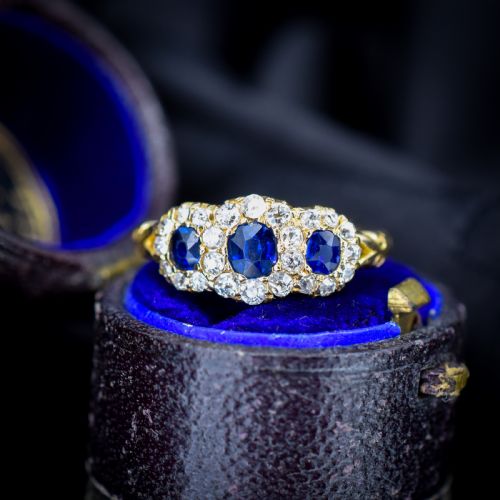
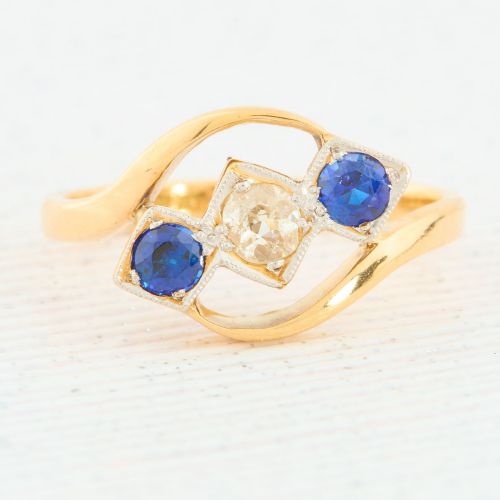
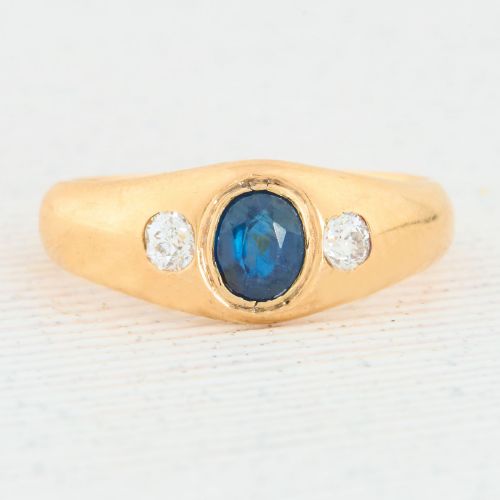
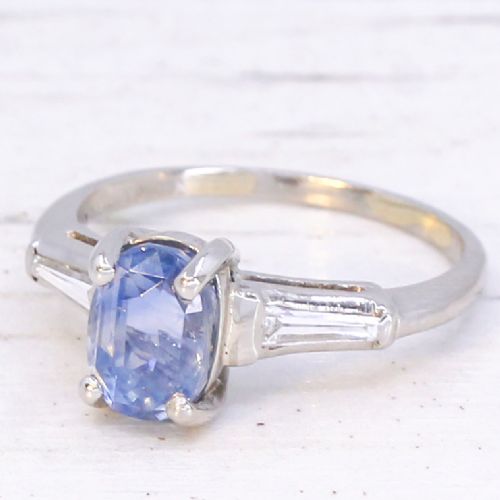
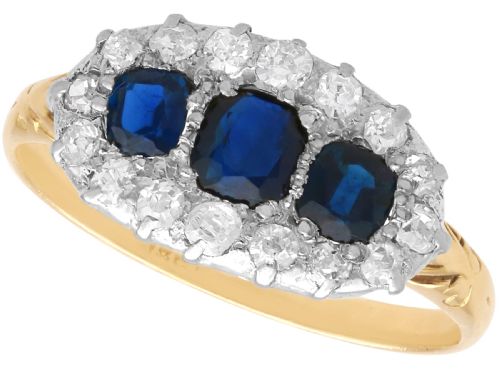
A sapphire diamond three stone ring brings together a central blue, pink, teal or yellow sapphire flanked by a pair of diamonds in a balanced trilogy setting.
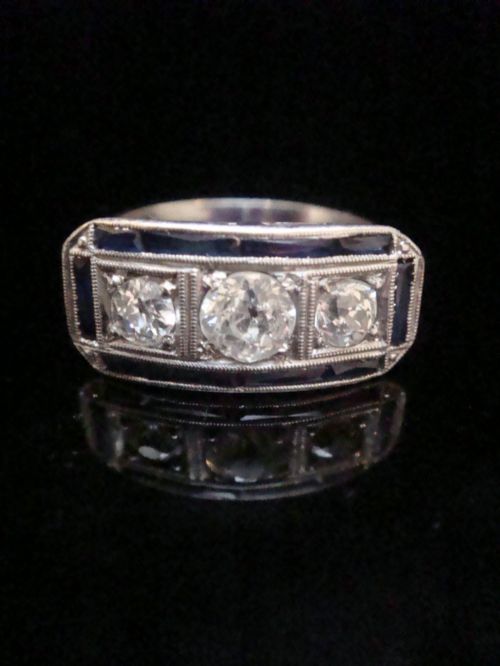
The most common form met on this page is the Art Deco platinum or 18ct gold mounting, alongside late Victorian and Edwardian examples featuring yellow gold bands.
Jewellers structure these rings to symbolise the past, present and future, balancing the rich saturation of untreated or Ceylon corundum against bright old cut diamonds.
Materials and construction
Goldsmiths constructed these pieces primarily in platinum or cast 18ct yellow and white gold, often setting stones with fine claws or flush rubover borders.
Gemstone selection pairs natural Kashmir, Burmese or Ceylon sapphires with hand-faceted old cut, baguette or brilliant diamonds arranged along low-profile bands.
The archive and active stock include pink, teal, blue and yellow sapphires paired with old cut diamonds in trilogy configurations.
Distinctions in grade and execution
The finest examples display unheated sapphires possessing intense natural saturation paired with clear, high-colour diamonds securely mounted in heavy precious metal settings.
Lesser pieces feature stones with dull inclusions, weak colour zoning or lightweight bands showing signs of thinning from decades of wear.
The Sapphire Diamond Three Stone Glossary
- Trilogy ring
- A ring set with three stones, traditionally representing the past, present and future. This layout is typical for sapphire and diamond combinations.
- Old cut diamond
- A diamond faceted by hand before modern machinery, featuring a smaller table, higher crown and deep pavilion. These cuts produce a softer candlelight sparkle.
- Unheated sapphire
- A sapphire that has not undergone thermal enhancement to improve colour or clarity. Natural stones retain their original geological characteristics.
- Ceylon sapphire
- A sapphire originating from Sri Lanka, recognised for a vibrant and lively brilliance. These stones often display a medium light blue shade.
- Rubover setting
- A mounting where a thin collar of metal folds over the edge of the gemstone. This technique secures the stone safely while creating a smooth profile.
Sapphire Diamond Three Stone: Frequently Asked Questions
What periods do these rings come from?
The pieces span the late Victorian, Edwardian and Art Deco eras, extending through mid-century modern designs.
Craftsmanship shifts from ornate yellow gold filigree towards geometric platinum settings as time progresses.
Are the sapphires natural or treated?
Many listings specify unheated stones originating from regions such as Burma, Kashmir and Ceylon.
Certification from gemological laboratories often accompanies these untreated blue, pink or teal varieties.
How should I wear an antique trilogy ring?
These rings suit daily wear provided the platinum or 18ct gold settings remain sturdy and secure.
Remove the ring during manual labour or heavy lifting to protect the claws holding the sapphire and diamonds.
What metal is most common?
Yellow gold dominates the nineteenth-century Victorian and Edwardian items on this page.
Platinum and white gold become prevalent during the Art Deco period, highlighting the stones with bright neutral tones.