
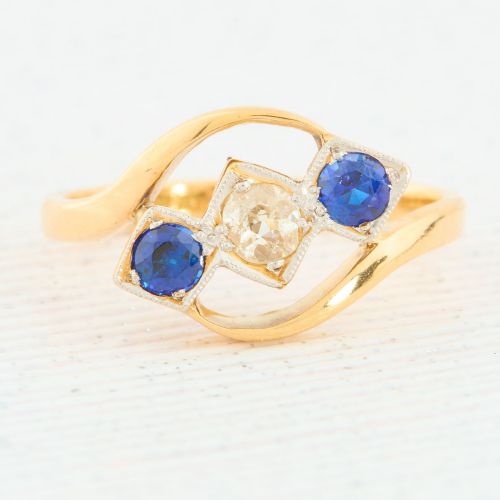


Sapphire Crossover Ring
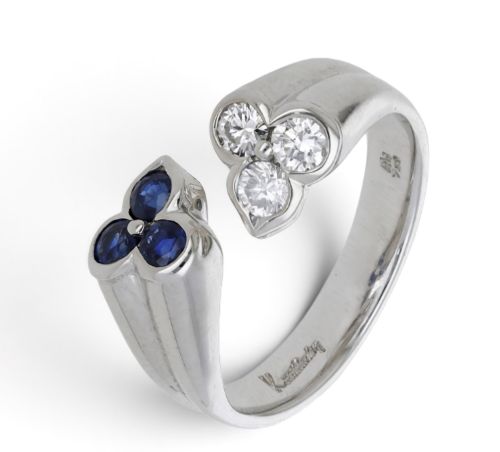
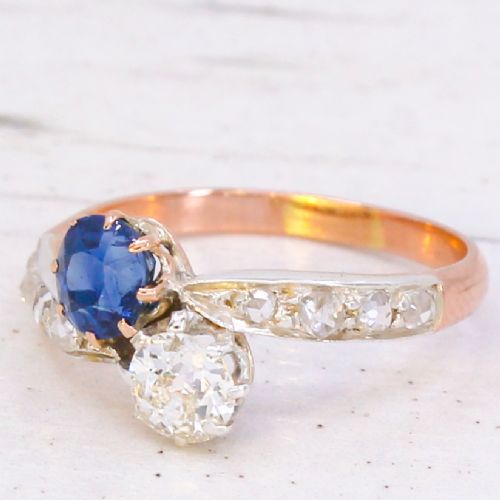
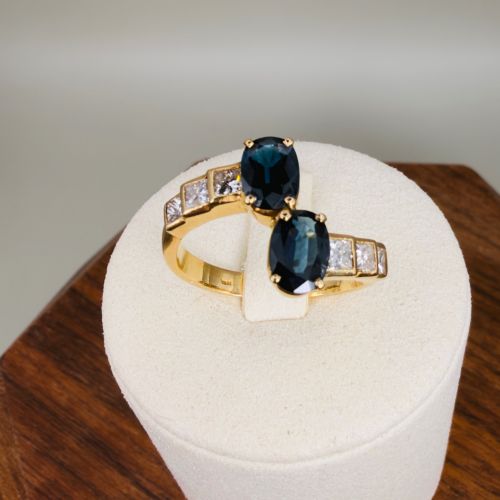
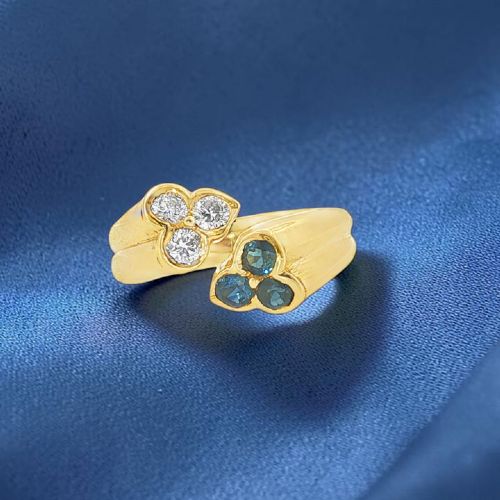
A sapphire crossover ring twists two stones in a continuous embrace, offering a fluid silhouette that sits low on the finger.
Sapphire Crossover Ring
A sapphire crossover ring places a blue, pink, or natural sapphire alongside a diamond in a sweeping, intertwined band. These pieces emerge primarily from periods spanning the Victorian era through the Edwardian years, the Art Deco period, and into mid-century and later vintage designs.
Collectors frequently encounter twist rings and Toi et Moi forms where the dual stones symbolise two lives joined together. The selection available here captures these characteristic curving lines in both yellow and white precious metals.
Makers set these stones using platinum or gold mounts, creating a graceful profile that accentuates the contrast between deep blue sapphires and sparkling diamonds. The overarching design prioritises flow and movement across the hand.
Materials and construction
Goldsmiths forge these mounts using platinum, 18ct gold, 18ct yellow gold, and 9ct white gold to support the main gemstones. The metal is shaped into delicate twist bands that hold the sapphires and diamonds securely in place.
Jewellers employ old cut diamonds alongside princess cut stones, pairing them with blue sapphire, pink sapphire, and basaltic sapphire varieties. Each gem is positioned to follow the sweeping contours of the crossover framework.
Listings feature pieces spanning the Victorian, Edwardian, Art Deco, and mid-century periods, fashioned in platinum, 18ct gold, and white gold.
Quality variations
The distinction between tiers rests upon the saturation and natural origin of the sapphire paired with the cut and weight of the accompanying diamonds. Stones displaying vibrant, unheated colour hold particular distinction.
Execution of the metalwork defines the finer examples, where the twist of the band flows seamlessly without bulk. The precision of the setting secures the stones while maintaining the delicate fluidity characteristic of the style.
Kutchinsky
The Sapphire Crossover Ring Glossary
- Crossover ring
- A ring design featuring two main stones that sweep around the finger to meet or cross over one another. This configuration creates a dynamic profile.
- Toi et Moi
- A French term meaning you and me, describing a ring with two principal side-by-side or intertwined stones. It carries a traditional romantic association.
- Old cut
- A diamond cutting style prevalent in antique jewellery featuring a small table, high crown, and open culet. These stones catch candlelight distinctively.
- Princess cut
- A square or rectangular diamond cut with numerous facets that deliver a modern, brilliant sparkle. It contrasts sharply with older curved stone shapes.
- Basaltic sapphire
- A sapphire originating from alkaline basaltic rock formations, often noted for deep, saturated colouration. These stones anchor traditional Victorian and Edwardian rings.
Sapphire Crossover Ring: Frequently Asked Questions
How do I wear a sapphire ring daily?
Sapphire is a durable gemstone suitable for regular wear, though antique and vintage settings require thoughtful care. Removing the ring during heavy manual tasks protects the metalwork.
Periodic checks by a jeweller ensure the platinum or gold claws keep the stones secure within the twist mount.
How do I date an antique ring?
Dating relies upon stylistic markers such as the cut of the diamonds and the shaping of the metal mount. Edwardian pieces often display delicate platinum work, while Art Deco examples favour geometric lines.
Assay marks and hallmarks stamped inside the band provide official clues regarding the year of creation and the gold or platinum purity.
What does Toi et Moi mean?
Toi et Moi translates from French as you and me, representing two distinct gems united in a single jewel. In a ring context, this usually pairs a sapphire with a diamond.
The style gained prominence during the Edwardian and antique periods as a sentimental token exchanged between partners.
Are pink sapphires natural?
Natural pink sapphires occur organically within the earth, possessing colouration derived from trace elements of chromium. They appear in antique and vintage rings alongside traditional blue stones.
Certification and examination under magnification help distinguish natural coloured sapphires from treated alternatives.