
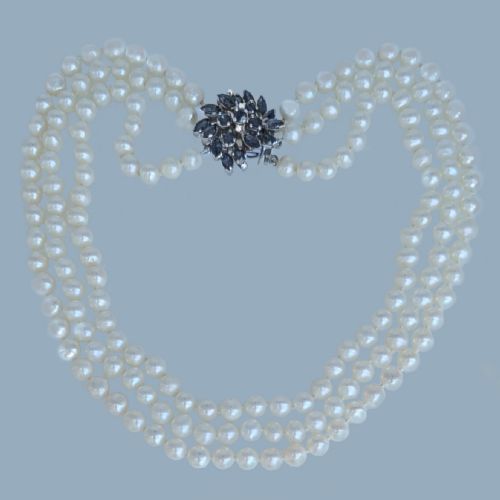


Sapphire Cluster Necklace
A sapphire cluster necklace brings together central coloured stones and surrounding gems to form a distinct pendant focal point.
Sapphire Cluster Necklace
The evidence shows forms ranging from standalone pendants to clasps on pearl necklaces and convertible brooch pendants. Most contemporary and vintage examples utilise 9ct gold, 18ct gold, or silver alongside blue sapphires, padparadscha sapphires, and diamond accents.
Pieces span distinct aesthetic movements, from Victorian natural sapphire designs to mid-century gold clusters. The selection includes specific motifs such as floral clusters, fan shapes, hearts, and crosses.
Materials and construction
Metals recorded in the listings include 9ct gold, 14ct white gold, 18ct gold, and silver. These provide the structural setting for the central stones and surrounding accent gems.
Gems comprise sapphires paired with diamonds, seed pearls, rubies, opals, and white zircon. Stones are arranged in tight cluster configurations around the central sapphire.
Elephant and witches heart motifs appear among the traditional floral and cross clusters.
Factors of quality
Quality rests on the selection and matching of the central sapphire and surrounding stones. Better examples display balanced proportions between the central gem and the cluster border.
The integrity of the metalwork and the precision of the stone settings distinguish finer pieces. Certified gems and natural unheated stones elevate the standing of the piece.
The Sapphire Cluster Necklace Glossary
- Cluster
- A stone arrangement where a central gem is encircled by smaller accent stones. This layout maximises visual impact and light return.
- Seed pearl
- A very small, naturally small pearl often used in period jewellery. Edwardian pieces frequently incorporate these alongside sapphires.
- Convertible pendant
- An item designed to function as both a pendant and a brooch. Victorian examples often feature this dual mechanism.
Sapphire Cluster Necklace: Frequently Asked Questions
How do I wear a cluster pendant?
These pendants sit centrally on the neckline, suspended from matching gold or silver chains. They suit both everyday wear and formal attire.
Heavier Victorian brooch-pendant hybrids require sturdier chains to support their weight securely.
What metals are used in these necklaces?
Listings feature yellow gold, white gold in 9ct and 18ct purities, and silver settings. The choice of metal often reflects the period of manufacture.
White metals dominated mid-century and Edwardian pieces, while yellow gold appears frequently across Victorian and later designs.
Are all sapphires blue?
Blue is the traditional colour, but records show green, padparadscha, and white sapphire variations. Each offers a distinct palette for the cluster arrangement.
Padparadscha stones display a blend of pink and orange tones, while unheated green sapphires show natural earth-toned hues.
How do I identify a period piece?
Dating relies on material combinations, gemstone cuts, and specific motif styles like witches hearts or floral clusters. Edwardian pieces often use seed pearls, while Victorian items include convertible brooch fittings.
Examining the metal purity marks and setting techniques helps confirm the era of production.