


Pink Sapphire Cluster
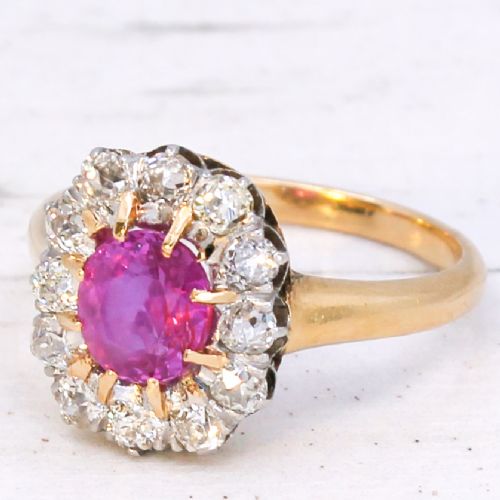
A pink sapphire cluster brings together a vibrant central stone and a bright frame of diamonds in a classic arrangement.
Pink Sapphire Cluster
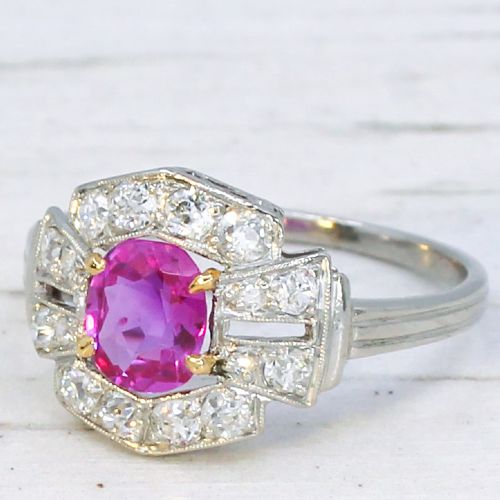
A pink sapphire cluster centres on a vivid pink gemstone, often framed by a border of sparkling diamonds. These jewels appear across several forms, with rings dominating the selection alongside necklaces, pendants, earrings and drop earrings. Examples range from early Victorian creations to mid-century designs, capturing various historical aesthetics in a single focused category.
The pieces on this page span the Victorian, Edwardian, Art Deco, Retro and Mid-Century periods. Early examples often pair natural pink sapphires with old cut diamonds in platinum or gold settings, while later twentieth-century iterations utilise clean geometric lines or alternative cuts like the marquis shape. This variety reflects changing tastes in jewellery manufacture over more than a century.
How they were made
Craftsmen built these clusters using precious metals such as platinum, 18ct gold, 18ct white gold, 9ct gold and 10ct gold. Platinum gained favour during the Edwardian and Art Deco eras for its strength, allowing fine, delicate claw and bezel settings that securely held the central stones without overwhelming them. Gold provided a warm alternative, particularly in Victorian and mid-century pieces.
Gemstone selection relies on pairing natural pink sapphires, including unheated Burmese and Ceylon origins, alongside brilliant or old cut diamonds. Stones are selected for uniform saturation and clarity, then arranged so the surrounding diamonds enhance the optical depth and colour intensity of the central pink sapphire.
The archive and active selection include both delicate Edwardian dress rings and substantial mid-century cocktail clusters set with Ceylon stones.
What varies in quality
Quality rests significantly on the origin and treatment status of the pink sapphire, with unheated stones from sources like Burma and Ceylon commanding distinct attention. The depth of colour saturation, natural crystal clarity and absence of artificial thermal enhancement elevate an individual stone's desirability among collectors.
Metalwork execution and gemstone proportion further separate pieces. Fine claw alignment, secure prong work, and balanced symmetry between the central sapphire and the surrounding diamond border demonstrate superior bench craftsmanship.
The Pink Sapphire Cluster Glossary
- Cluster
- A ring or pendant design featuring a prominent central gemstone encircled by a border of smaller accent stones, typically diamonds.
- Unheated sapphire
- A natural gemstone that has undergone no thermal treatments to improve its colour or clarity.
- Old cut diamond
- A vintage diamond cutting style characterised by a high crown, small table and open culet, designed to catch candlelight.
Pink Sapphire Cluster: Frequently Asked Questions
How do I care for a pink sapphire ring?
Clean the piece gently using warm soapy water and a soft brush to remove everyday oils from beneath the stones. Avoid harsh chemical dips or ultrasonic cleaners, particularly with treated or antique gems.
Store the item separately in a fabric-lined box to prevent the diamonds from scratching the softer gold or platinum metalwork.
Are these pink sapphires natural?
The pieces utilise natural corundum, with many specific listings noting unheated stones originating from traditional sources such as Ceylon and Burma. Natural origin adds considerable character and value to the gemstone.
Laboratory certifications often accompany significant stones to verify their geographic origin and confirm the absence of heat treatment.
What periods do these clusters come from?
The selection encompasses Victorian, Edwardian, Art Deco, Retro 1940s and Mid-Century eras. Each period brings distinct mounting styles, from intricate millegrain work to bold geometric platinum settings.
Examining the metal type and cut of the surrounding diamonds helps determine the specific manufacturing era of an individual jewel.
Can I wear a cluster ring daily?
Sapphires possess a high hardness rating on the Mohs scale, making them durable enough for regular wear when set securely in robust platinum or gold mountings. However, removing rings during heavy manual tasks prevents unnecessary impact damage.
Routine inspection by a jeweller ensures the claws holding the cluster remain tight and secure over years of use.