


Sapphire and Pearl Jewellery
Sapphire and pearl jewellery pairs deep blue stones with lustrous pearls across Victorian, Edwardian, and mid-century designs.
Sapphire and Pearl Jewellery
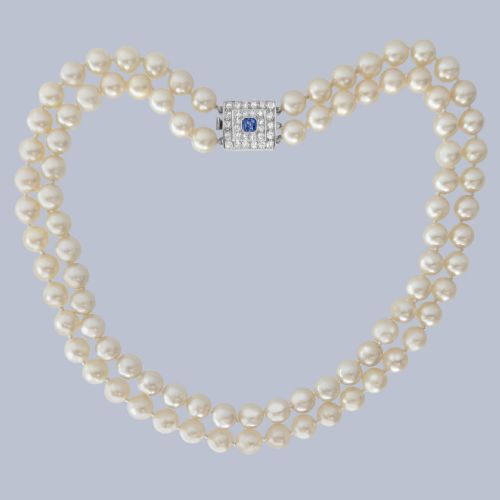
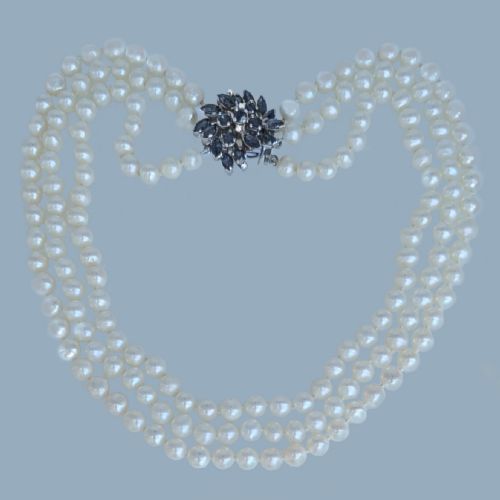
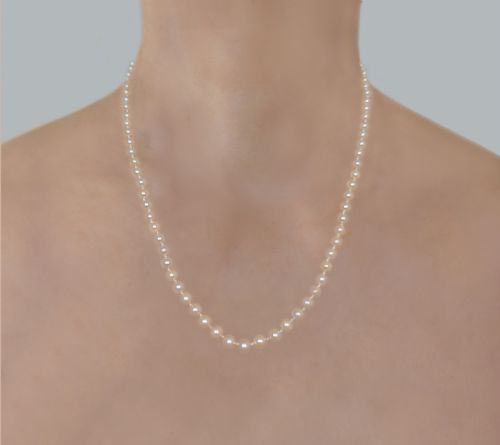
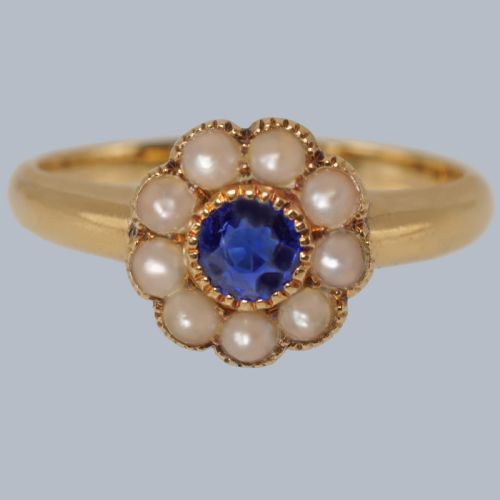
Sapphire and pearl jewellery encompasses wearable adornments produced across the Victorian, Edwardian, Art Deco, and mid-century periods. These pieces combine lustrous pearls with blue, pink, or white sapphires set into gold, silver, or platinum. The selections visible here focus heavily on necklaces with gemstone-set clasps, alongside rings, brooches, and pendants.
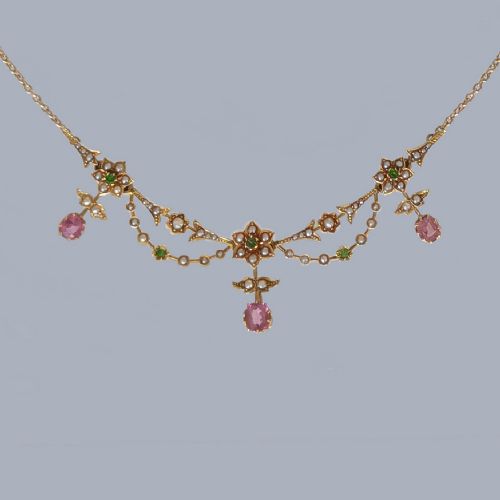
Buyers seeking this phrase encounter multi-strand pearl necklaces featuring intricate gold or silver floral clasps alongside gemstone cluster rings and fringe necklaces. Edwardian pieces often utilise delicate seed pearls and yellow gold in crescent or drop motifs, while mid-century examples lean towards multi-strand configurations with diamond and sapphire settings.
How they were made
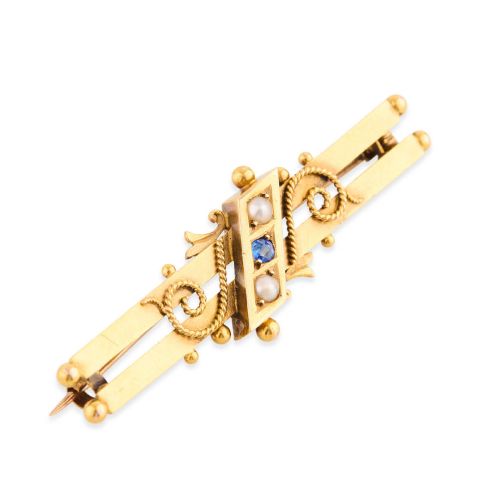
Goldsmiths constructed these items using 9ct, 14ct, and 18ct yellow and white gold, alongside platinum and silver settings. Stones were secured via claw settings, bezel mounts, or integrated directly into elaborate floral and geometric clasps. Seed pearls and split pearls required delicate adhesive and wire-working techniques to mount securely onto bar brooches and pendants.
Many historical pieces incorporate natural or cultured pearls strung onto silk cords, frequently accompanied by diamonds, rubies, or emeralds to accent the central sapphires. Platinum surfaces gained favour during the Edwardian and Art Deco eras to highlight fine millegrain detailing around the gems.
Some Edwardian pieces conceal tiny seed pearls inside miniature crescent moons and hollow witches' hearts.
What varies in quality
Quality rests in the origin and grade of the central sapphires and pearls, ranging from untreated Ceylon stones to standard commercial gems. The precision of the metalwork, such as hand-carved platinum settings and the uniformity of strung pearls, dictates the tier of the piece. Certified natural pearls command higher regard than cultured alternatives.
Structural integrity also separates standard items from finer examples, evident in the robustness of safety chains on bracelets and the complexity of multi-stone floral clasps. Maker craftsmanship shows in the crispness of scrollwork and the secure seating of tiny seed pearls.
The Sapphire and Pearl Jewellery Glossary
- Seed pearl
- A very small, naturally formed pearl, often round or slightly irregular, used extensively in Victorian and Edwardian cluster jewellery. These tiny gems create delicate, textured patterns when grouped together.
- Cabochon
- A gemstone cut with a smooth, rounded, convex upper surface rather than faceted planes. This style highlights the natural colour and depth of the sapphire.
- Millegrain
- A decorative jewellery technique involving a line of tiny metal beads along the edge of a setting. This method softens hard metal borders with a textured finish.
- Trilyx
- A three-stone ring setting typically featuring a central gemstone flanked by two matching accent stones. In these pieces, a central sapphire sits between diamonds or smaller pearls.
- Trilogy
- A ring featuring three prominent stones arranged in a row, often symbolising the past, present, and future. Antique examples pair sapphires with flanking pearls or diamonds.
Sapphire and Pearl Jewellery: Frequently Asked Questions
How do I care for pearl and sapphire jewellery?
Pearls are organic and soft, requiring gentle cleaning with a damp cloth rather than chemical dips or ultrasonic baths. Keep them away from perfumes, cosmetics, and harsh household detergents to preserve their natural lustre.
Sapphires are much harder stones that tolerate mild soapy water and a soft brush. Store pearl necklaces flat rather than hanging them to prevent the silk cord from stretching over time.
Are these pearls natural or cultured?
The inventory includes both natural saltwater pearls from historical eras and cultured pearls common in mid-century pieces. Certified items often specify pearl origins through formal gemological reports.
Inspecting the pearls under magnification or checking accompanying certification helps determine whether they grew naturally or with human intervention.
What periods do these pieces come from?
The selection spans the late Victorian and Edwardian eras, through the Art Deco period, into mid-century 1950s and 1960s designs. Each era brings distinct motifs, from yellow gold crescent brooches to platinum-set geometric clasps.
Victorian and Edwardian items often feature delicate seed pearls and warmer gold tones, whereas mid-century creations favour uniform cultured pearls and bold clasps.