


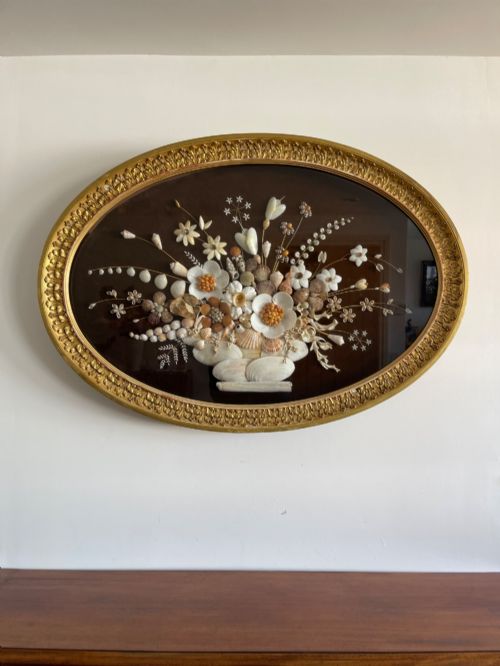


Sailor Art Frame
These sailor art frame pieces bring maritime folk art and shadow box diorama works into a room, offering a tangible link to 19th century sea life.
Sailor Art Frame
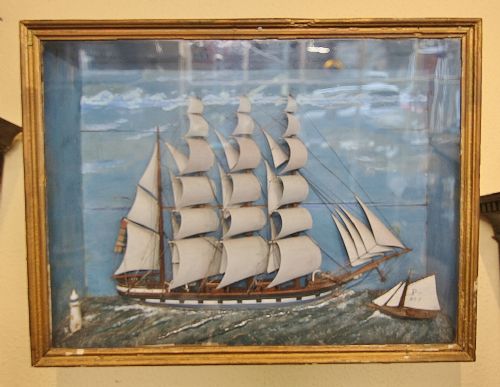
A sailor art frame encompasses maritime folk art, shadow box diorama displays, and framed watercolour paintings dating from the Georgian and Victorian eras through to the early twentieth century. Buyers seeking this phrase typically encounter framed woolie embroideries, shellwork pictures, and commemorative gouache paintings detailing naval vessels.
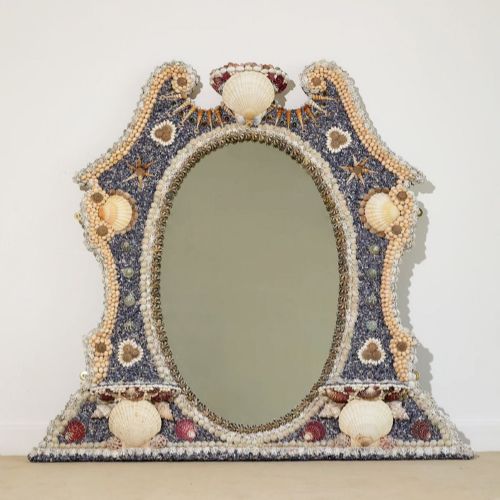
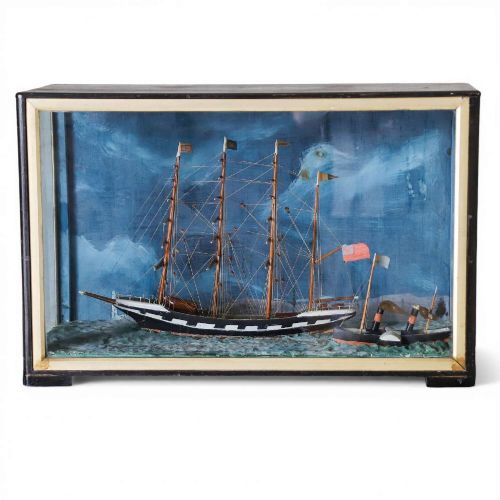
The objects span wall art, wall mirrors, enamel plaques, and detailed dioramas featuring sailing ships and steam barges. Origins stretch across English and French maritime traditions, reflecting personal tributes made by sailors and coastal artisans alike.
Examples on this page range from mid-century maritime pieces to early nineteenth-century watercolours and photographs mounted in original oak or giltwood surrounds. Each item preserves a distinct narrative of seafaring heritage through varied domestic craft forms.
Materials and construction
Makers utilised wood, glass, paper, and giltwood to build sturdy frames that protected delicate interior scenes from sea air and domestic wear. Original wooden and giltwood surrounds frequently house the artwork, maintaining the structural integrity of the piece since the nineteenth century.
Internal compositions often incorporate wool, watercolour paint, gouache, and plaster, alongside organic elements like gathered shells and card. Embroidered woolies relied on varied stitch techniques to depict rigging and waves, while shadow box dioramas layered painted paper and cut wood to create three-dimensional depth.
Sailor Art Frame Retail Price Guide 2026
Typical asking prices for sailor art frame among the pieces listed under this phrase on Sellingantiques today, from the lower quarter to the upper quarter. They describe what is for sale here now, not the wider market.
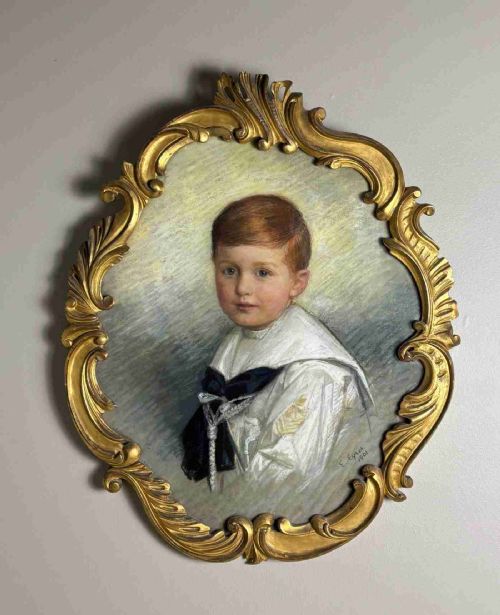
One midshipman stands ready for duty in an 1850 watercolour, proving that even young sailors needed to look sharp for the painter.
Distinguishing the pieces
Quality rests in the complexity of the internal arrangement and the preservation of fugitive materials like watercolour pigments and wool threads. Pieces featuring detailed rigging in a woolie embroidery or intricate shellwork compositions display superior artisan engagement compared to simpler flat paintings.
The survival of original glass and uncompromised wooden or giltwood frames elevates an object, as later replacements alter the historical context. Greater depth in a shadow box diorama and clear provenance noted in signatures or inscriptions distinguish finer examples from standard decorative items.
Emily Eyres·J. Hardy
The Sailor Art Frame Glossary
- Woolie
- A sailor's embroidered picture typically executed in wool yarn using various stitches to depict a ship at sea. These works frequently date from the nineteenth century.
- Shadow Box Diorama
- A deep, glazed frame enclosing a three-dimensional scene built from layered paper, wood, and model elements. This form allowed makers to create realistic perspective.
- Giltwood
- Wood carved and coated with gold leaf or gold paint to provide a decorative metallic surface. It appears on finer frames across the Georgian and Victorian periods.
- Gouache
- An opaque water-based medium producing bright, flat areas of colour on paper or card. Sailors and maritime artists favoured it for depicting ships and coastal scenes.
- Shellwork
- Decorative art created by arranging sea shells into geometric patterns or pictorial frames. Examples range from Georgian mirrors to early twentieth-century dioramas.
Sailor Art Frame: Frequently Asked Questions
What is a woolie embroidery?
A woolie is a textile picture stitched by sailors during long voyages, using coloured wool yarns to depict sailing ships upon textured waves.
These embroideries were often framed behind glass to protect the wool fibres from dust and dampness in domestic settings.
How do I date a shadow box?
Dating relies on examining the construction of the wooden frame, the type of glass, and the materials used for the internal diorama. Early nineteenth-century examples often feature hand-blown glass and simpler wooden profiles.
Maritime subjects also provide clues, such as the transition from sailing ships to ironclad battleships and steam barges around the turn of the twentieth century.
Where should I hang these frames?
These pieces suit spaces away from direct sunlight and excessive moisture, which can fade watercolours and damage delicate wool or paper elements.
Mounting them securely on sturdy hooks is essential due to the weight of deep wooden frames and glass shadow boxes.
Are shellwork frames fragile?
Shellwork requires careful handling because individual shells and plaster settings can loosen over time if subjected to vibration or sharp impacts.
Keeping the frame in a stable environment helps preserve the adhesive and structural arrangement of the shell motifs.