


Sage Green Armchair
A sage green armchair brings a muted, earthy colour to a room, offering a comfortable seat shaped by Victorian, Edwardian and earlier traditions.
Sage Green Armchair
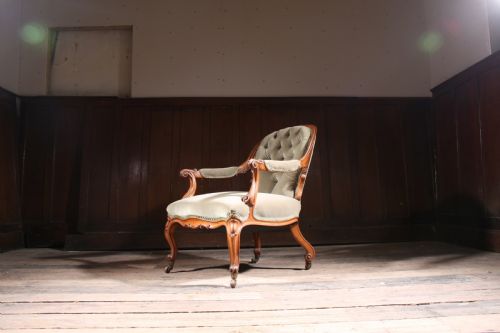
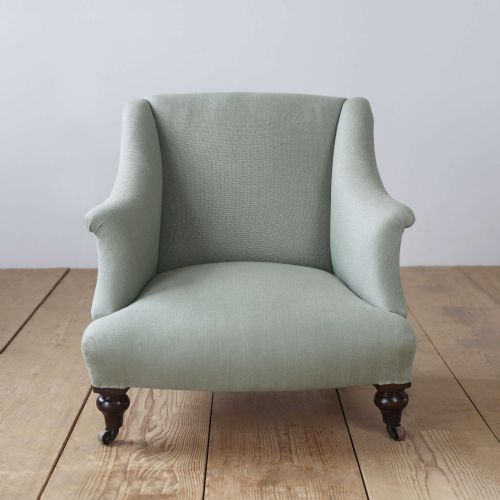
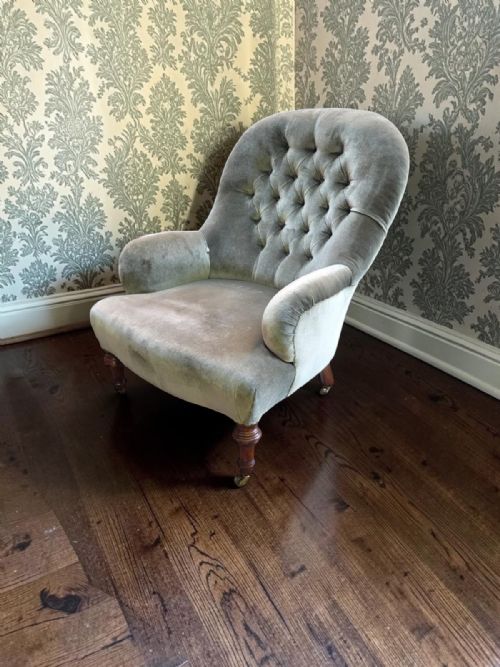
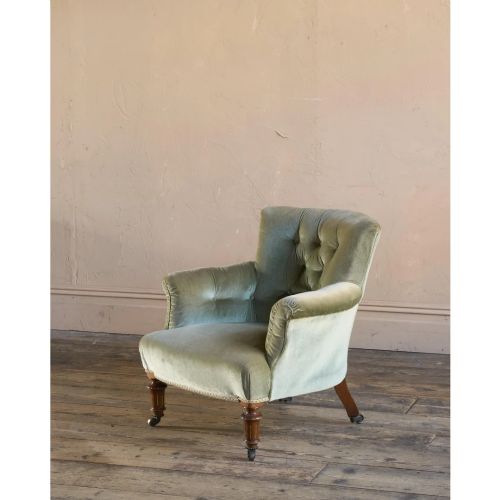
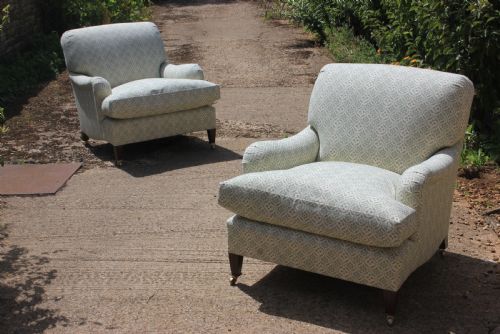
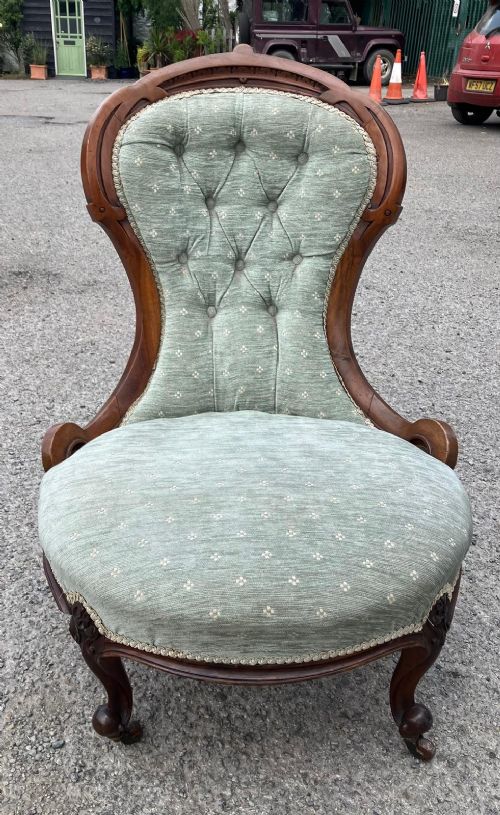
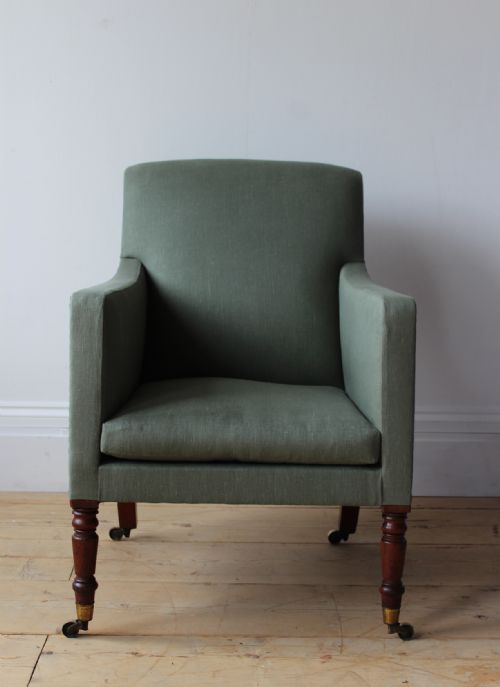
A sage green armchair spans several distinct periods, with Victorian and 19th-century examples appearing frequently alongside Edwardian and later pieces. Buyers searching for a sage green armchair encounter forms ranging from nursing chairs and library chairs to open armchairs and button-back designs.
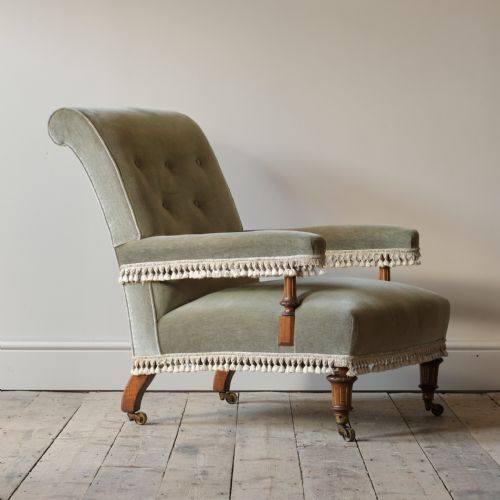
The selection includes specific stylistic revivals and maker-attributed pieces, such as Gillows open armchairs and William and Mary style giltwood chairs. Some examples feature recent upholstery in sage green velvet or fabric, paired with traditional frames.
Origins vary across English and French traditions, encompassing styles like Louis XVI alongside robust Victorian mahogany gentleman's armchairs. These seats serve functional purposes in libraries and drawing rooms while displaying period woodworking and upholstery details.
How they were made
Frames are constructed from hardwoods including mahogany, walnut and giltwood, providing structural support for upholstered bodies. Wood carving shapes arms, legs and frames, particularly in Victorian and revival styles.
Upholstery incorporates velvet, tapestry, and fabric, often finished with textile fringe, brass details or button backs. Craftspeople built these chairs using traditional stuffing and tension methods suited to the periods of manufacture.
Sage Green Armchair Retail Price Guide 2026
Typical asking prices for sage green armchair among the pieces listed under this phrase on Sellingantiques today, from the lower quarter to the upper quarter. They describe what is for sale here now, not the wider market.
Listings feature woods like mahogany and walnut paired with velvet, fabric, and brass elements.
What varies in quality
Quality rests in the precision of the timber frame construction and the fidelity of period details, such as carved mahogany or giltwood enrichment. Finer pieces demonstrate superior joinery and balanced proportions, whether in a diminutive armchair or a larger library chair.
The standard of upholstery materials and execution dictates the finish, from button-backed velvet to detailed French tapestry panels with needlepoint. Maker attributions, such as Gillows or Howard and sons, set distinct benchmarks for craftsmanship.
Gillows·Howard and sons
The Sage Green Armchair Glossary
- Button back
- An upholstery technique where depressions are formed in the padding by pulling buttons tight into the backrest, creating a quilted pattern. This method provides firm support and was common on Victorian chairs.
- Open armchair
- A seat featuring un-upholstered wooden armrests that expose the structural frame, frequently seen in 19th-century and earlier designs. The arms often show carved wood or polished mahogany.
- Nursing chair
- A low-seated armchair designed historically for comfort during nursing, typically featuring an upholstered back and short legs. Victorian examples often highlight walnut or mahogany frames.
- Giltwood
- Wood coated with a thin layer of gold leaf or gilt, used extensively in decorative styles like the William and Mary revival. It adds a reflective surface to chair frames.
- Library chair
- A substantial seating form intended for reading rooms, built for extended periods of use with supportive padding and sturdy timber construction.
Sage Green Armchair: Frequently Asked Questions
What periods do these armchairs come from?
The pieces span the 19th century, Victorian era, Edwardian period, and later 20th-century revivals. Each era brings distinct silhouettes and upholstery choices.
Craftsmanship and materials shift across these timelines, reflecting the shifting tastes of cabinetmakers and upholsterers.
How were sage green armchairs used?
These chairs served in libraries, parlours, and drawing rooms as primary seating or dedicated nursing chairs. Their supportive structures catered to reading, resting, and formal socialising.
Upholstery like velvet and tapestry provided both comfort and a decorative statement within period interiors.
Are the sage green covers original?
Some pieces retain older textiles like French tapestry or velvet, while others feature new sage green upholstery applied during restoration. Archive records show examples with newly added velvet and tassel trim.
Reviewing the listing details helps clarify whether the fabric is a recent reupholstery or an older textile survival.
What woods support these frames?
Makers utilised sturdy timbers such as mahogany, walnut, and giltwood for structural stability and decorative carving. The choice of wood often aligns with the specific period and style, from Victorian mahogany to revival giltwood.
Exposed wooden elements reveal the grain and finish selected by the original workshop.
How do I identify a Victorian armchair?
Victorian examples often feature button-backed upholstery, carved mahogany or walnut frames, and generous proportions designed for comfort. Forms like the gentleman's armchair and nursing chair are typical of the era.
Detailing on the timber and the weight of the frame help distinguish Victorian pieces from Edwardian or later alternatives.