


Sabred Leg Chairs
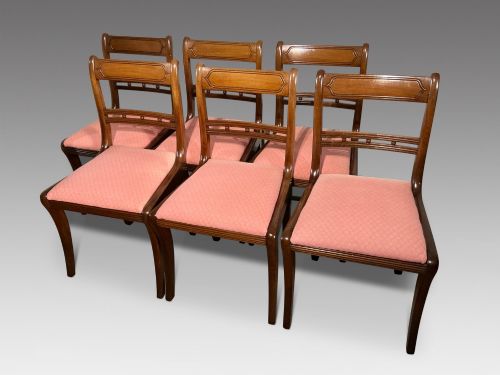
Sabred leg chairs bring the distinctive outward-curving lines of the early nineteenth century into the dining room or library.
Sabred Leg Chairs
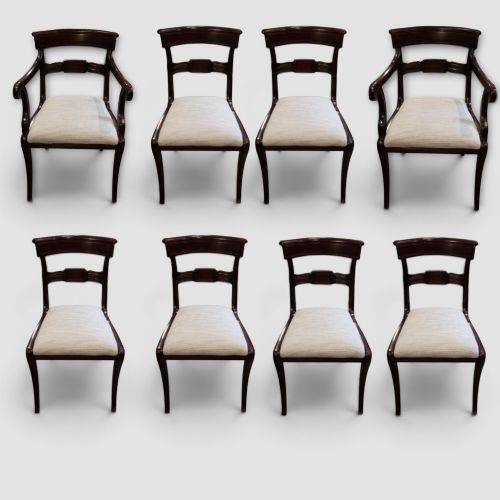
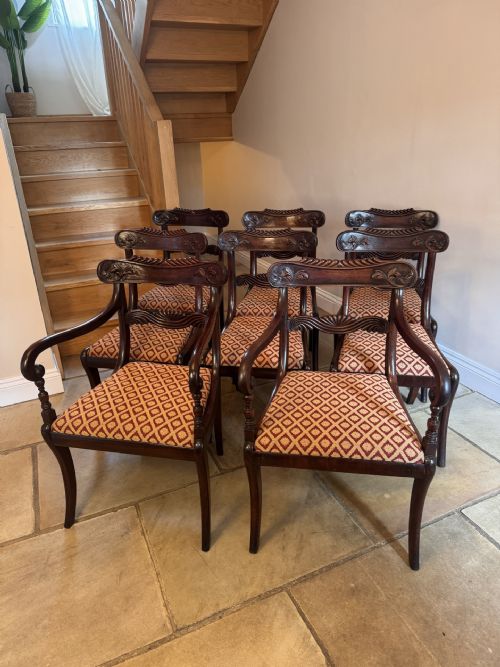
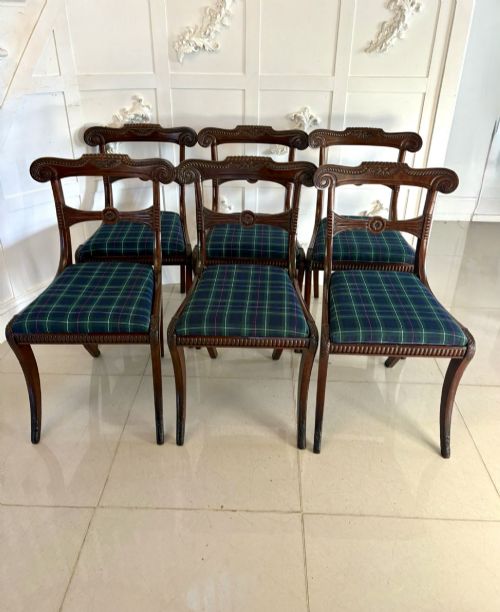
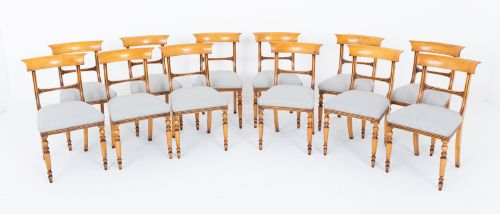
When you search for sabred leg chairs, you encounter seating built primarily during the Regency and Georgian eras, alongside later revivals from the nineteenth and twentieth centuries. These pieces appear as single side chairs, pairs of carvers, and full dining sets intended for formal rooms.
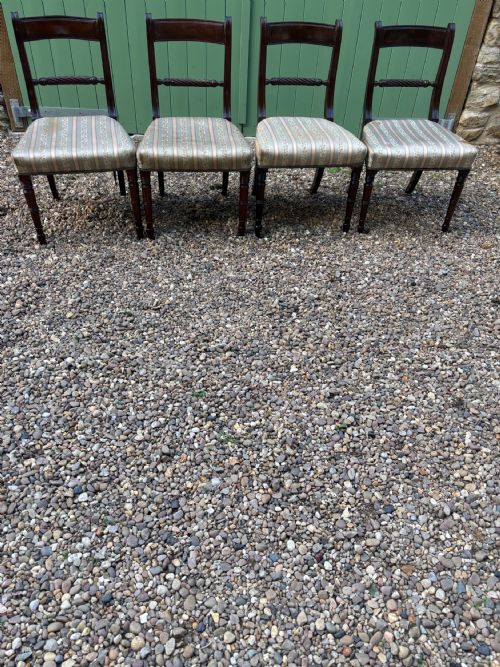
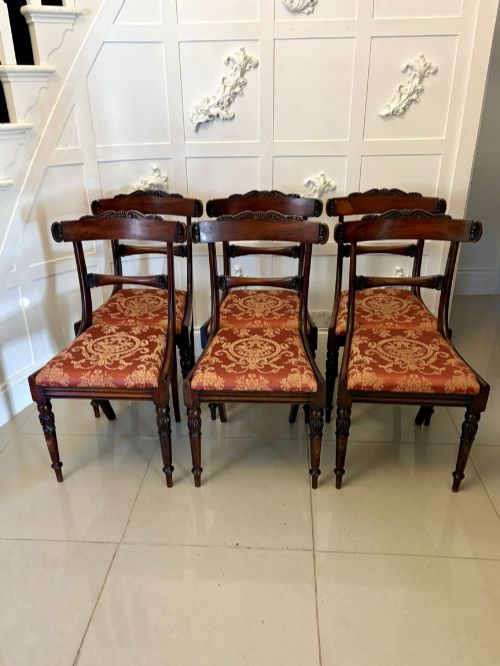
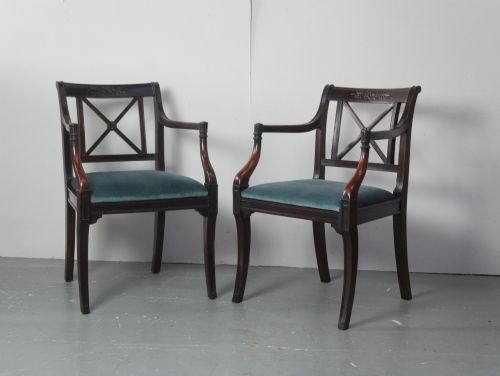
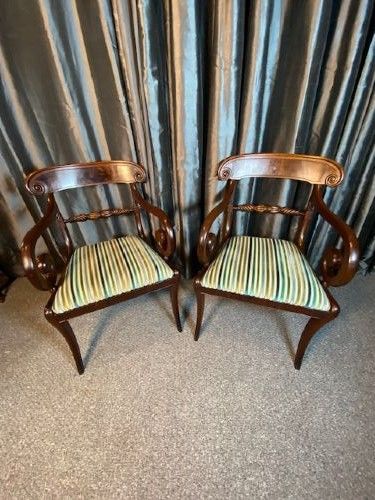
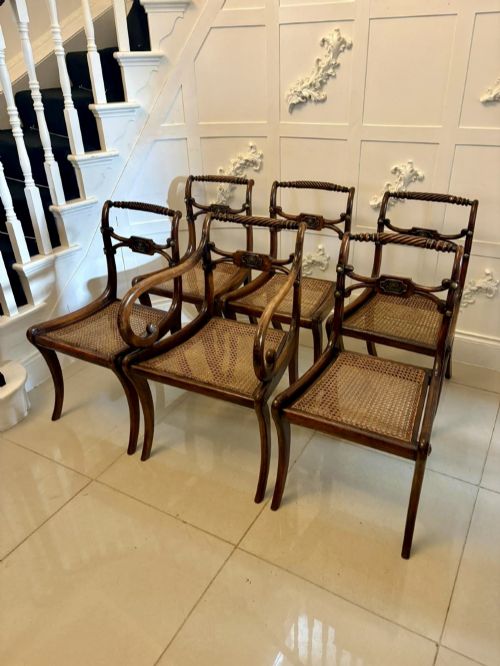
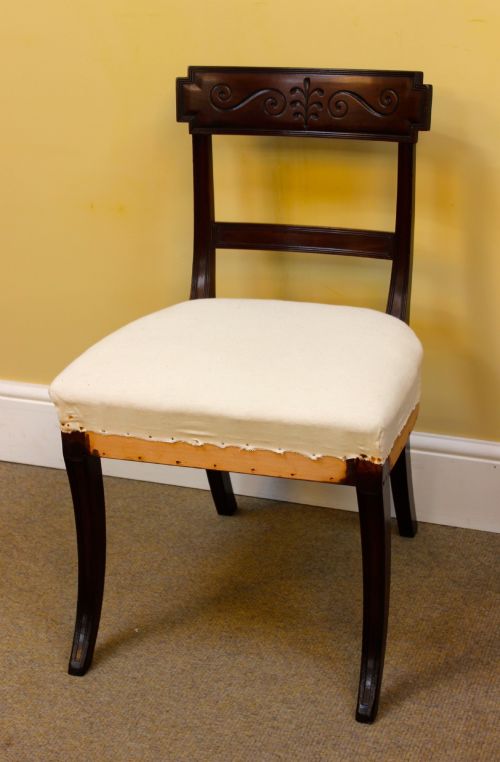
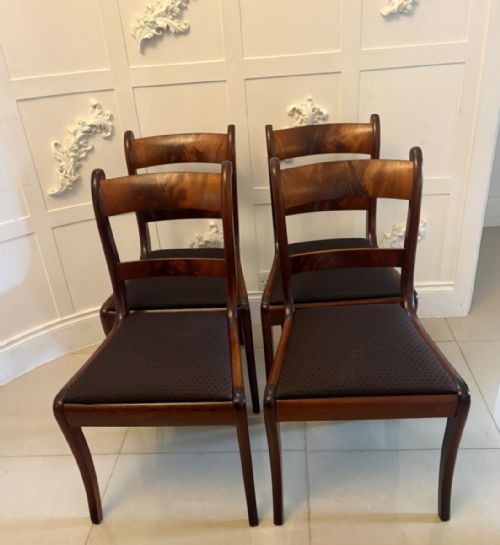
The form relies on distinctive swept rear or forward legs that taper towards the floor, echoing classical Greek and Roman klismos designs. Mahogany and rosewood predominate, frequently configured as dining suites or library armchairs.
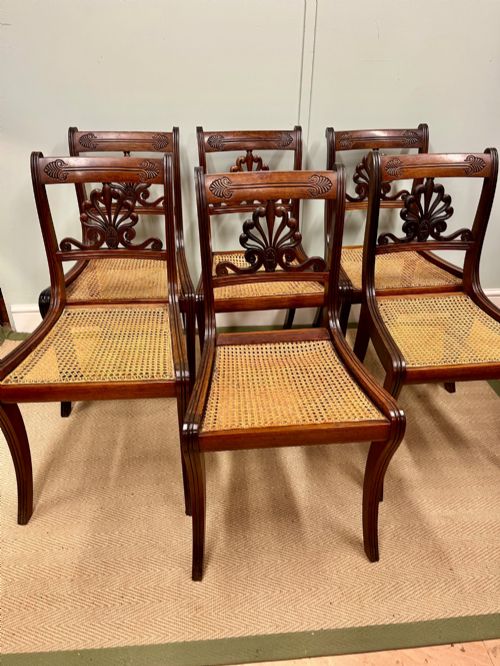
Most examples originate from the early nineteenth century, though revival pieces from around nineteen hundred also occur. You find them with wooden seats, cane panels, or traditional upholstery in velvet and fabric.
Construction and Materials
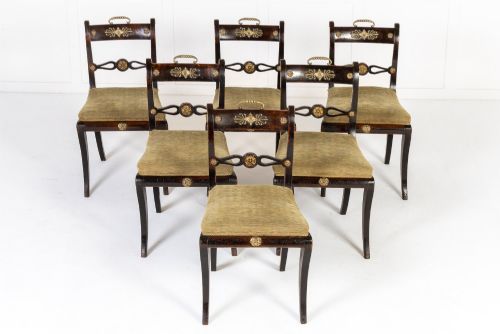
Cabinetmakers constructed these frames predominantly from dense hardwoods like figured mahogany and rosewood, occasionally employing simulated grain finishes or ebonised surfaces. Timber selection provided the structural strength required for the sharply angled legs without snapping at the joints.
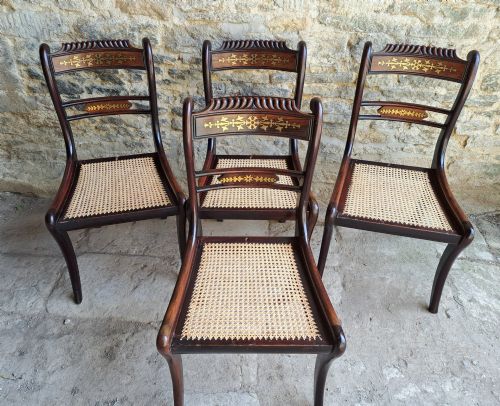
Decorative enrichment frequently involved brass inlay set flush into the top rails or crossbars, alongside hand-carved foliage and reeded details. Seats incorporated woven cane panels or padded foundations upholstered in materials such as green velvet.
Sabred Leg Chairs Retail Price Guide 2026
Typical asking prices for sabred leg chairs among the pieces listed under this phrase on Sellingantiques today, from the lower quarter to the upper quarter. They describe what is for sale here now, not the wider market.
Listings feature mahogany, rosewood, and satin birch, with seating surfaces in cane, velvet, and traditional upholstery across the Regency and Edwardian periods.
Gradations in Quality
The distinction between ordinary workshop production and master craftsmanship lies in the crispness of the carving and the grain configuration of the mahogany or rosewood. Superior examples exhibit tightly figured timbers and meticulously fitted brass inlay that remains flush with the surrounding wood surface.
Structural integrity also separates the tiers, with finer chairs retaining robust joinery in the complex sweep of the sabre leg rather than showing signs of historic repair or weak glue lines. Proportions play a decisive role, as the best proportioned frames balance the outward curve of the legs with refined back rail geometry.
Gillows
The Sabred Leg Chairs Glossary
- Sabre leg
- A chair leg that curves outwards in a concave sweep reminiscent of a cavalry sabre. This form originates from classical antiquity and defines Regency seating.
- Carver chair
- An armchair designed to sit at the head of a dining table, featuring open elbows. These often match a set of single side chairs.
- Brass inlay
- Thin strips of brass let directly into the wooden surface of the rail or backrest in geometric or floral motifs. It characterises smart Regency cabinetwork.
- Bergère
- An enclosed upholstered armchair with exposed wooden framing, frequently incorporating cane panels to the sides and back. These provide comfortable seating for libraries and drawing rooms.
- Bar back
- A horizontal curved wooden slat across the upper back of a chair that resembles the rail of a harness. It offers ergonomic support while displaying polished timber grain.
Sabred Leg Chairs: Frequently Asked Questions
How do I date a sabre leg chair?
Dating relies on timber choice, construction methods, and stylistic markers such as brass inlay or ebonised finishes. Earlier examples from the early nineteenth century display hand-cut joints and dense Cuban mahogany.
Later revival pieces from nineteen hundred often utilise different secondary woods and machine-cut components. Comparing the joinery underneath helps confirm the period of manufacture.
Are these chairs comfortable for daily dining?
Many designs offer supportive curved back rails and upholstered or cane seats suited for sitting through meals. Armchair versions provide additional support via open elbows.
Cane seats can be used bare or softened with loose squab cushions according to preference. Upholstered variants provide traditional padding for extended sitting.
How should I maintain cane seats?
Natural cane requires occasional light dusting and should be kept away from direct heat sources that dry out the material. Applying a damp cloth gently helps maintain flexibility.
Avoid placing excessive sharp point loads directly onto the woven surface. Proper humidity levels prevent the cane from becoming brittle over time.
What is the difference between a carver and a side chair?
Carver chairs feature wooden armrests attached to the sides, designed for the host at the dining table. Side chairs lack arms and slide neatly beneath the table edges.
Dining sets traditionally combine a matched group of side chairs with a pair of matching carvers. Both share the same leg profiles and backrest designs within a set.