


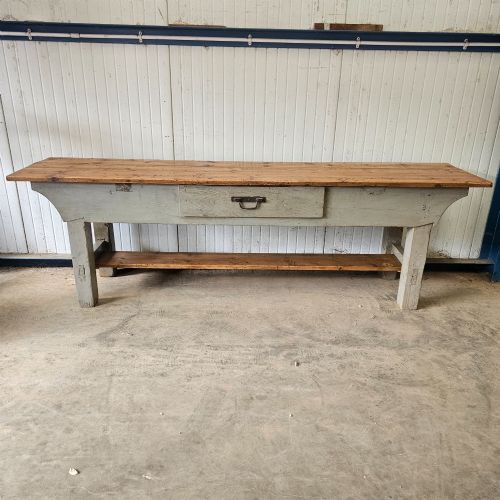
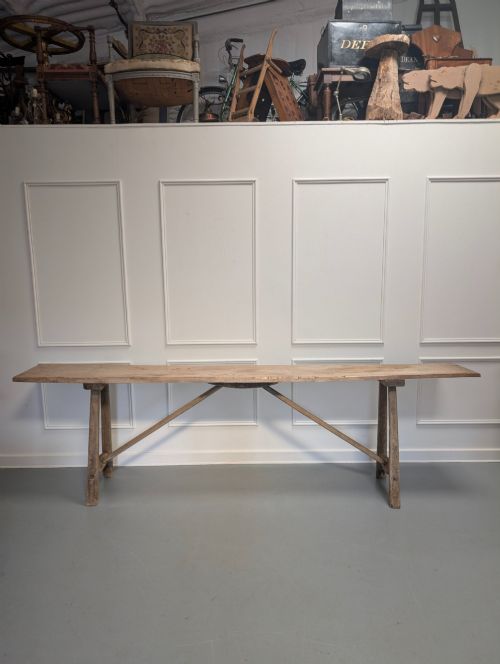
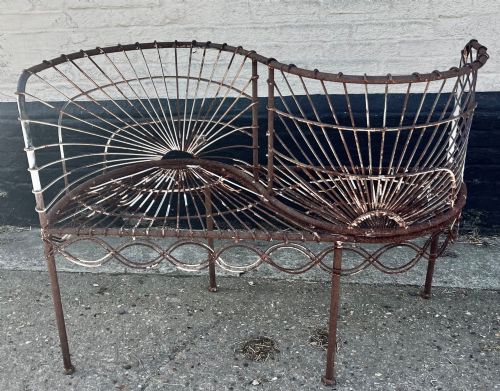
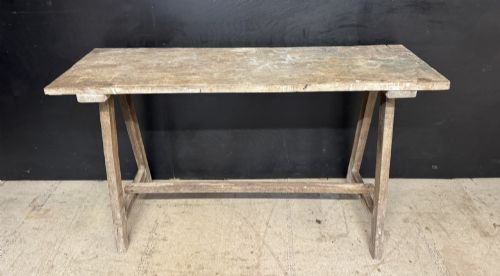
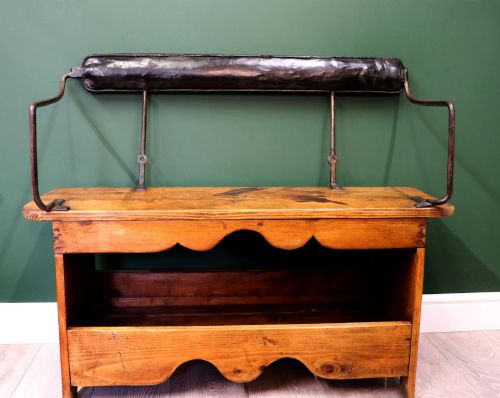
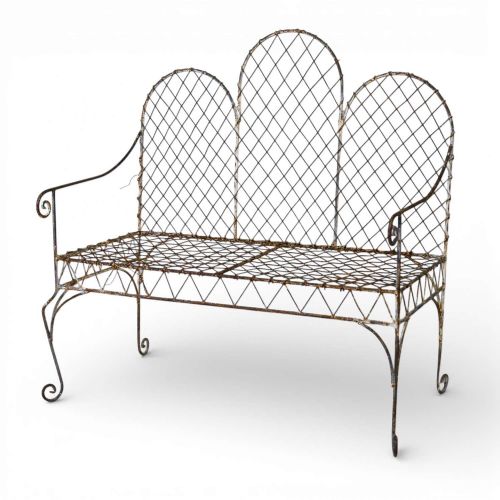
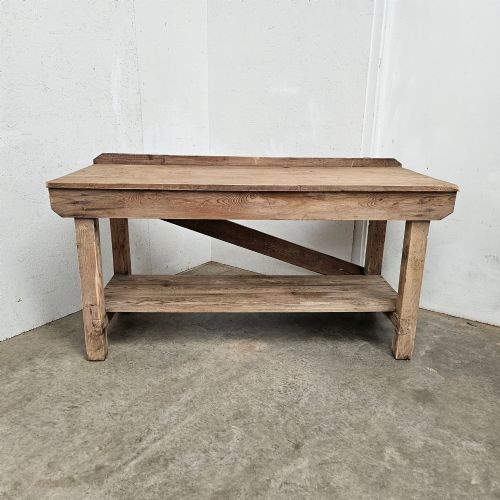


Rustic Work Bench
A rustic work bench brings honest utility into a room, shaped by decades of trade and hard use.
Rustic Work Bench
When you search for a rustic work bench, you are looking at utilitarian tables and seating born from workshops, laundries, dairies and gardens. These pieces span the eighteenth century through to the early twentieth century, carrying the marks of carpenters, cobblers, drapers and gardeners.
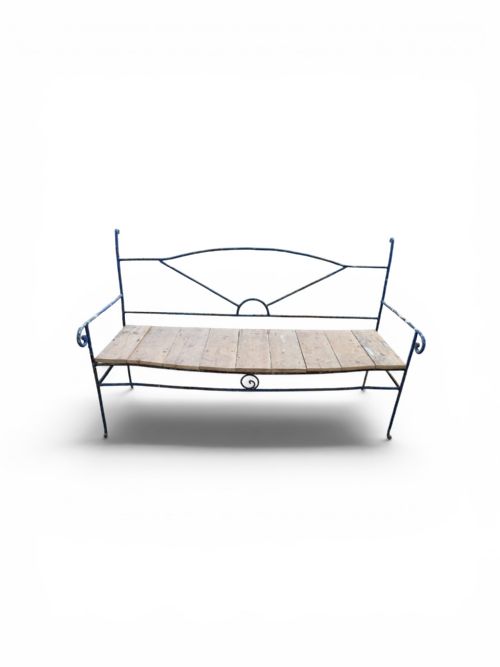
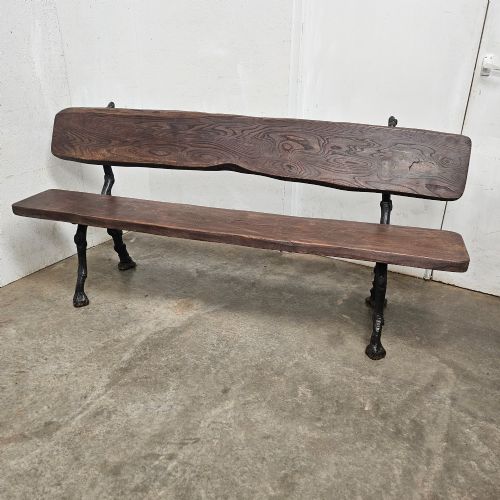
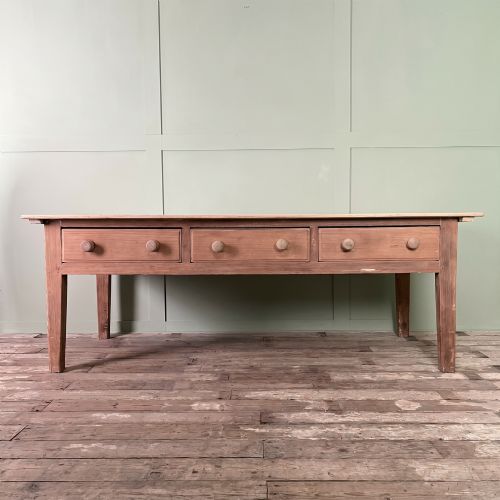
The versions you are most likely to meet on this page include French artisans' workbenches fitted with vices, long painted pine worktables, scrubbed sycamore and elm trestle tables, and sturdy garden seating in iron and wood.
Origins stretch across English and French country traditions, taking forms such as potting tables, butchers' blocks and drapers' tables. They bridge the gap between heavy industrial utility and provincial country charm.
Materials and construction
Makers built these pieces from robust timbers like pine, oak, elm, sycamore and beech, chosen for their ability to withstand heavy daily labour. Surfaces often show layers of original paint, scrubbed finishes or patinas built up over generations.
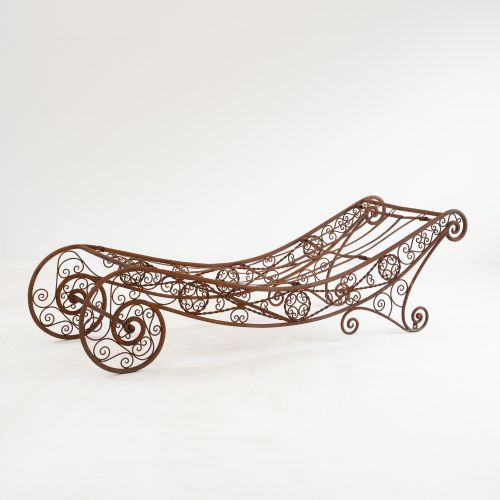
Metal components added strength and function, utilising wrought iron, cast iron and plain iron for vices, brackets, scrollwork and daybed frames. Joinery was straightforward and utilitarian, designed to hold firm under the weight of tools and materials.
Rustic Work Bench Retail Price Guide 2026
Typical asking prices for rustic work bench among the pieces listed under this phrase on Sellingantiques today, from the lower quarter to the upper quarter. They describe what is for sale here now, not the wider market.
Listings feature items built from pine, oak, elm, sycamore, beech, iron and paint, spanning the eighteenth century to the 1930s.
Distinctions in quality
Quality in a rustic work bench lies in the integrity of its structure and the honesty of its wear. Pieces that retain their original vices, lower shelves or untouched layers of historic paint hold greater character than those stripped back indiscriminately.
The balance of proportions and the choice of denser timbers, such as old elm or sycamore for table tops, separate standard workshop utility from exceptional regional examples.
Trussant and Cie
The Rustic Work Bench Glossary
- Workbench
- A sturdy table used by artisans such as carpenters and mechanics for holding work pieces. These often include integrated wooden vices and tool wells.
- Drapers table
- A long, wide table historically used in textile shops for measuring and cutting cloth. They frequently feature lower shelves for storing bolts of fabric.
- Trestle table
- A table comprising two or more support frames connected by a horizontal beam. This design provides maximum legroom and stability.
- Butchers block
- A thick, heavy wooden block or table used for preparing meat. They are typically constructed from end-grain blocks of dense hardwood.
- Patina
- The surface sheen and colour developed through age, handling and cleaning. On these pieces, it records the physical history of use.
Rustic Work Bench: Frequently Asked Questions
What is a rustic work bench?
A rustic work bench is a heavy, functional table or seating piece originally built for manual trades, gardening or domestic prep work.
Over time, these utilitarian objects have moved into living spaces, kitchens and gardens for their practical surfaces and honest character.
How do I style a work bench at home?
Their substantial presence makes them suited as kitchen islands, console tables or potting benches where surface space is valued.
Allow the original paint, scuffs and scrubbed timber to remain central without heavy dressing.
How can I tell the period of a work bench?
Dating relies on timber selection, tool marks, fastening types and the style of provincial design, such as French provincial or Edwardian utility.
Eighteenth and nineteenth-century examples often display hand-sawn boards and pegged joints rather than modern fixings.