







Rustic Wooden Dresser Top
A rustic wooden dresser top offers immediate country character to a wall, and these open plate racks and hanging shelves bring practical charm to any kitchen.
Rustic Wooden Dresser Top
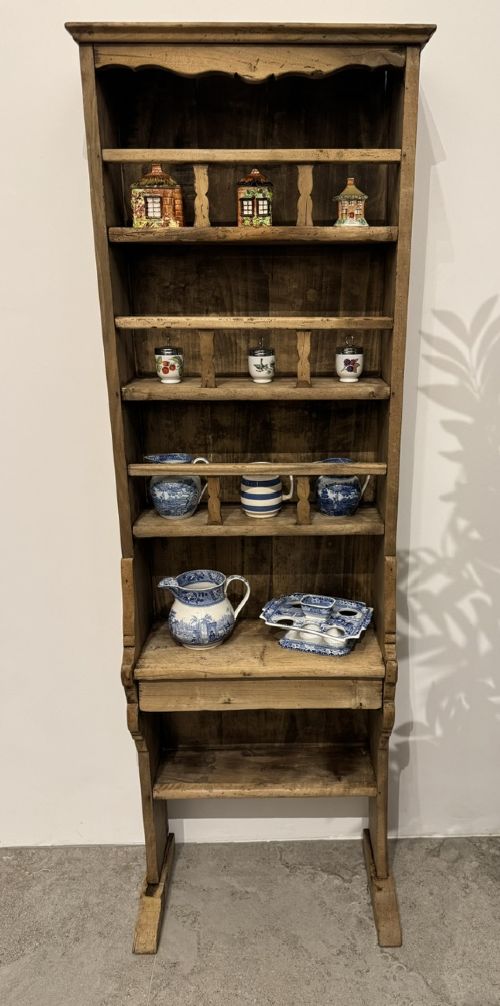
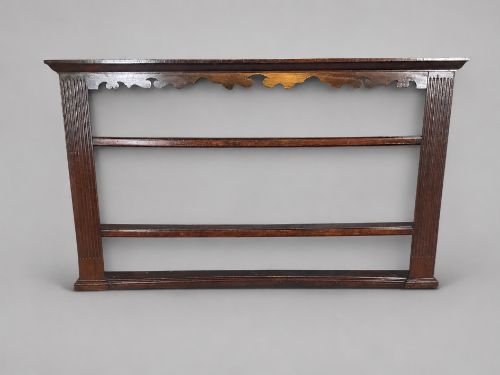
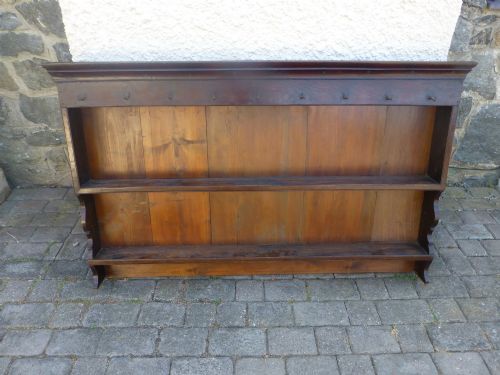
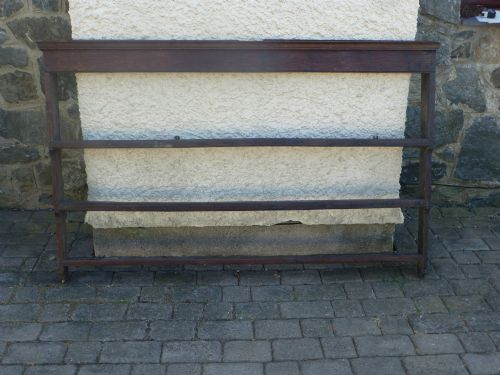
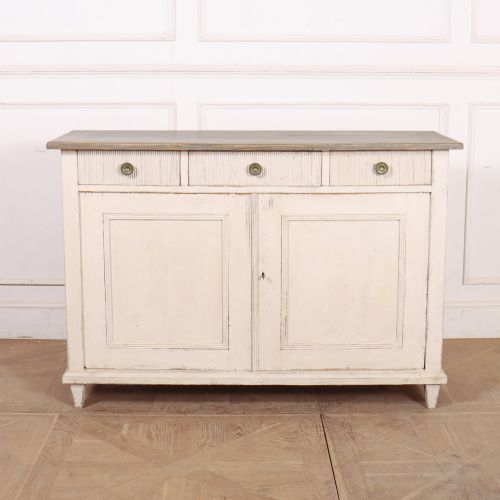
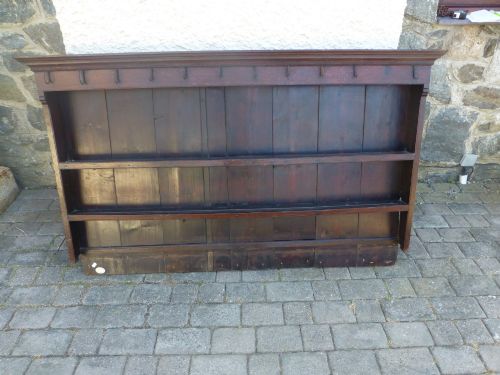
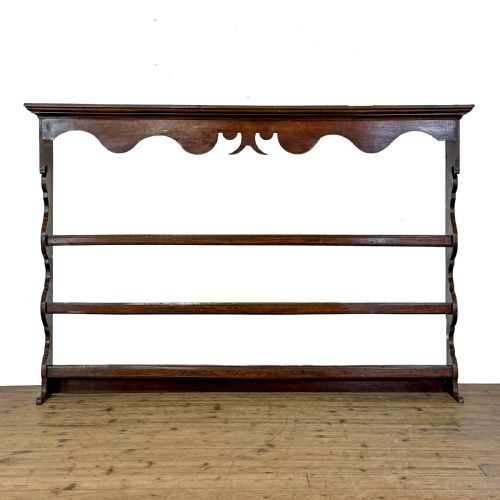
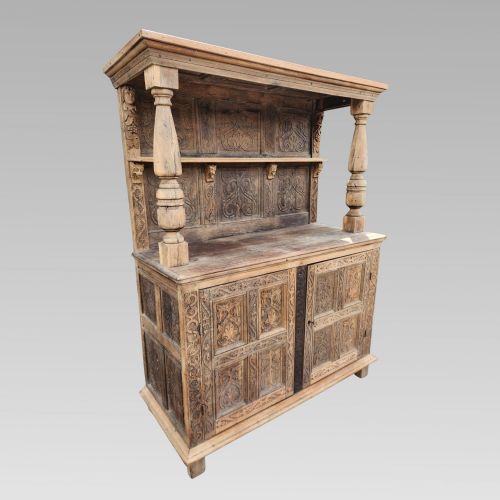
A rustic wooden dresser top functions primarily as a wall-mounted plate rack or hanging shelf designed to display earthenware and kitchenalia. Buyers searching for a rustic wooden dresser top seek these upper sections independently from their matching lower bases.
The selections available span several centuries, with particular emphasis on 18th century and 19th century examples. These pieces originate from various regional traditions including English country, Irish country, and French country workshops.
Forms range from simple pine wall shelves to substantial oak delft racks intended to secure plates safely against timber backing boards. Most pieces reflect utilitarian country origins rather than formal urban cabinetmaking.
Materials and construction methods
Makers relied principally on solid oak and pine, shaping timbers with hand tools to form practical shelving and plate grooves. Iron and wrought iron hardware occasionally appears in the form of hanging brackets or structural strapwork.
Surfaces often show layers of early paint or original waxed finishes accumulated through decades of domestic use. Construction relies on pegged joints and simple housing dadoes suited to regional furniture traditions.
Rustic Wooden Dresser Top Retail Price Guide 2026
Typical asking prices for rustic wooden dresser top among the pieces listed under this phrase on Sellingantiques today, from the lower quarter to the upper quarter. They describe what is for sale here now, not the wider market.
Regional styles represented include English, Irish, French, and Scottish vernacular traditions, taking the form of wall shelves, plate racks, and server tops.
Factors that distinguish individual pieces
Quality rests heavily on the integrity of the original timber and the presence of untouched period surfaces rather than modern refinishing. Untouched painted finishes or deeply patinated waxed oak command stronger interest among purists.
Proportion and architectural detailing also set better examples apart from plain utility shelving. The presence of shaped friezes, original plate retaining grooves, and sturdy structural framing elevates a piece above standard workshop output.
The Rustic Wooden Dresser Top Glossary
- Delft rack
- A wall-mounted wooden shelf featuring narrow ledges and vertical slats specifically designed to display ceramic plates upright.
- Potboard
- A lower open shelf integrated into dresser designs, though the term occasionally relates to regional base configurations associated with upper racks.
- Server
- A utilitarian side table or low sideboard format found within country dining spaces and kitchens.
- Patina
- The surface sheen and colour acquired by wood and paint through age, handling, and environmental exposure over centuries.
Rustic Wooden Dresser Top: Frequently Asked Questions
How do I hang a heavy wooden dresser top?
These wall-mounted racks require secure fixing directly into masonry or substantial wall studs due to the heavy weight of solid oak and pine timbers.
Professional installation using appropriate load-bearing brackets ensures the piece safely supports the added weight of displayed ceramics.
Were these tops originally joined to bases?
Many upper racks were manufactured as independent wall-hanging units rather than permanent fixtures attached to lower servers or buffets.
Documented examples show distinct hanging points and finished cornices intended for direct wall display.
How should I clean antique pine and oak?
Maintenance requires only a soft, dry cloth to remove dust without disturbing the historic wax or dry painted surfaces.
Harsh chemical cleaning agents and modern liquid polishes strip the valuable patina accumulated over generations.
What indicates an 18th century date?
Early construction methods such as hand-cut peg joints, irregular board widths, and period tool marks help establish proper dating.
Surfaces displaying genuine early paint layers or deep wax accumulation further corroborate extended age.