



Rustic Wood Workbench
These heavy timbers and utilitarian frames bring a rustic wood workbench into contemporary kitchens and halls as practical tables.
Rustic Wood Workbench
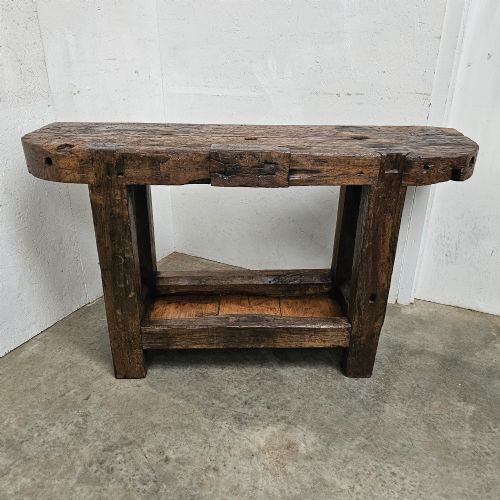
A rustic wood workbench serves as a heavy-duty surface originally built for trades like carpentry, cheesemaking, and tailoring, which now functions domestically as a console, kitchen table, or coffee table. These pieces emerge predominantly from the nineteenth century alongside early twentieth-century examples, reflecting utilitarian work spaces across England, Wales, France, and Sweden.
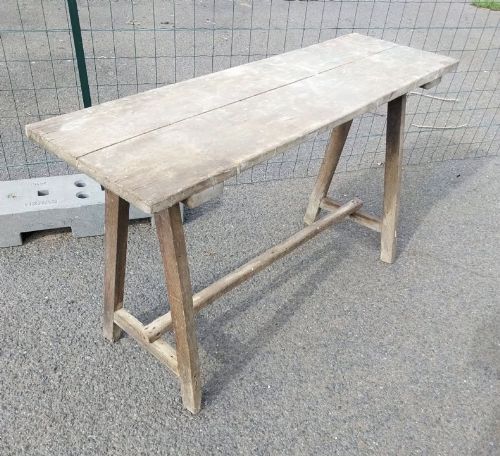
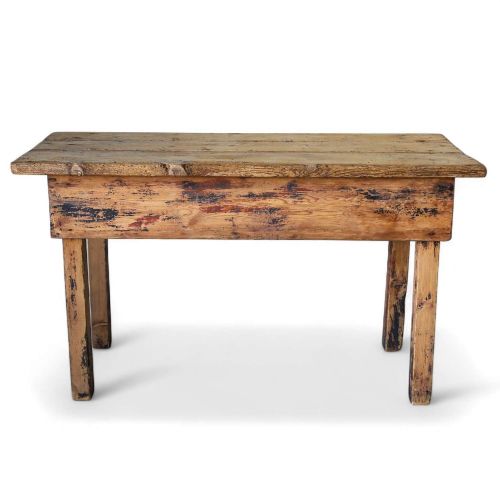
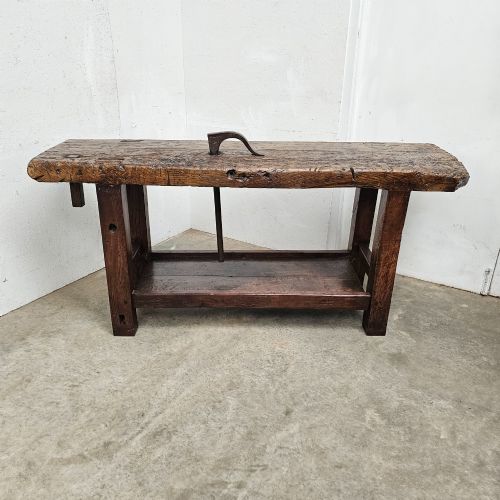
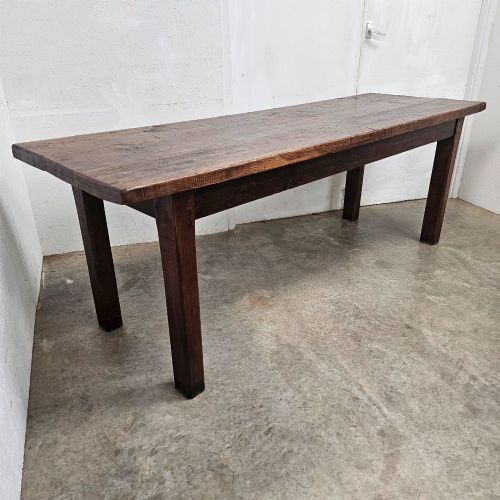
The version most commonly met on this page is the French provincial or country workbench, often featuring a thick top of pine, oak, elm, or sycamore equipped with a working vice or clamping bar. Alongside these direct workshop survivors, buyers encounter related utilitarian forms such as trestle tables, sorting tables, dairy tables, and tavern tables.
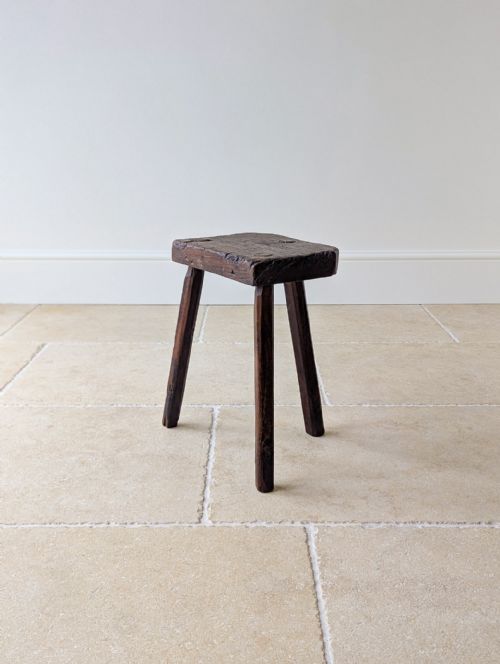
The forms span lengths from compact primitive benches to substantial country house examples exceeding eight feet, retaining the scars and patination of actual manual labour. Iron vices, wooden screws, and trestle bases ground each piece in its original industrial or agricultural context.
How they were made
Constructed primarily from sturdy domestic hardwoods and softwoods including pine, oak, elm, ash, sycamore, beech, and poplar, these benches rely on thick slabs designed to withstand heavy downward pressure. Joinery is straightforward and robust, utilising heavy stretchers, pegged tenons, and solid framing to prevent movement during use.
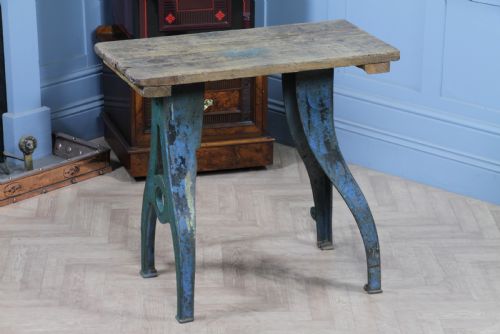
Mechanisms form an integral part of the construction, incorporating cast iron bases, wooden clamping bars, and functional vices operated by threaded wooden or metal screws. Surfaces show the results of manual scrubbing, planing, and centuries of daily wear rather than fine cabinet finishes.
Many surfaces still bear the deep ink stains and groove scars left by nineteenth-century artisans.
What varies in quality
The distinction between ordinary utility and superior quality rests in the selection of timber and the proportion of the base. Dense native hardwoods like oak and elm command greater presence, while scrubbed sycamore and bleached pine display nuanced grain and historical patination.
Integrity of the original mechanisms elevates a piece, particularly intact wooden vices, functioning clamping bars, and heavy cast iron machine bases. Untouched surfaces bearing the deep gouges and ink stains of past artisans hold greater character than stripped or overly sanded timber.
The Rustic Wood Workbench Glossary
- Clamping bar
- A heavy wooden beam integrated into the workbench top, used alongside a screw mechanism to hold workpieces steady during planing or sawing.
- Trestle table
- A table consisting of two or more support frames connected by a horizontal beam, commonly found in French and English country workshops.
- Scrubbed
- A description of softwood or hardwood surfaces repeatedly washed with water and sand or soap, leaving a pale, clean grain texture.
- Primitive
- A term for furniture made with basic tools and straightforward construction methods, prioritizing raw utility over refined decorative style.
- Cobblers bench
- A low specialised workstation featuring compartmentalised ledges for tools and leatherworking equipment, adapted today for low coffee table use.
Rustic Wood Workbench: Frequently Asked Questions
How are these workbenches used today?
These sturdy tables function brilliantly as kitchen islands, hallway consoles, or dining surfaces where a heavy, tactile centrepiece is desired. Their durable tops readily handle daily family life.
Lower variants and carpenter's benches also serve as low coffee tables or sideboards, retaining their original vices and tool wells as sculptural details.
What woods were used for these tables?
Constructors selected resilient local timbers capable of absorbing heavy blows and constant friction. Pine, oak, elm, ash, sycamore, beech, and poplar appear frequently.
Surfaces are often scrubbed pale or left with natural wax finishes that highlight decades of workshop use and historical spills.
How do I date a rustic workbench?
Dating relies on construction methods, timber choice, and specific hardware markers like hand-cut screws or cast iron machine bases. Pieces span the nineteenth century and early twentieth century.
Regional variations also offer clues, such as specific French trestle proportions or Welsh dairy table framing styles.
Are the vices and clamps still functional?
Many wooden and iron vices retain their threaded screws and operational capacity, though some are fixed in position for safety and stability as furniture. Working mechanisms add authenticity.
Buyers should examine the specific listing details to determine if the clamping bar or vice moves freely.