

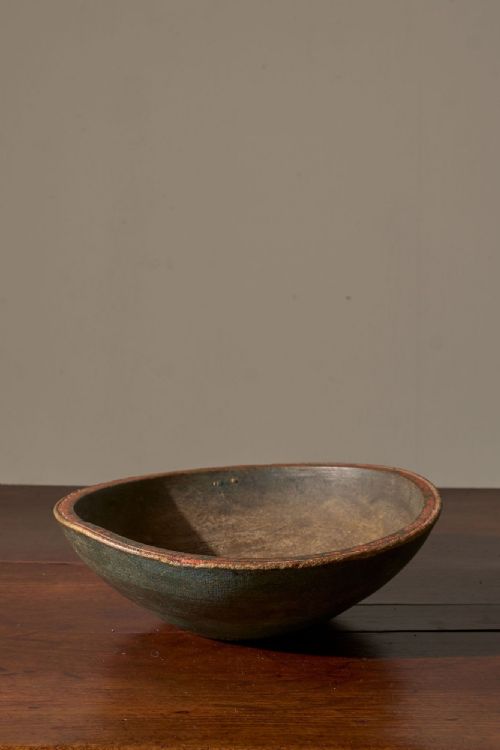


Rustic Timber Dough Bowl
A rustic timber dough bowl brings tangible domestic history into a modern room through honest, utilitarian craft.
Rustic Timber Dough Bowl
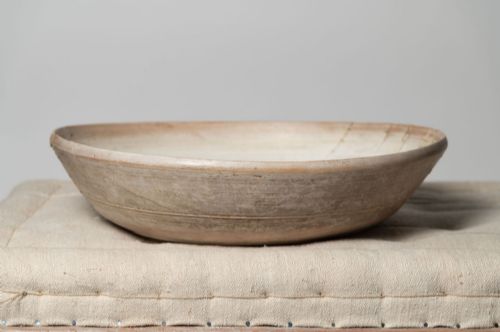
A rustic timber dough bowl represents a practical vessel shaped for domestic food preparation, originating from rural households across Europe and Britain. These hollowed implements served essential daily purposes in kitchens and dairies before modern manufacturing took hold. Buyers search for these items to introduce authentic texture and warmth into contemporary spaces.
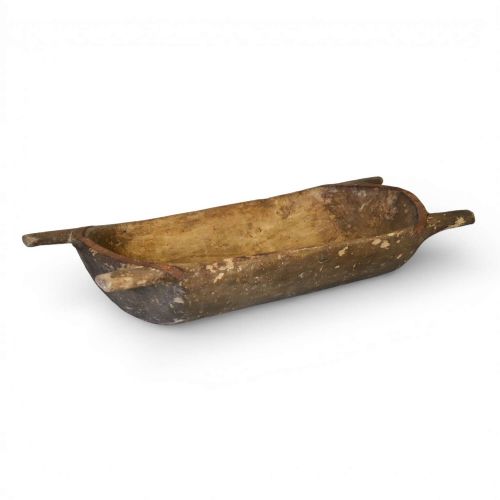
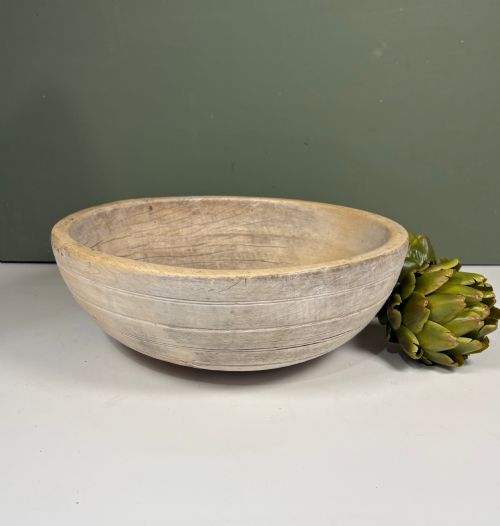
The selection on this page centres on wooden bowls and dairy bowls spanning the eighteenth century through to the early twentieth century. Common forms include large kneading troughs, dug-out vessels, and circular dairy bowls shaped from native timbers. Swedish and French country examples sit alongside English pieces, each showing the marks of heavy domestic labour.
How they were made
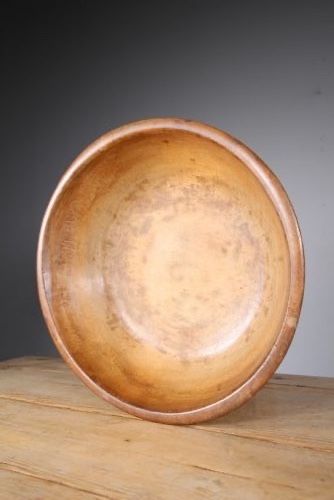
Woodturners and country craftsmen shaped these vessels using solid timbers such as sycamore and pine, often digging them straight from green logs. Sycamore provided a dense, tight-grained surface that resisted splitting when exposed to moisture and flour during daily kitchen use. Iron fixings occasionally reinforced heavy forms, while selective applications of paint finished specific regional variants.
Hand tools such as gouges and adzes left visible chisel marks across the interiors and exteriors of dug-out bowls. Makers smoothed surfaces through repeated scraping and polishing rather than mechanical sanding, resulting in undulating walls that reveal the natural movement of the wood.
Listings feature items spanning the eighteenth century to nineteen-hundred, utilising pine and sycamore woods across English, French, and Swedish origins.
What varies in quality
Quality in a rustic timber dough bowl rests primarily in the depth of the carving and the integrity of the surviving timber. Vessels that retain their original unpainted surfaces and deep patinas command greater interest from collectors. The balance of the proportions and the crispness of the hand-carved edges distinguish superior examples from plain utility pieces.
The presence of early painted finishes on specific Swedish pieces elevates the visual distinction of the object. Substantial scale and minimal structural alteration over centuries of use separate exceptional vernacular survivals from more common utilitarian bowls.
The Rustic Timber Dough Bowl Glossary
- Treen
- Small handmade wooden household objects. These items range from domestic bowls to spoons and kitchen utensils carved before the Victorian era.
- Patina
- The surface sheen developed through decades of handling, scrubbing, and natural oxidation. This characteristic layer distinguishes old wood from recently stripped timber.
- Dairy bowl
- A wide, shallow wooden vessel utilised for setting milk and skimming cream. Sycamore was frequently chosen for these items due to its clean, non-porous nature.
- Dug out
- A method of construction where a single solid log is hollowed into a vessel. This technique produces bowls of considerable strength without joints or glue.
Rustic Timber Dough Bowl: Frequently Asked Questions
What is a rustic timber dough bowl used for today?
These bowls serve entirely decorative purposes in modern interiors, often displayed on large tables, sideboards, or kitchen islands to hold fruit, dried botanicals, or small objects. Their deep wells and warm wooden tones provide visual weight and texture within a room.
While their original function involved kneading bread or processing dairy, placing heavy liquids or damp food inside modern displays can raise the grain and damage historic surfaces.
How do I date an antique wooden bowl?
Dating relies on observing the tool marks left by the maker, the wood species utilised, and the depth of the surface patina accumulated over generations. Eighteenth-century examples often display distinct regional paint or heavier adze work compared to later Victorian and early twentieth-century pieces.
Comparing the form and timber characteristics against documented vernacular pieces helps establish the likely period of origin.
What woods were used to make these bowls?
Sycamore and pine appear most frequently among these listings, chosen by country makers for their local availability and working properties. Sycamore was particularly favoured for dairy vessels because the tight grain resists absorbing liquids.
Solid wood construction ensures that each piece reacts differently to environmental conditions, developing subtle splits and mellowing in colour over the decades.
How should I care for a wooden dough bowl?
Maintenance requires keeping the timber away from direct heat sources, strong sunlight, and excessive moisture changes that cause wood to crack. Dusting with a dry cloth is generally sufficient to preserve the surface.
Applying a neutral beeswax or mineral oil is occasionally practiced by collectors to nourish dry timber, though historic patinas should be preserved without aggressive cleaning.