

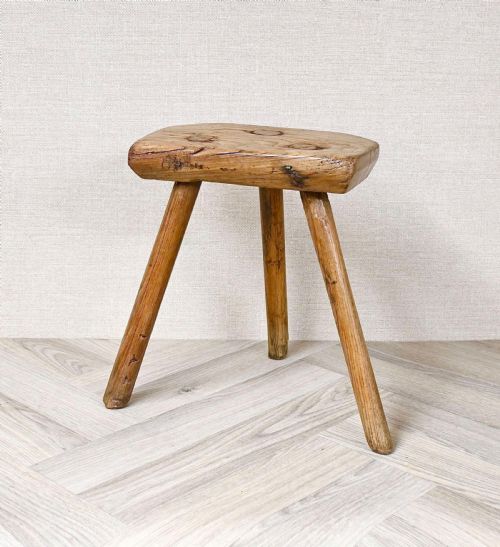


Rustic Three Legged Stool
A rustic three legged stool is a sturdy utilitarian seat built from timber, prized for its honest craft and stable stance on uneven floors.
Rustic Three Legged Stool
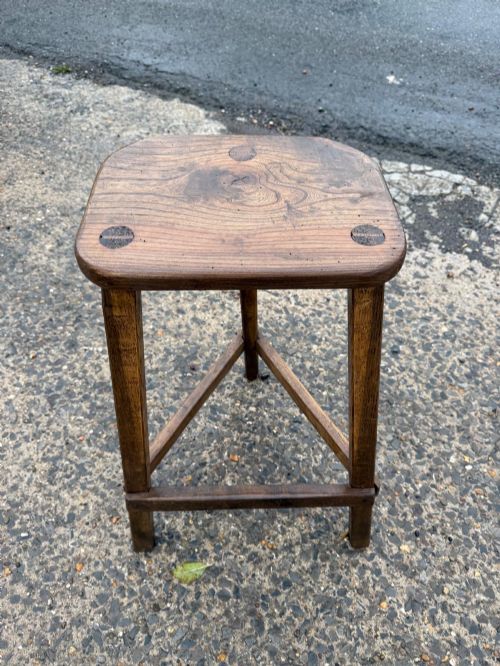
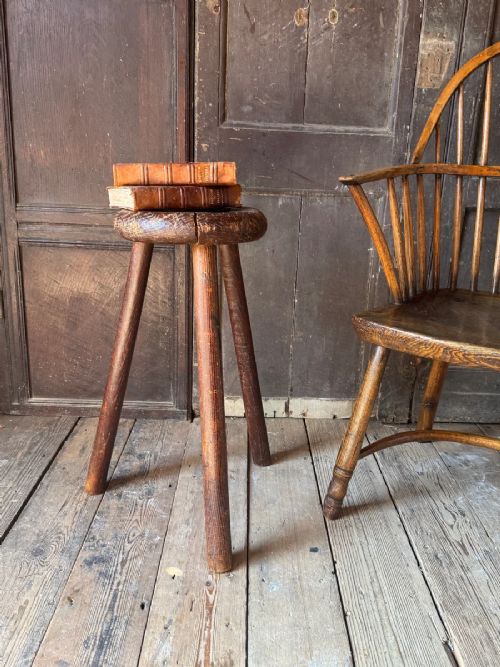
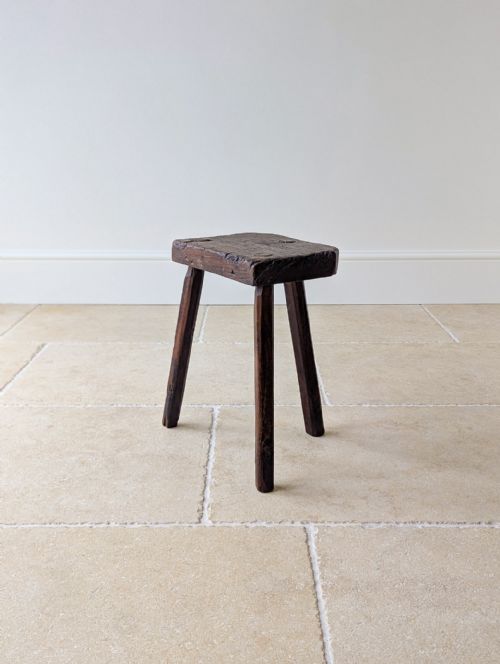
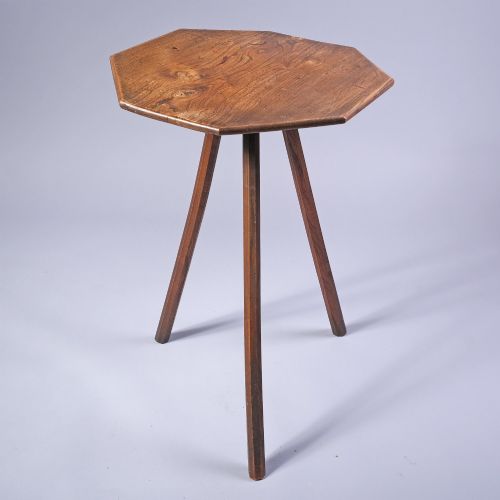
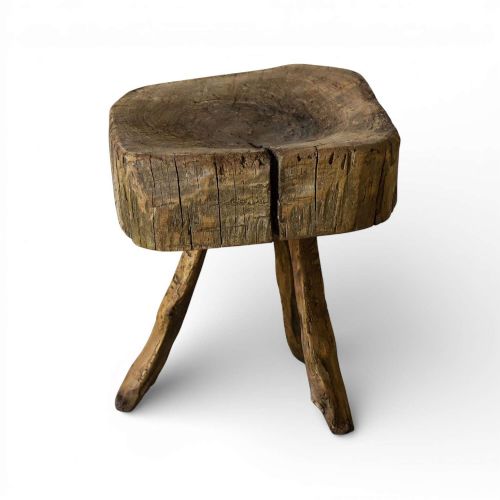
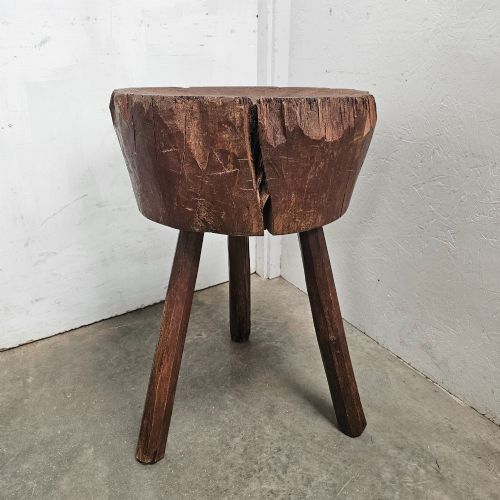
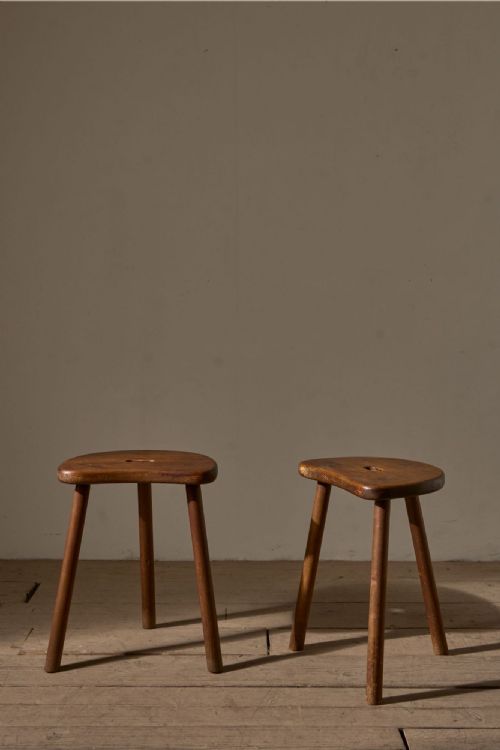
A rustic three legged stool takes many forms across the 18th century, Victorian period, and 19th century. Buyers seeking a rustic three legged stool encounter domestic milking seats, artisan work stools, and small occasional tables rooted in vernacular country traditions.
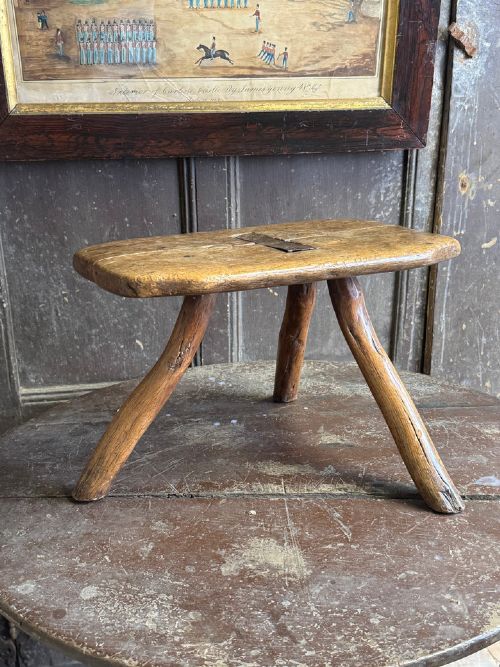
The pieces on this page originate from diverse workshops and regions, spanning British styles, French country designs, and Arts and Crafts experiments. Form follows function closely, resulting in round tops supported by three splayed legs wedged firmly into the seat.
How they were made
Local timbers dictate the construction, with elm tops favoured for their resistance to splitting, paired with ash, oak, pine, or beech for the legs. Blacksmiths provided iron braces or strap repairs when working timber split under heavy use.
Joinery relies on simple, direct methods such as through-wedged tenons where leg tops protrude straight through the seat. Surfaces often show the marks of adzes, drawknives, and primitive lathes rather than factory sanding.
One Scottish Victorian stool carries a carved pokerwork inscription reading 'Touch me wha daur'.
What varies in quality
Quality rests in the character of the timber grain, the thickness of the solid seat slab, and the balance of the splayed legs. Examples retaining original tool marks and honest workshop repairs hold greater visual weight than sterile, over-restored pieces.
Proportion and stance determine the success of the piece, as shorter milking forms differ entirely from taller artisan seating. Original surfaces with genuine patination distinguish superior survivors from later interpretations.
The Rustic Three Legged Stool Glossary
- Vernacular
- Everyday objects built by local craftspeople using regional materials without academic architectural pretension. These pieces reflect traditional local needs rather than fashionable metropolitan tastes.
- Splayed
- Legs angled outwards from the centre to provide a wider, more stable base on uneven stone floors. This triangular geometry prevents rocking.
- Elm
- A dense, interlocking timber historically chosen for stool seats because it resists splitting when subjected to constant movement and pressure. Its wild grain pattern ages to a deep hue.
- Drawknife
- A woodworking hand tool pulled towards the user to shave strips of wood when shaping legs and seats. It leaves subtle, undulating facets across the timber.
Rustic Three Legged Stool: Frequently Asked Questions
How do I style a three-legged stool at home?
Place one beside a chair as a small surface for a book or cup, or use it simply as an unadorned sculptural object. Their compact footprint fits easily into corners and narrow hallways.
Avoid placing them in damp areas, as old timber reacts poorly to humidity changes. Treat the surface with a gentle wax to maintain the existing finish without sealing the wood.
How can I tell the period of a stool?
Examine the tool marks on the underside and legs to understand how the maker shaped the timber. Hand-auled holes and wedges indicate older vernacular methods rather than modern mechanical production.
Check the type of wood and the wear patterns around the foot sockets. Edges rounded by generations of handling point towards older domestic use.
Why do these stools have three legs instead of four?
Three points determine a plane, meaning a three-legged stool naturally rests firmly on irregular surfaces without rocking. This geometric certainty made them ideal for dairy floors and outdoor ground.
Four legs require a completely flat floor to remain steady, which rural workspaces rarely provided. This makes the tripod format a practical necessity of country life.