

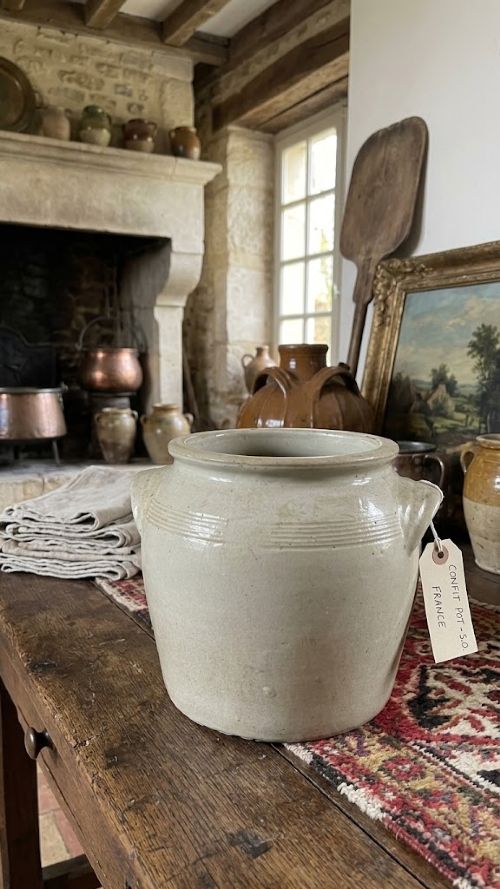
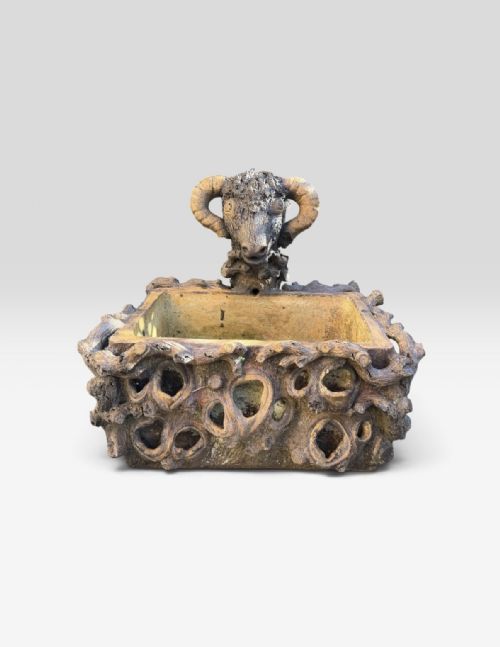


Rustic Stoneware Pot
These rustic stoneware pot pieces bring honest utility and earthy character into a room.
Rustic Stoneware Pot
A rustic stoneware pot is a functional vessel designed for storage, cooking or planting, carrying the marks of everyday use from past centuries. When searching for a rustic stoneware pot, buyers encounter diverse forms ranging from confit jars and cooking dishes to large garden planters and walnut oil jugs.
The pieces listed on this page originate from the eighteenth and nineteenth centuries, spanning French provincial and Victorian rustic styles. Most examples lean towards utilitarian French country forms and heavy garden vessels made to endure.
How they were made
Potters shaped these items from clay, earthenware, and terracotta, utilising traditional throwing and hand-building techniques. Salt-glazing was applied to create durable, impermeable surfaces suitable for heavy kitchen and garden duties.
Makers finished many surfaces with glazes in green and earthy tones, resulting in tactile finishes that show the slight irregularities of handmade production.
Rustic Stoneware Pot Retail Price Guide 2026
Typical asking prices for rustic stoneware pot among the pieces listed under this phrase on Sellingantiques today, from the lower quarter to the upper quarter. They describe what is for sale here now, not the wider market.
Materials in these listings include terracotta, earthenware, stoneware, and salt-glazed stoneware.
What varies in quality
Quality in these pieces rests in the integrity of the form and the depth of the glaze rather than sheer uniformity. The best examples show a harmonious balance between their utilitarian purpose and the accidental beauty left by the kiln.
Wear and surface character distinguish a superior vessel from a plain one, with age-softened textures and intact glazes holding greater visual weight.
The Rustic Stoneware Pot Glossary
- Confit jar
- A traditional French pot once used for preserving meats, featuring handles and often a partially glazed body. These vessels were essential fixtures in provincial farmhouses.
- Salt-glazed stoneware
- Pottery fired at high temperatures with salt thrown into the kiln, producing a characteristic pitted, orange-peel texture. This finish provides exceptional durability against moisture.
- Faux bois
- An artistic technique imitating wood grain, applied here to ceramic and terracotta garden planters. This style reflects nineteenth-century romanticism towards the natural world.
- Terracotta
- Fired unglazed or glazed clay varying in colour from orange-red to brown. It forms the porous foundation for many traditional garden and kitchen containers.
Rustic Stoneware Pot: Frequently Asked Questions
How were these pots originally used?
These vessels served practical roles in rural life, from storing walnut oil and confit meats to holding kitchen ingredients and garden plants.
Their robust construction allowed them to withstand daily demands in larders, kitchens, and courtyards across generations.
Where do these pieces come from?
The available selection originates primarily from French provincial workshops and Victorian makers, reflecting distinct regional domestic traditions.
Potters shaped local clays to meet the specific storage and agricultural needs of their communities.
How do I care for antique pottery?
Keep these pieces away from freezing temperatures if used outdoors, as residual moisture can crack the porous clay.
Clean surfaces gently with a soft cloth and avoid harsh detergents that might harm historic glazes.
Can I use these planters outside?
Many of these vessels, such as jardiniere bins and strawberry planters, were built for garden use and handle outdoor settings well.
Owners should bring sensitive terracotta pieces indoors during harsh winter weather to preserve the material.