

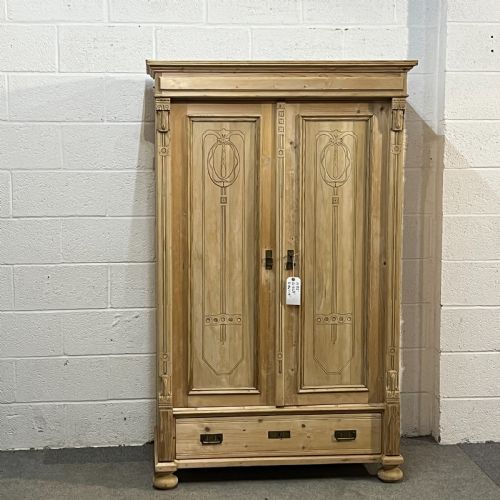


Rustic Standing Cupboard
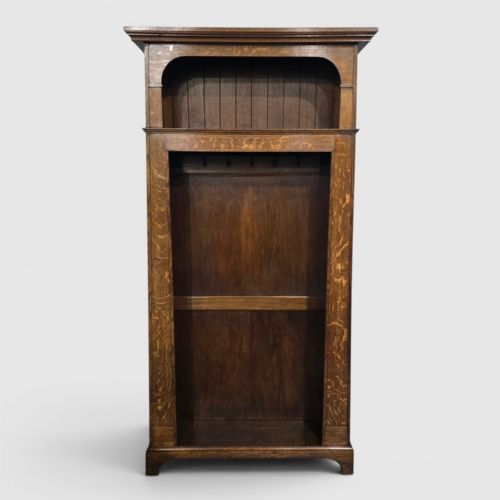
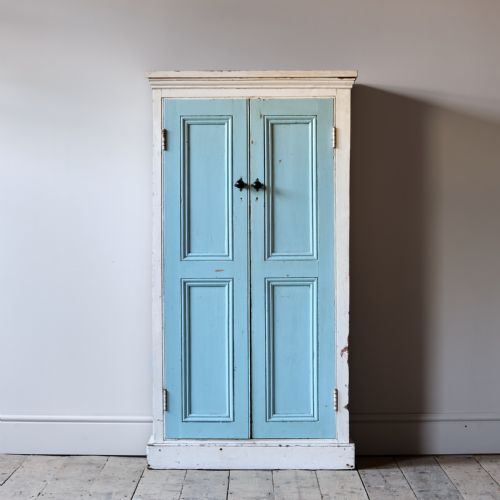
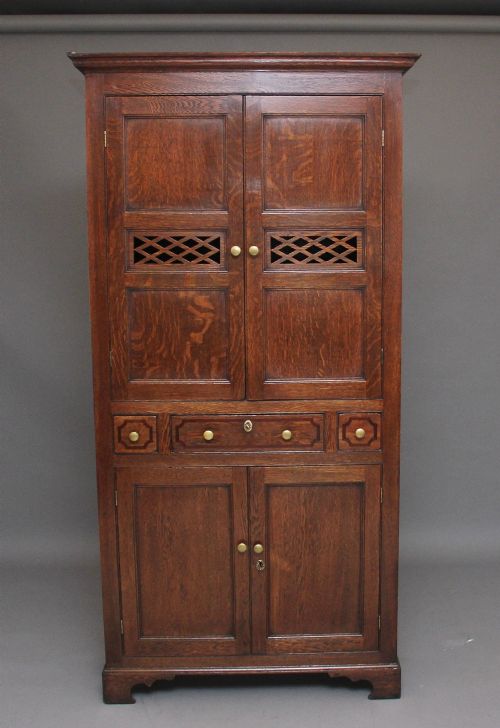
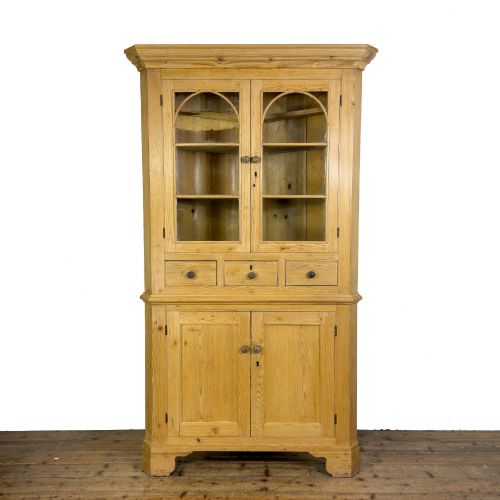
When you search for a rustic standing cupboard, you are looking at substantial timber storage pieces originating from country workshops and domestic interiors.
Rustic Standing Cupboard
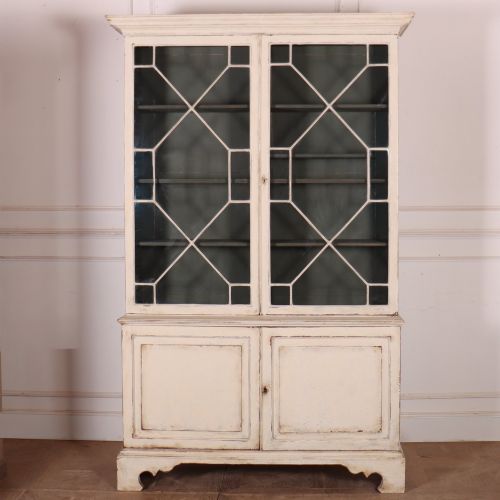
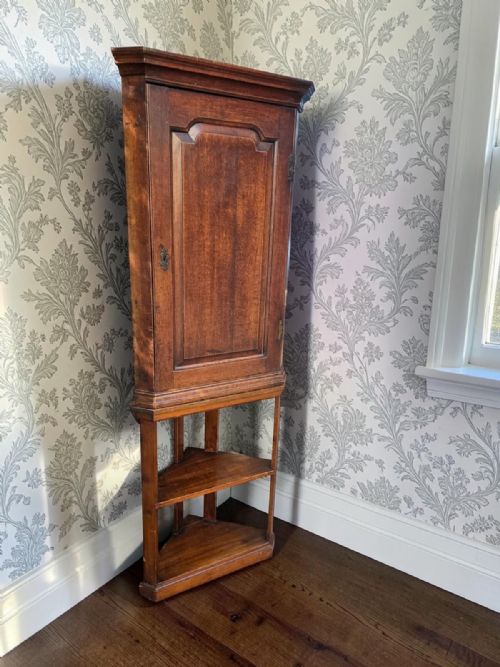
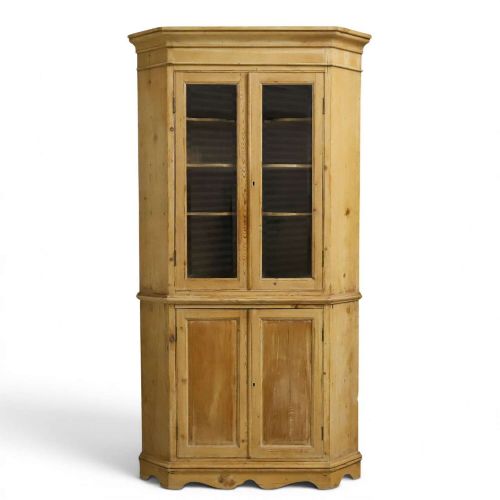
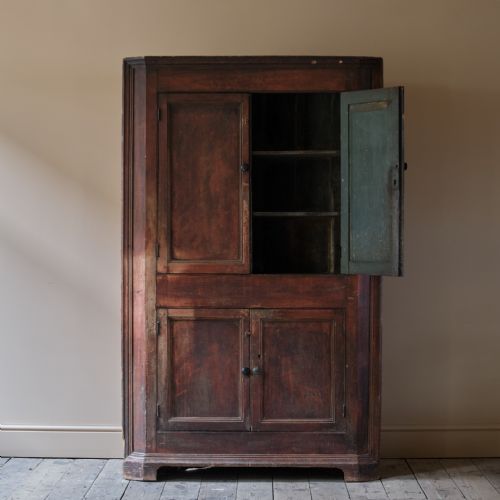
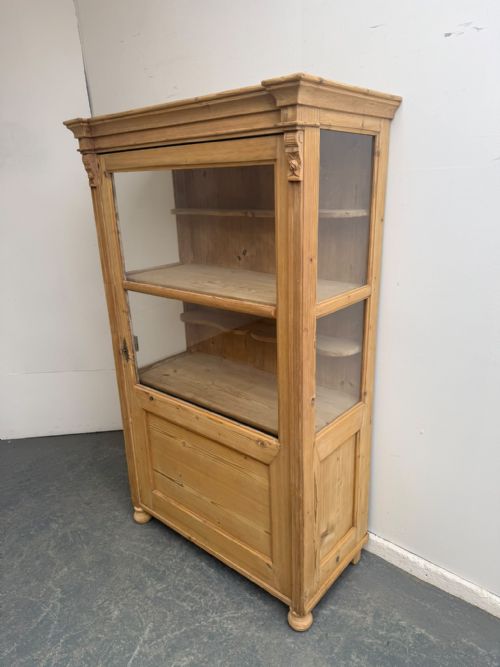
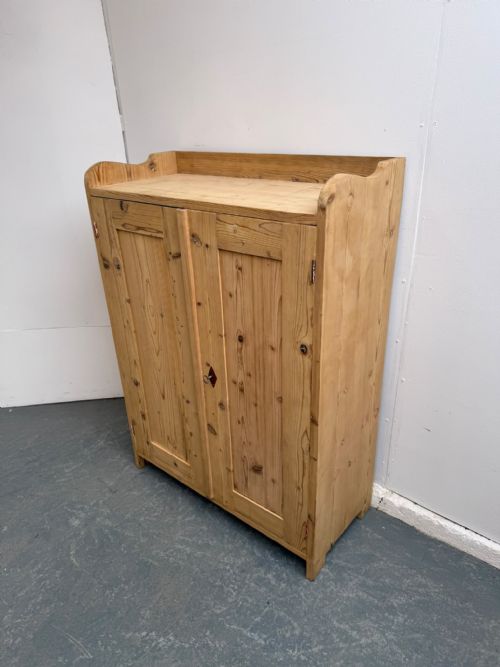
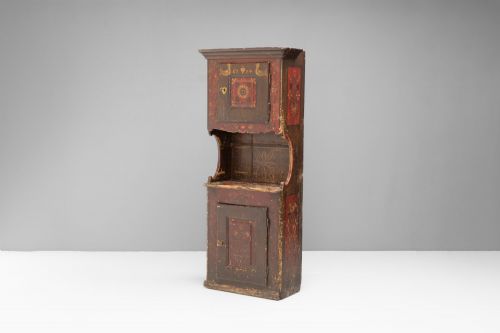
A rustic standing cupboard encompasses floor-standing storage forms designed for domestic utility, frequently appearing as corner cabinets, food cupboards, and two-part display cabinets. The pieces seen here span from the 17th century through the Victorian era and into the early 20th century, capturing centuries of rural craftsmanship.
The most common examples you will encounter on this page are pine and oak cupboards, often showing the marks of long daily use in provincial kitchens and halls. Regional variations include Welsh vernacular pieces, English country furniture, and French provincial designs.
Forms range from tall corner cupboards fitting neatly into domestic angles to wide storage cupboards and glazed display cabinets intended to hold provisions, linens, or household wares.
How they were made
Construction relies heavily on solid timber, with oak and pine forming the structural backbone of nearly every piece. Joinery methods include panelled doors, pegged joints, and dovetailed drawers, supported by iron or brass hardware such as original blacksmith locks and hinges.
Surfaces frequently show historical treatments including original paint, wax, or stripped pine finishes. Many items utilise a two-part form, separating top display sections from lower storage bases for ease of transport.
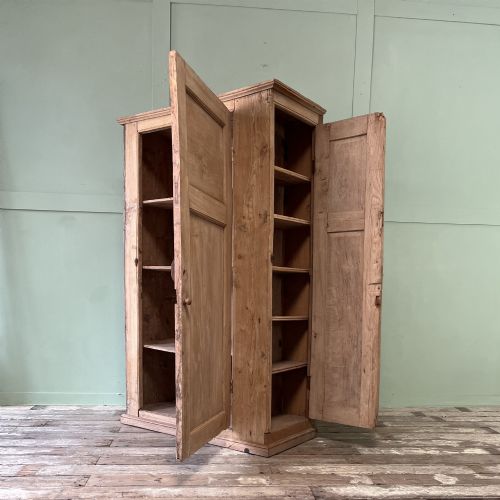
One extraordinary 17th-century survival is a dug-out oak metamorphic cupboard.
What varies in quality
Quality in a rustic standing cupboard rests upon the integrity of the timber and the survival of original surface finishes. Pieces retaining their early paintwork, hand-forged ironwork, or untouched patination stand apart from those stripped or heavily altered over time.
The sophistication of the joinery and the proportions of the carcass dictate the standing of a piece within its regional tradition. Well-balanced cornices, original panelled doors, and robust internal shelving elevate utilitarian forms into examples of fine country craftsmanship.
The Rustic Standing Cupboard Glossary
- Vernacular
- Furniture made by local craftsmen using regional traditions and readily available native timbers. These pieces prioritize practical domestic utility over grand academic design.
- Two-Part Form
- A construction method where a cabinet is built in separate upper and lower sections. This allowed easier movement through narrow cottage doorways.
- Food Cupboard
- A ventilated or enclosed cupboard designed for storing perishables before modern refrigeration. They often feature panelled or slatted doors for air circulation.
- Corner Cupboard
- A cabinet specifically shaped with a triangular footprint to fit flush into the corner of a room. They maximise floor space in smaller domestic interiors.
- Patina
- The surface sheen and colour acquired by wood and metal through decades of handling, polishing, and exposure to light. It serves as a visual indicator of age and authenticity.
Rustic Standing Cupboard: Frequently Asked Questions
What is a rustic standing cupboard?
A rustic standing cupboard is a floor-dwelling storage unit built from timbers like oak and pine for everyday domestic use.
These pieces originate primarily from country workshops and feature utilitarian forms intended for holding food, linens, or household items.
How were these cupboards used?
These cupboards served central roles in domestic life, housing provisions in kitchens, displaying china in dining spaces, or storing garments in halls.
Specialised forms like food cupboards utilised panelled or ventilated construction to keep contents fresh before modern refrigeration.
How do I care for antique pine?
Antique pine requires stable indoor humidity and protection from direct heat sources to prevent the timber from splitting or warping.
Maintain the surface by applying traditional beeswax periodically rather than modern synthetic polishes that can trap moisture.
How can I tell the period of a cupboard?
Dating relies on examining the construction methods, tool marks, joinery techniques, and hardware present on the carcass.
Early pieces often feature hand-forged iron hinges, pegged joints, and native hardwoods like oak, whereas later Victorian and 20th-century examples frequently employ machine-sawn pine.