
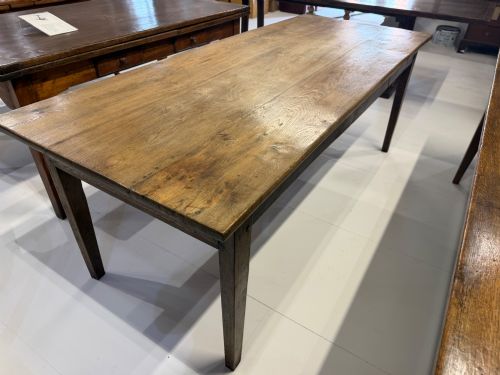
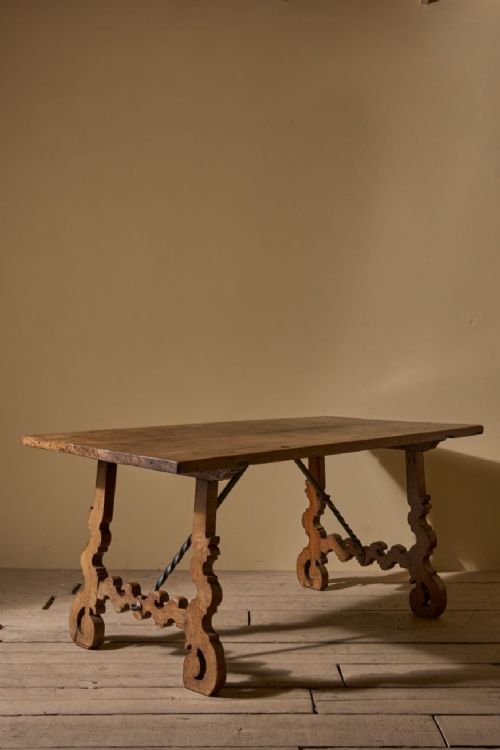
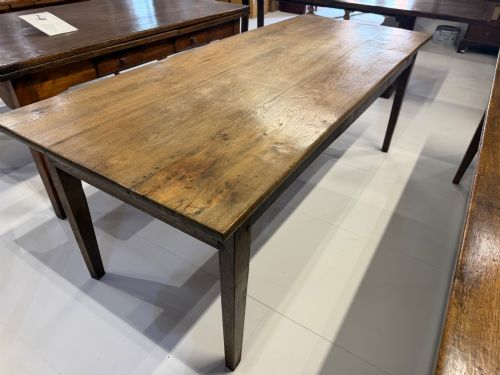
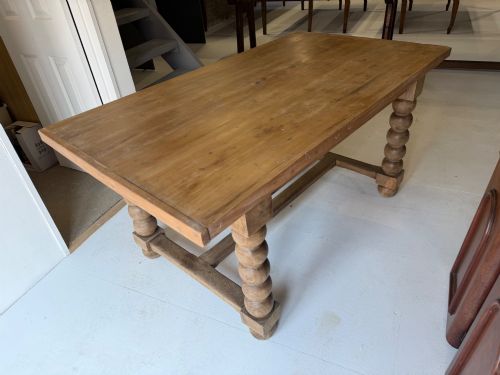
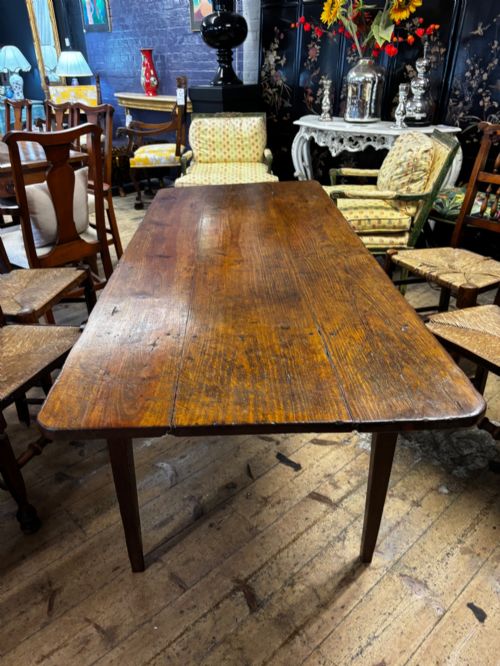
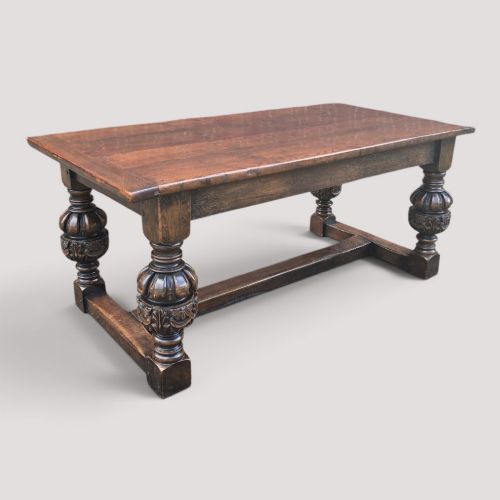
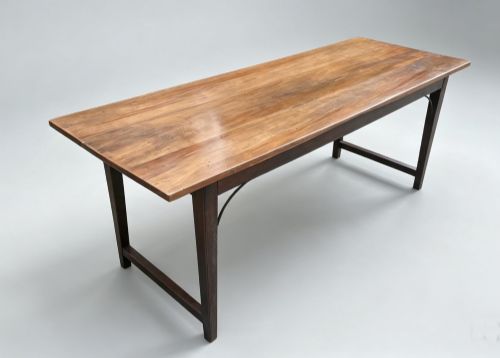
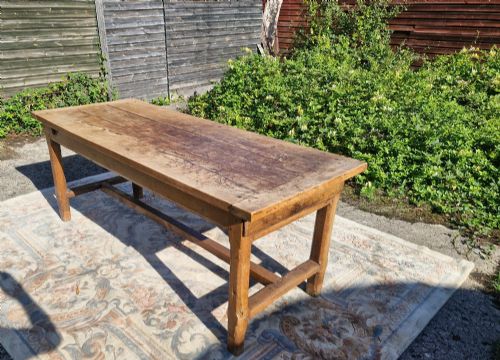
Rustic Refectory Dining Table
A rustic refectory dining table brings solid timber craft and long gatherings into the heart of the home.
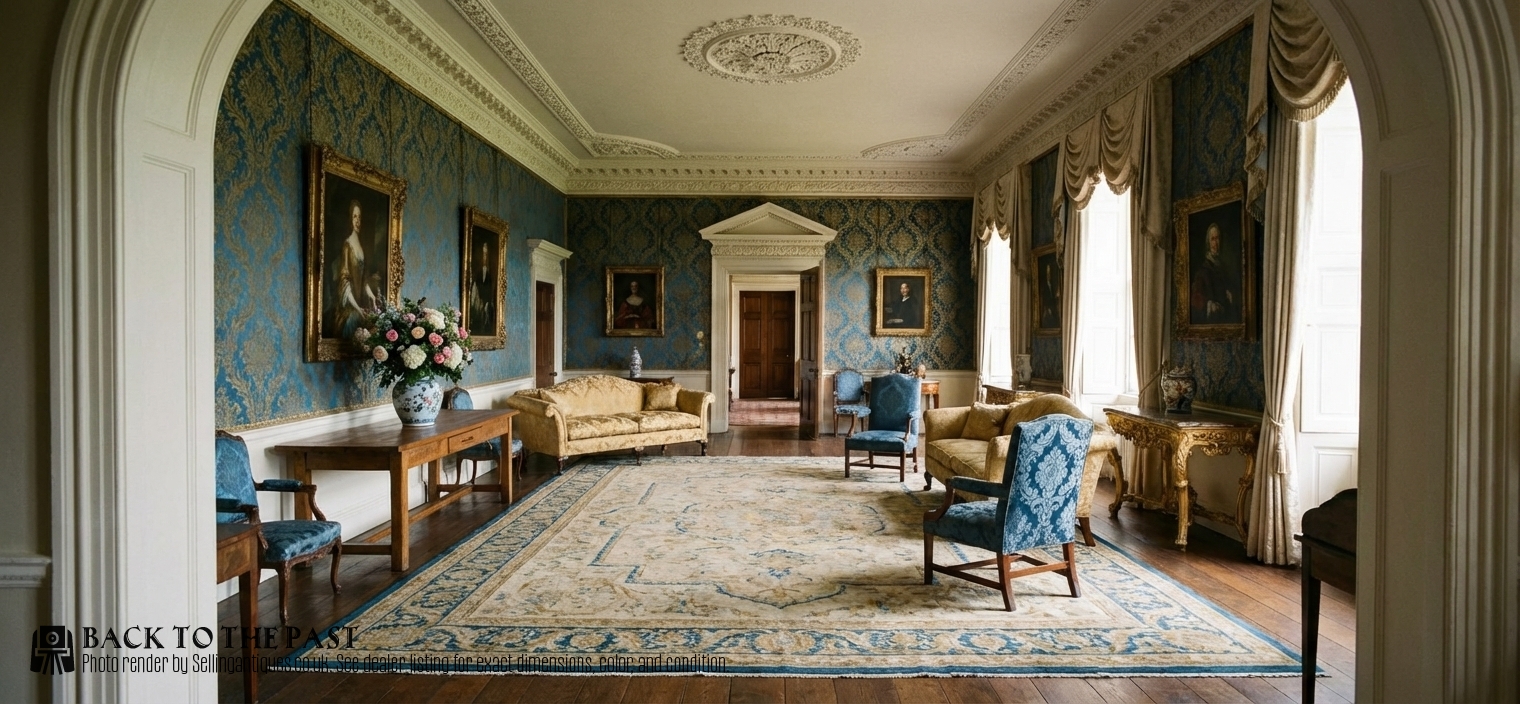
Rustic Refectory Dining Table
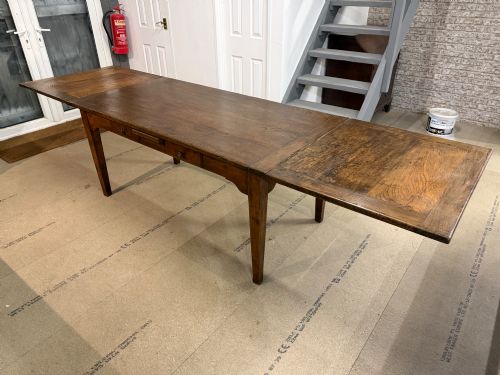
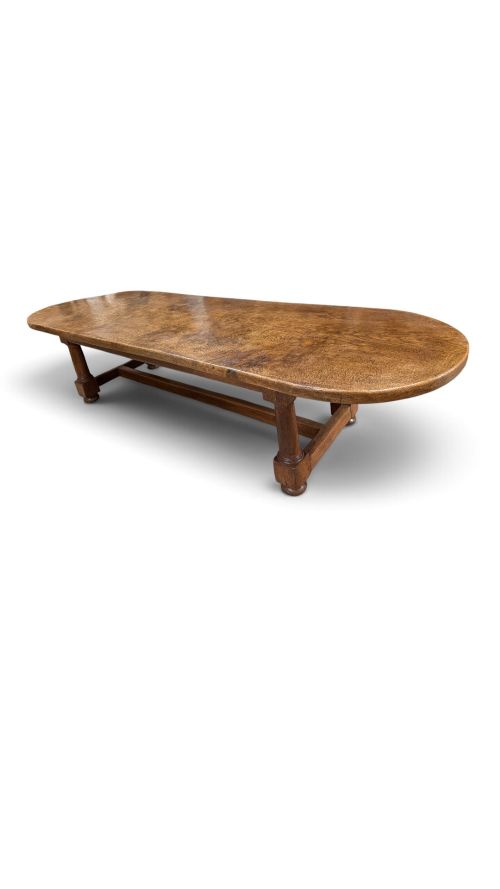
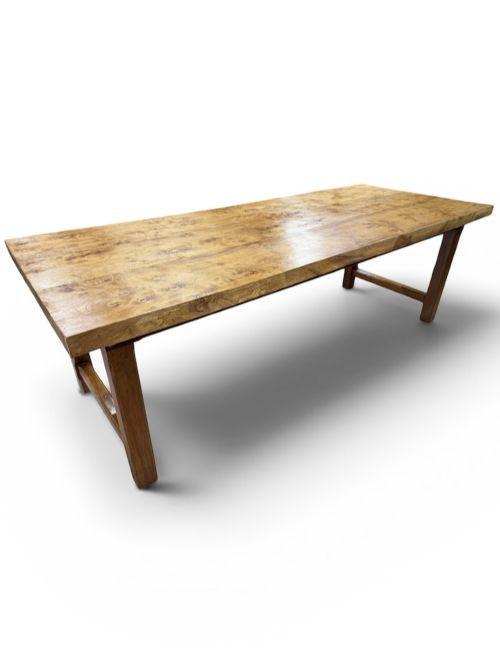
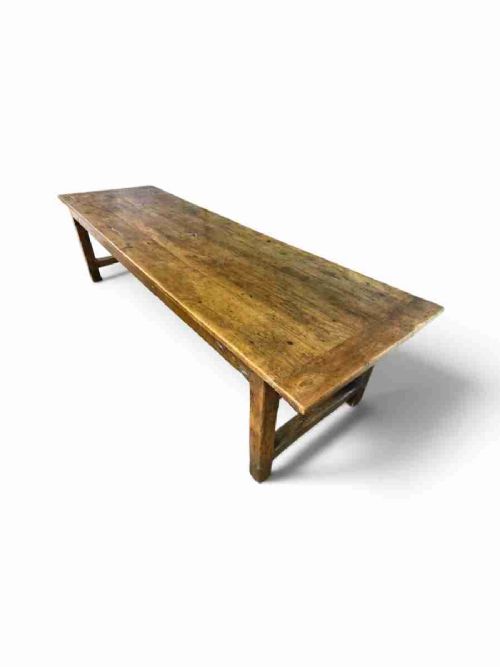
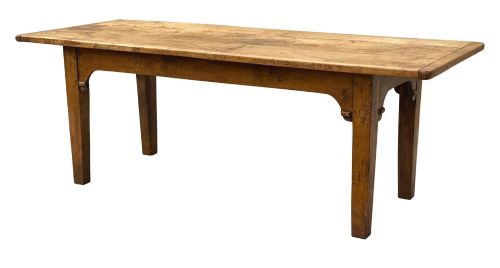
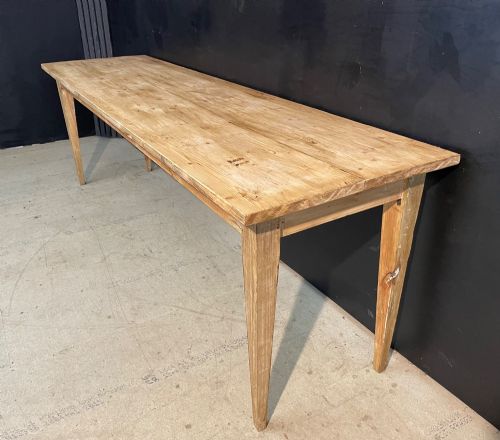
A rustic refectory dining table combines the heavy proportions of monastic dining boards with the honest utility of rural domestic furniture. When searching for a rustic refectory dining table, buyers encounter long timber tops supported by sturdy trestles, four legs, or central stretchers designed to seat large households. These pieces span centuries of country woodworking traditions across Britain, France, and Spain.
Most examples found here date from the eighteenth and nineteenth centuries, alongside early twentieth-century revivals built in oak, pine, elm, and fruitwood. Forms vary from simple single-plank tops to double-extending designs and French provincial kitchen boards. Benches and matching seating sets frequently accompany these tables to complete the traditional dining arrangement.
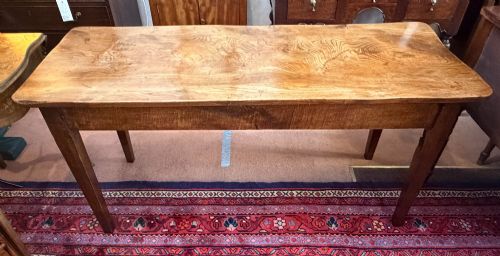
Makers drew on local timber stocks, meaning English pieces lean towards oak and elm while continental examples often utilise cherry, pear wood, or walnut. The styling ranges from unadorned Georgian utility to Edwardian heavy oak refectories with shaped trestle ends. Each piece reflects the functional requirements of communal dining spaces through straightforward carpentry.
How They Were Made
Joiners constructed these tables from sturdy domestic timbers including oak, pine, elm, beech, fruitwood, and sycamore. Planks were selected for width and strength, sometimes utilising a single wide board for the tabletop or joining several boards with pegged mortise and tenon joints.
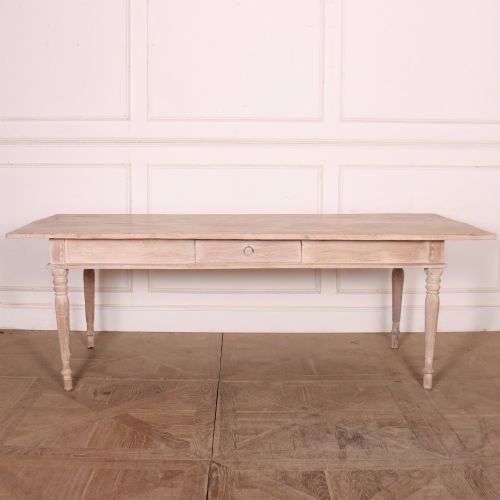
Undercarriages relied on robust framing, featuring tapered legs, bobbin turnings, or shaped trestle ends secured by heavy stretcher rails. Craftsmen fastened the structure with wooden trammels and iron hardware where extra bracing was required for daily use.
Surface finishes remained practical, typically consisting of wax polishing, oiling, or historic paint layers applied to protect the wood from kitchen wear. Over generations, scrubbing and daily use developed a rich patina across the tabletops and stretchers.
French provincial and Spanish baroque styles appear alongside traditional English farmhouse forms in the current selection.
What Varies in Quality
Quality rests primarily on the integrity of the timber selection and the retention of original structure. Tables fashioned from single-plank tops or dense hardwoods such as early oak and fruitwood exhibit superior longevity compared to later pine builds.
Proportion and undercarriage design also separate standard workshop output from finer examples. Balanced leg placement, substantial stretcher assemblies, and clean joinery demonstrate the maker's skill in supporting heavy loads without sagging.
The depth of patination and surface honesty dictate desirability. Tables retaining their original untreated timber grain, historic wax accumulations, and uncompromised framing hold a stronger presence than heavily restored or altered boards.
The Rustic Refectory Dining Table Glossary
- Refectory table
- A long dining table historically used in monastery dining halls for communal meals. These pieces are characterised by their elongated proportions and supportive base stretchers.
- Trestle ends
- Upright supports placed at either end of a table to hold the top plank. They often feature shaped profiles or foot shoes for added stability.
- Stretcher
- A horizontal wooden bar connecting the legs or trestles of a table to prevent lateral movement. Strong stretchers were essential for heavy rural dining boards.
- Single-plank top
- A tabletop surface constructed from one wide piece of timber rather than multiple joined boards. This feature indicates large old-growth trees and desirable cabinetmaking stock.
- Patina
- The surface sheen and colour depth developed through decades of handling, polishing, and natural ageing. A good patina rewards careful preservation.
Rustic Refectory Dining Table: Frequently Asked Questions
How do I care for an old timber table?
Feed the wood periodically with traditional beeswax to maintain the moisture balance in dry interior environments. Avoid harsh modern cleaning chemicals that strip the historic surface.
Use felt pads under hot dishes and wipe spills promptly to prevent water staining on bare timber surfaces. Regular gentle buffing enhances the natural sheen over time.
Were these tables built exclusively for dining?
Rural households utilised these large surfaces for a multitude of domestic tasks before meals were served. Dough kneading, ironing, and household administration all took place on the same timber boards.
Their robust construction made them suitable for heavy workshop and kitchen duties alike. Dining remained the primary function, but versatility dictated their everyday placement.
How can I tell eighteenth-century oak from later revivals?
Early oak displays distinctive medullary rays, irregular grain patterns, and hand-cut joinery marks left by pit saws. Pegs securing the mortise and tenon joints are typically hand-turned and slightly uneven.
Twentieth-century revival pieces often exhibit mechanical tooling marks and more uniform timber grading. Examining the underside and joint construction reveals the working methods of the period.
Do these tables dismantle for transport?
Many traditional refectory tables feature top boards that lift off their base frames to ease movement. Knock-down construction using pegged joints was standard practice for heavy furniture.
Modern buyers should check whether the undercarriage remains fixed or comes apart via structural wedges. Fixed frames require careful measuring of doorways and stairwells prior to delivery.