
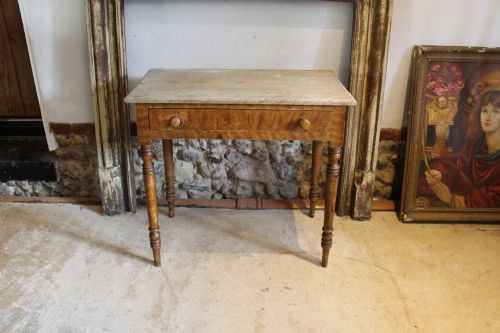
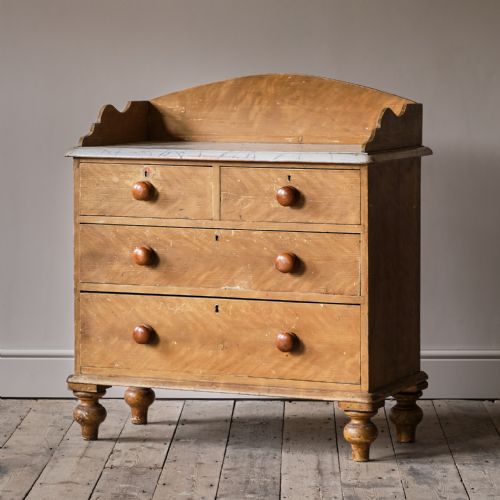
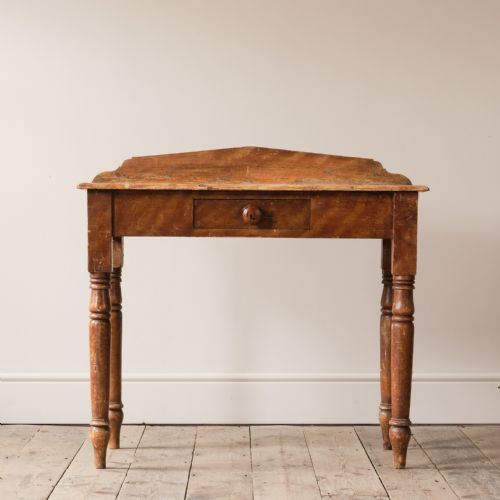


Rustic Painted Washstand
A rustic painted washstand brings honest nineteenth-century utility and surface character straight into a modern bedroom or hallway.
Rustic Painted Washstand
A rustic painted washstand is a nineteenth-century practical wooden item built for personal hygiene before plumbed bathrooms arrived in every home. You meet washstands, side tables, console tables, chests of drawers, and dressers shaped by Victorian country makers.
The material running through these pieces is solid pine, frequently finished with historic paint layers, scumble glaze, or topped with marble. They survive from periods spanning the Victorian era and the years around eighteen-eighty, showing English country and rustic country styles.
How they were made
Joiners constructed these pieces from solid pine and other simple woods, relying on traditional carpentry joints to build washstands, side tables, and chests. Some examples incorporate zinc or iron elements for practical water resistance during daily use.
Makers applied surface finishes including oil-based paint and scumble glaze to seal the wood and provide decorative colour. Marble slabs were fitted to the tops of specific washstands to handle spills and provide a durable surface.
Nineteenth-century scumble glaze lets ordinary pine pretend to be exotic timber with a flick of a comb.
What varies in quality
The survival of original surface finishes separates a standard piece from a more desirable one. Original paint and scumble glaze layers that remain intact without heavy modern intervention carry greater authenticity.
Construction substance and fitted elements such as marble tops or integrated drawer arrangements dictate the standing of an individual item. Pieces retaining their structural integrity and original materials reflect the straightforward honesty of nineteenth-century country workshops.
The Rustic Painted Washstand Glossary
- Scumble glaze
- A translucent oil-based decorative paint technique used to imitate the grain of richer timber or create mottled patterns on pine furniture. This finish was widely applied by nineteenth-century country painters.
- Washstand
- A dedicated piece of bedroom furniture designed to hold a basin, pitcher, and washing accessories. Nineteenth-century versions frequently included marble tops or splashbacks.
- Victorian Country
- A style of furniture produced in provincial workshops during the reign of Queen Victoria, prioritising sturdy utility over elaborate ornamentation.
- Console table
- A side table designed to stand against a wall, frequently featuring a narrow rectangular top supported by simple legs.
Rustic Painted Washstand: Frequently Asked Questions
What is a rustic painted washstand?
A rustic painted washstand is a nineteenth-century pine furniture piece made for bedroom washing before plumbed bathrooms existed. They often feature original painted surfaces, scumble glaze, or marble tops.
These items now serve as side tables or decorative storage surfaces in modern homes while retaining their utilitarian country character.
How do I date a painted washstand?
Dating relies on construction methods, timber choice, and surface treatments visible on the piece. Nineteenth-century examples display solid pine boards and period paint applications.
Looking closely at the fixings, drawer construction, and wear patterns helps place an item within the Victorian period.
Where should I place a washstand?
These pieces fit naturally in bedrooms, hallways, or bathrooms where surface space and character are required. Their compact proportions make them practical for smaller rooms.
Keeping them away from direct heat sources protects the old pine timber and any surviving historic paint layers.
What materials were used?
Makers relied primarily on solid pine and painted wood to build these functional household items. Marble slabs, zinc, and iron details appear on specific examples to manage water.
Surface finishes typically include oil-based paints and decorative scumble glazes applied over the wood.