
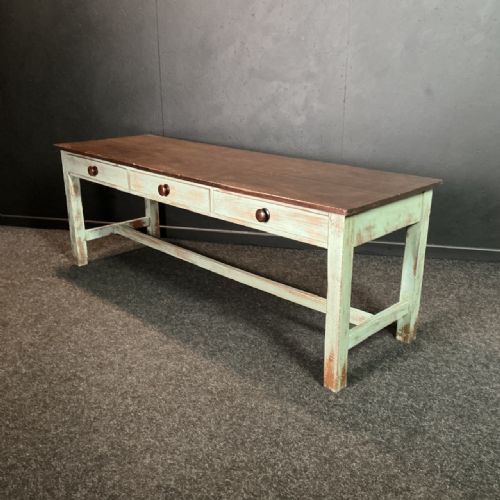
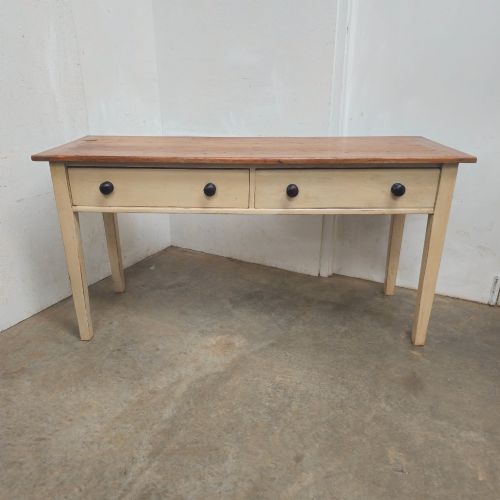
Rustic Painted Pine Drawers
These rustic painted pine drawers bring honest country utility and character into modern rooms.
Rustic Painted Pine Drawers
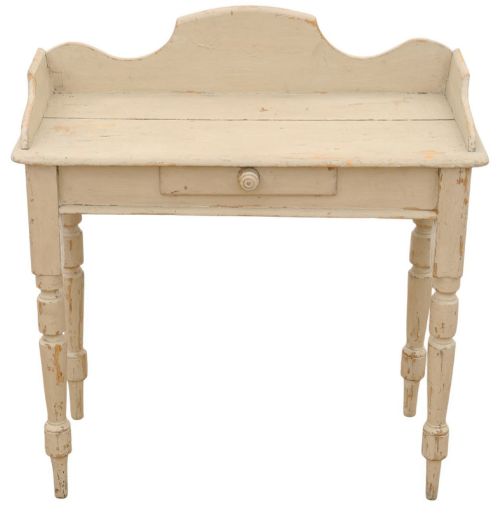
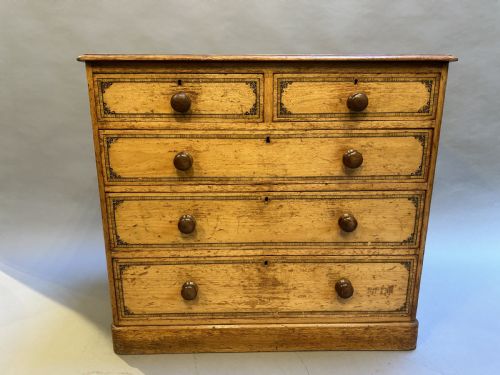
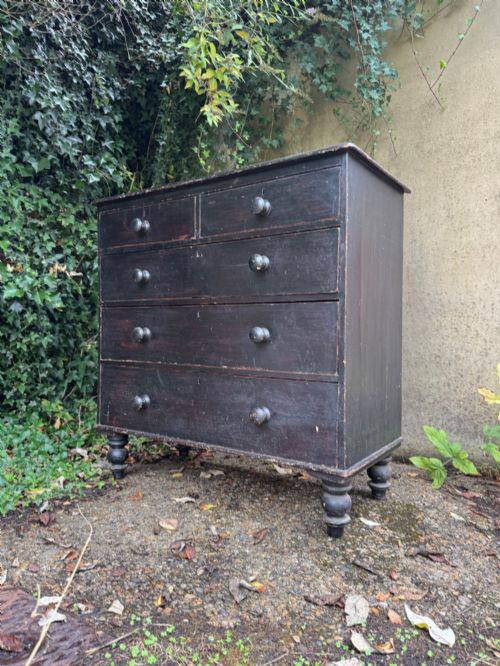
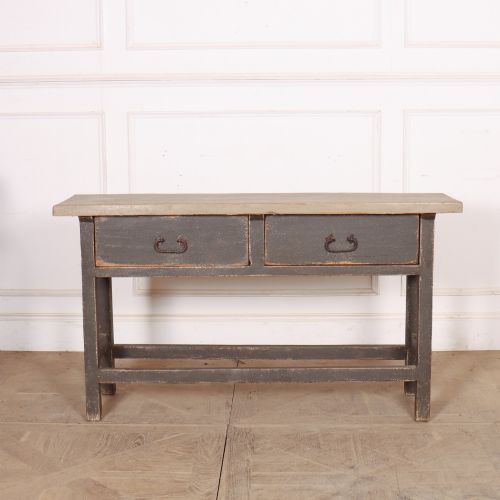
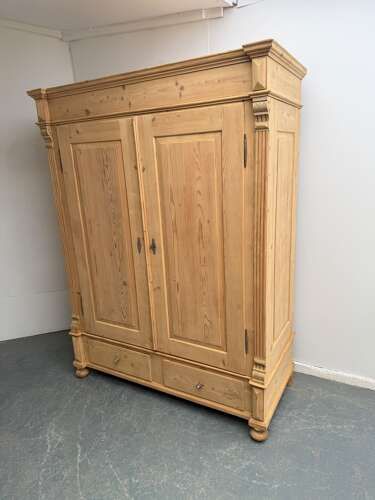
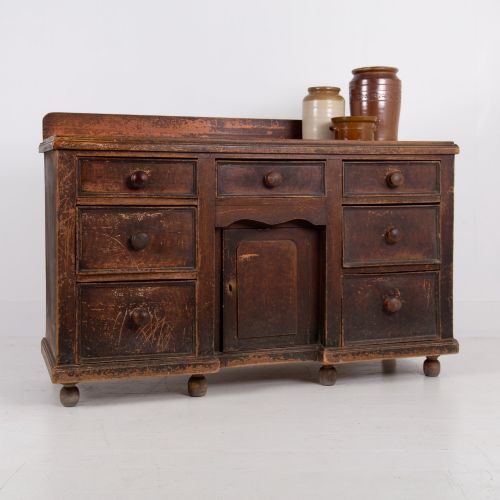
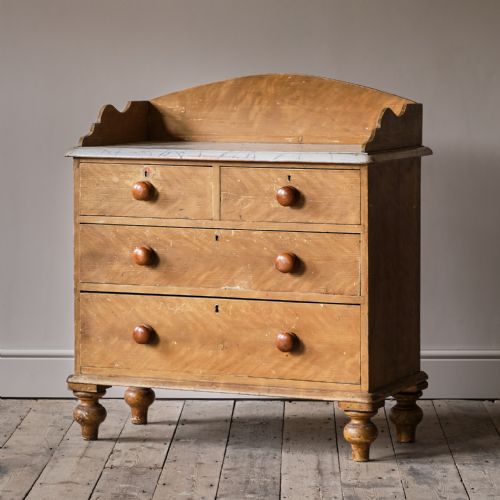
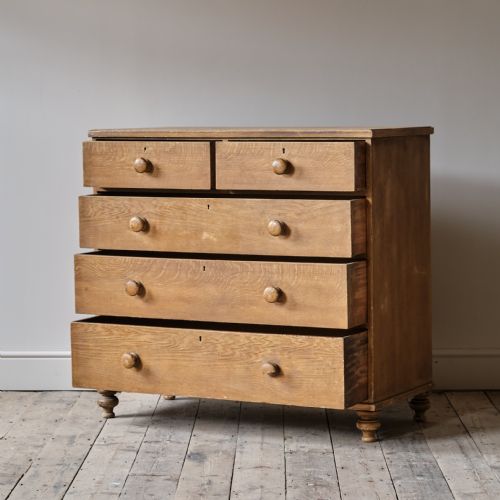
Rustic painted pine drawers encompass practical storage furniture shaped from softwood, predominantly appearing from the Georgian, Regency, and Victorian eras. These pieces include chests of drawers made in configurations such as two-over-two arrangements, alongside larger dresser bases, washstand chests, and mule chests.
Makers built these items for everyday domestic service in farmhouses, dairies, and country houses rather than grand formal reception rooms. Consequently, the forms remain straightforward, prioritising functional capacity and straightforward utility above decorative flourish.
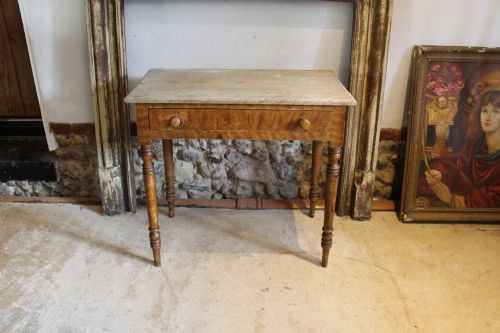
Surviving examples frequently display original painted finishes, ranging from aged black surfaces to stencilled details and scumble effects. Some pieces retain the marks of long household use, showing how ordinary families utilised pine storage over generations.
Construction and materials
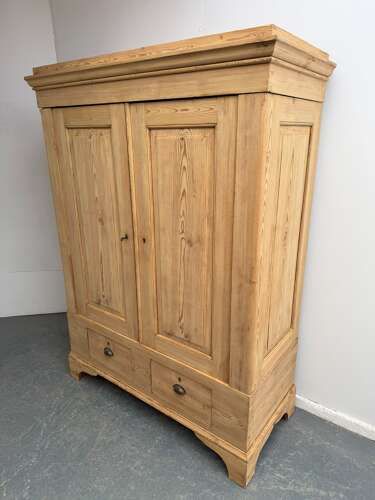
Joiners constructed these pieces primarily from solid pine, a timber chosen for its availability and workability in regional workshops. Craftsmen frequently incorporated iron and brass hardware, including drawer pulls and hinges, to secure movable elements.
Surfaces received protective or decorative coats of paint, with many items preserving their early or original painted schemes. Workshops occasionally employed scumbling techniques to simulate more expensive hardwoods, applying translucent glazes over base coats to create grained textures.
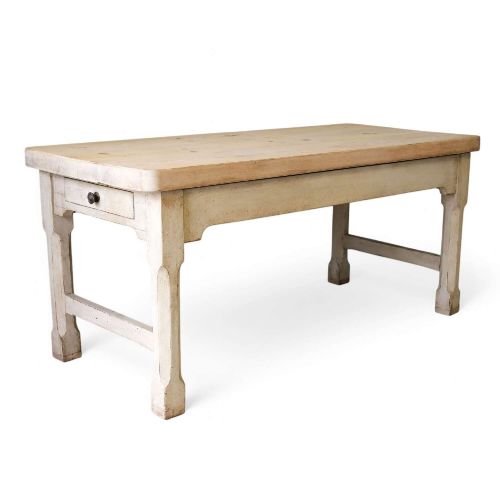
Listings feature pine chests of drawers and dresser bases spanning the Georgian, Regency, and Victorian periods, alongside twentieth-century dining tables.
Defining quality
Quality rests significantly on the integrity of the painted surface, distinguishing pieces with original or early paint from those subject to later refinishing. Intact scumble glazes, stencilled details, and honest signs of age hold greater appeal than modern, sterile coats applied to strip away history.
Structural soundness also sets examples apart, determined by tight joinery in the drawer carcases and the retention of original brass or iron fittings. Pieces made in two parts or displaying specific regional quirks command attention for their distinct construction methods.
The Rustic Painted Pine Drawers Glossary
- Scumble
- A decorative painting technique involving a translucent glaze drawn over a lighter base coat to imitate wood grain or create textured patterns.
- Mule chest
- A traditional storage chest featuring one or more drawers built into the base beneath a hinged lid compartment.
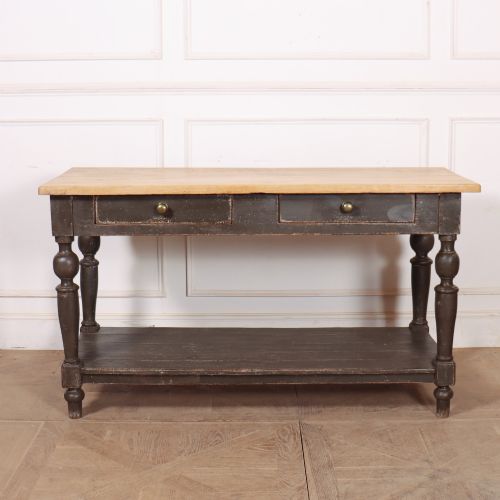
- Potboard dresser base
- A heavy kitchen or dining sideboard featuring an open lower shelf traditionally used for storing pots and heavy earthenware.
- Pine
- A common softwood utilised widely in British and European vernacular furniture for its structural adaptability and abundance.
- Stencilled
- A method of applying patterns or borders onto a painted surface using a cut-out template and pigment.
Rustic Painted Pine Drawers: Frequently Asked Questions
How do I care for painted pine?
Clean surfaces gently using a soft, dry cloth to remove dust without disturbing historic paint layers. Avoid harsh chemical cleaners and direct sunlight, which can fade or crack aged finishes.
Maintain stable indoor humidity levels to prevent the softwood from warping or splitting. Occasional gentle waxing can protect unpainted wooden elements while leaving aged painted areas untouched.
Are these drawers strictly British?
While many items originate from English country houses and farmhouses, the inventory also includes continental examples, such as Hungarian pieces finished in black paint. Regional variations appear in construction methods and proportions depending on the workshop's origin.
Examining the internal timber, hardware style, and paint formulation helps clarify where a particular item was made. Both British and continental versions share a utilitarian ethos rooted in rural domestic life.
What does original paint mean?
Original paint refers to the initial decorative or protective coating applied when the furniture was first manufactured. These early finishes often exhibit natural wear, craquelure, and patination accumulated through decades of domestic use.
Pieces retaining this surface integrity preserve historical evidence that later overpainting obscures. Collectors value these untouched finishes for showing the true age and working life of the furniture.
How do I identify a Victorian piece?
Victorian items frequently exhibit specific drawer configurations, such as two short drawers over three longer ones, alongside characteristic hardware and pine construction. Stencilled decoration and scumble finishes also point toward nineteenth-century workshop practices.
Comparing the drawer dovetails and timber thickness helps distinguish Victorian manufacturing methods from earlier Georgian or later twentieth-century pieces. Examining the backboards and interior construction confirms the expected period traits.