

Rustic Oil Painting
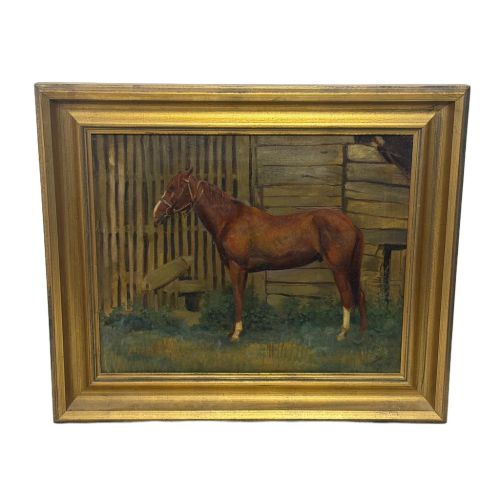
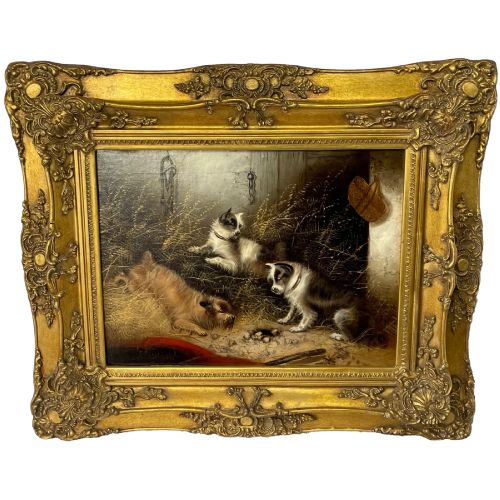
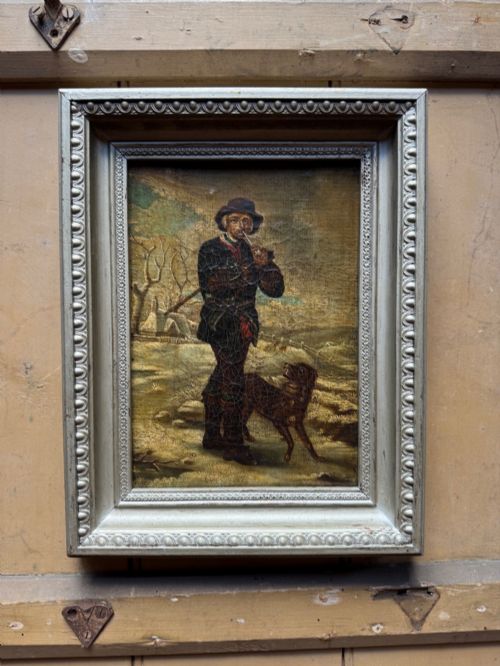
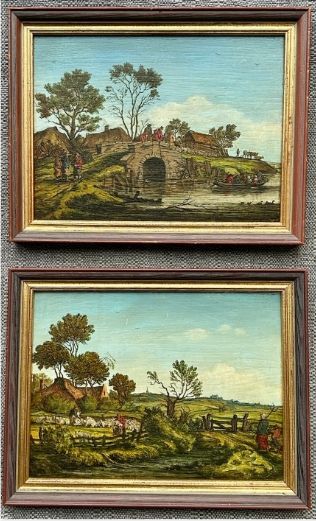
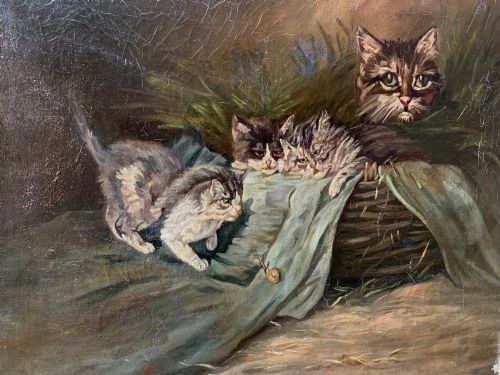
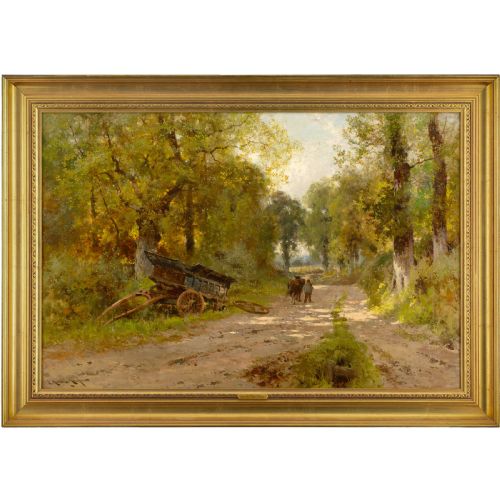
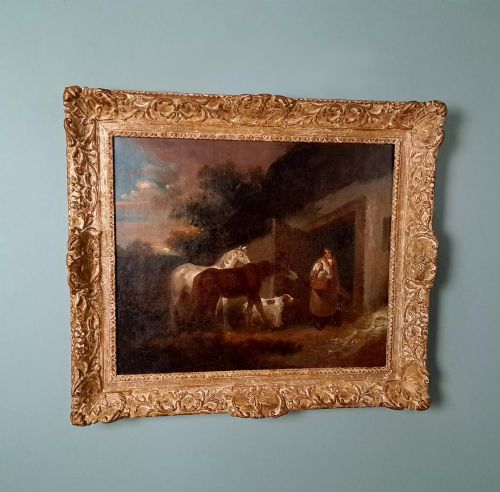
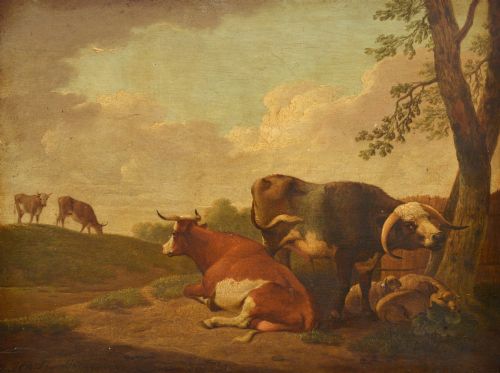
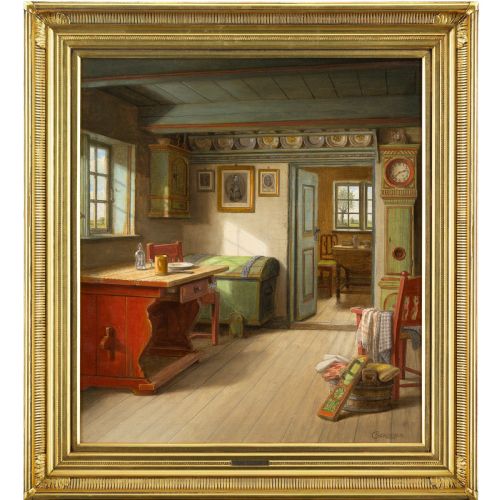
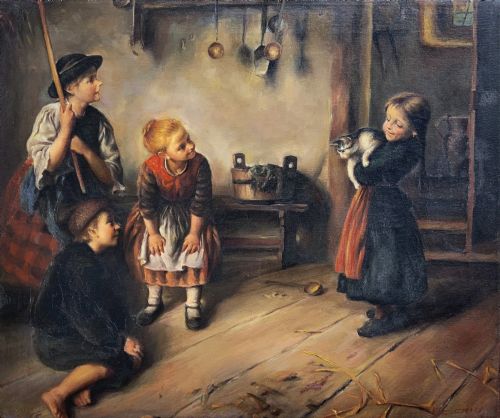
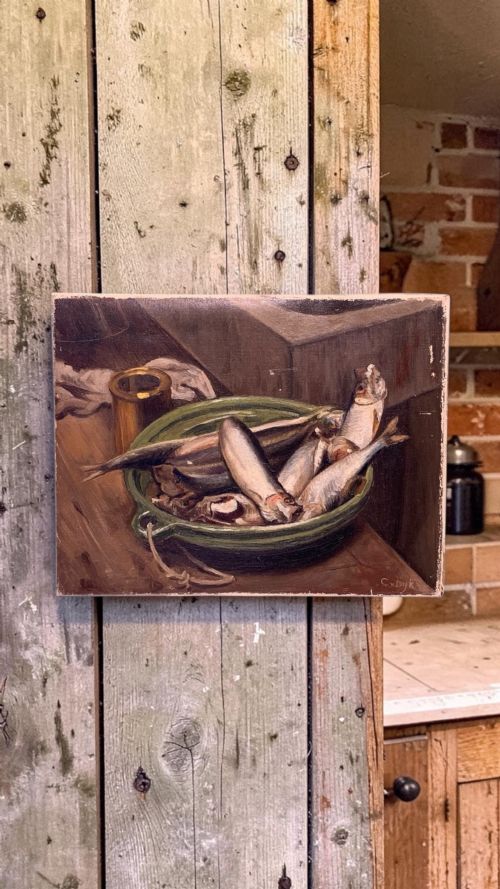
When you search for rustic oil painting, you find works depicting rural scenes, farm animals, and cottage interiors rendered on canvas or wood.
Rustic Oil Painting
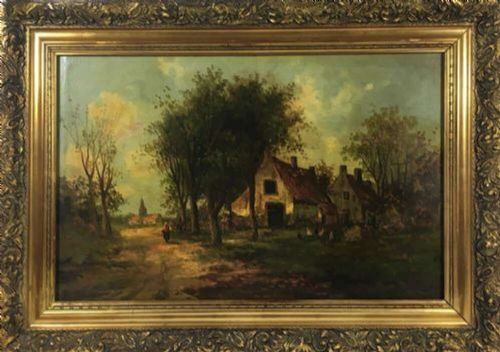
A rustic oil painting brings pastoral scenes, farmyard animals, and rural landscapes directly into a room. These artworks span the eighteenth, nineteenth, and mid-twentieth centuries, capturing agrarian life across Britain, France, Belgium, and the Netherlands.
The subjects range from working terriers and prize shorthorn bulls to quiet farmyards, riverside conversations, and domestic cottage interiors. Most pieces encountered here belong to the nineteenth century, reflecting both professional academic output and provincial naive folk art.
Makers represented include named artists such as Edward Armfield, William Joseph Shayer Senior, and Edgar Hunt, alongside various regional schools. Works appear on stretched canvas, wooden boards, and panels, occasionally framed in period giltwood.
Materials and methods of execution
Pigments mixed with oil medium form the primary pigment layer, applied to surfaces like canvas, wooden boards, and wood panels. Many older works utilise canvas later laid onto board for structural support.
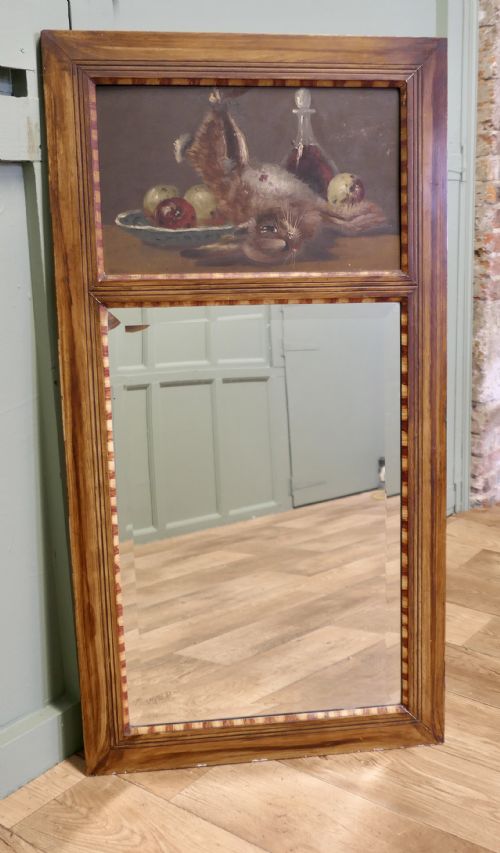
Supporting grounds often incorporate gesso preparations beneath the oil paint. Frames typically utilise wood and giltwood, sometimes embellished with gold leaf or shaped as trumeau mirrors.
Listings feature works from the eighteenth, nineteenth, and mid-twentieth centuries, executed in oil on canvas, wood, and panel.
Distinctions in execution and depth
The standard of a rustic oil painting rests upon the confidence of brushwork, anatomical accuracy in figures and animals, and atmospheric depth within the landscape. Master painters command light and shadow to create natural focal points, whereas provincial naive or primitive works rely on flat perspective and charm.
Condition also dictates standing, particularly the integrity of the paint surface, evidence of past relining on canvas, and the originality of the associated wooden frame.
Lionel Ellis·Edward Armfield·W Klombeck·John Horace Hooper·William Joseph Shayer Senior·Hendrik Willem Schweickhardt·Thomas Barker of Bath·Charles Houben·Max Kaltenmoser·Edgar Hunt·Jacob Akkersdijk·Henry Schouten·George Morland·Harry Brooker·Claude Cardon·Thomas Hicks·Owen Bowen·John Constable·Haynes King·James Kyd
The Rustic Oil Painting Glossary
- Oil on Canvas
- Pigment bound in drying oil applied to a woven fabric stretched across a wooden frame. This remains the most common support medium for fine art paintings across the eighteenth and nineteenth centuries.
- Oil on Board
- Pigment applied directly to a rigid wooden or composition board rather than woven fabric. Artists frequently utilised this method for smaller studies and landscape sketches.
- Giltwood
- Wood carved and surfaced with a thin layer of gold leaf or metallic powder. This material frequently frames nineteenth-century paintings and trumeau mirrors.
- Genre Painting
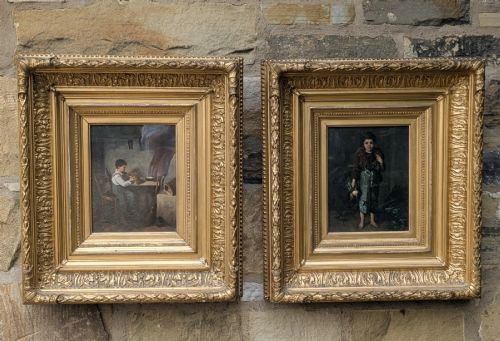
- Artwork depicting scenes from everyday life, such as cottage interiors, tavern gatherings, or children playing. These subjects form a substantial portion of nineteenth-century rural art.
- Provincial Naive
- Art created outside academic traditions, characterised by simplified perspective and direct expression. Such pieces are often unsigned and reflect local folk traditions.
Rustic Oil Painting: Frequently Asked Questions
What subjects appear in rustic oil paintings?
These works typically depict farm animals, agricultural landscapes, riversides, and rustic cottage interiors.
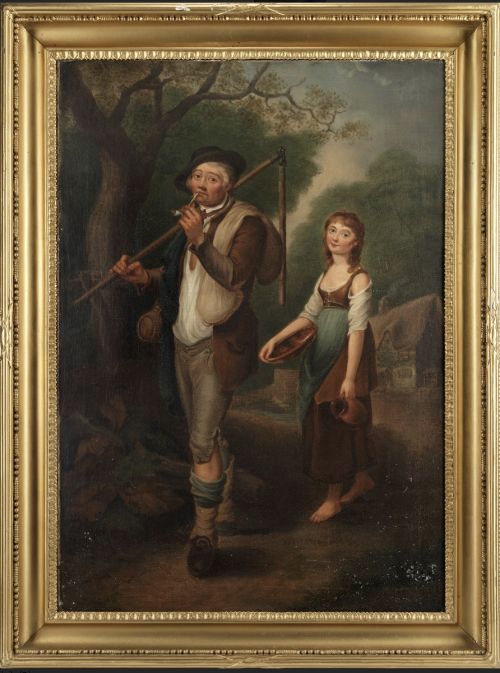
Human figures engaged in daily rural tasks, such as spinning, collecting water, or tending livestock, also feature prominently.
How do I date an antique oil painting?
Dating relies on stylistic clues, costume details, the type of canvas or wood panel used, and framing materials.
Signatures, artist records, and inscription styles written on the reverse provide further chronological markers.
Where should I hang a landscape painting?
These works suit traditional living spaces, studies, or dining rooms where natural light enhances the oil pigments.
Keep them away from direct sunlight and damp walls to preserve the canvas and wooden frame.
What is the difference between canvas and board?
Canvas consists of woven fabric stretched over a wooden frame, offering slight flexibility and texture beneath the paint.
Boards provide a completely rigid wooden or panel support, which artists often selected for smaller en plein air studies.