
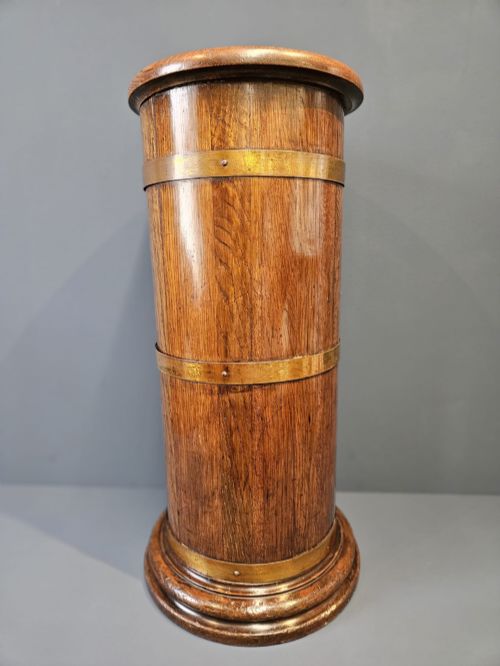


Rustic Oak Stick Holder
A rustic oak stick holder brings sturdy utility and rich grain to a hallway.
Rustic Oak Stick Holder
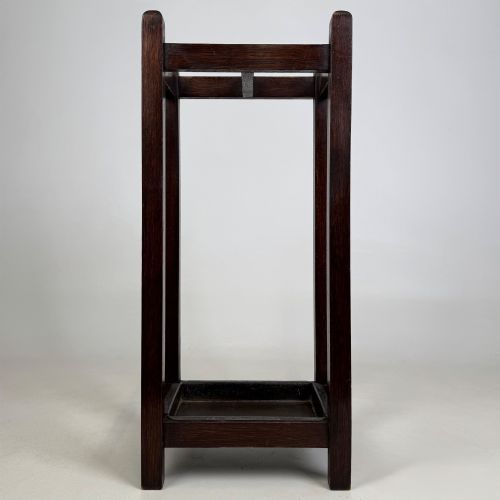
A rustic oak stick holder is a practical piece of hallway furniture designed to organise walking sticks, umbrellas, and canes. The examples on this page span the Victorian, Edwardian, and twentieth-century periods, capturing the robust domestic design of their respective eras.
Most items you will encounter take the form of stick stands, umbrella stands, or larger hall stands with dedicated storage sections. Alongside these traditional forms, the selection includes related timber items such as carved wood candlesticks and fishing racks.
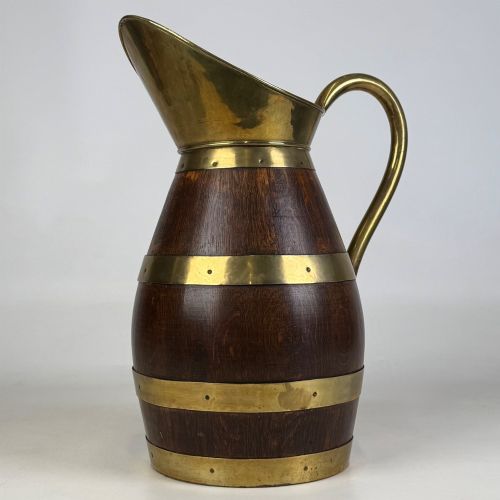
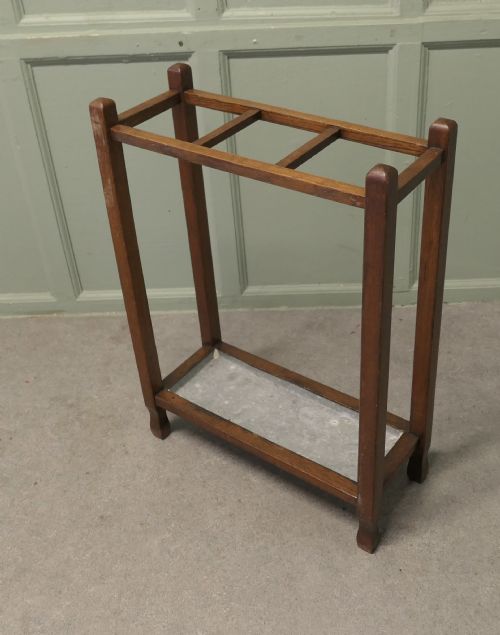
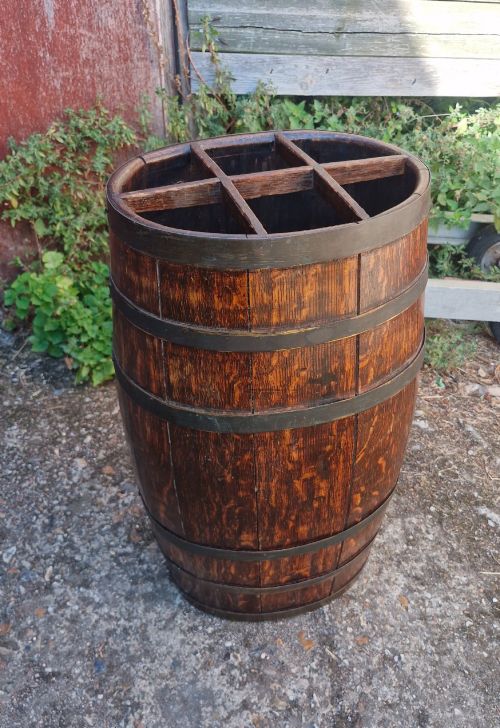
Originating from traditional English country houses and folk art traditions, these objects utilise solid timber construction to withstand daily use. They range from coopered barrels with metal bands to rectangular stands featuring multiple divisions and drip trays.
How they were made
Makers built these pieces primarily using solid oak and timber, often selecting golden or dark varieties for their durability and pronounced grain. Metal components such as brass and zinc appear frequently as binding bands, linings, or drip trays to protect the wood from wet umbrellas.
Construction techniques include traditional cooperage for barrel-style holders, alongside turned wood elements and detailed carving seen in folk art and Gothic Revival pieces. Joinery focuses on robust assembly, utilising canted corners, sturdy upright supports, and fitted bases.
Periods represented span the Victorian and Edwardian eras, alongside the 1890s and 1920s.
What varies in quality
The degree of hand-carving and decorative detail also separates standard utility items from finer examples. Distinctive regional styles, such as Black Forest carving or folk art figures, reflect greater artisan skill and visual character.
The Rustic Oak Stick Holder Glossary
- Coopered
- Constructed from wooden staves bound together with metal hoops, much like a traditional barrel. This technique provides structural strength for cylindrical stick holders.
- Brass bound
- Fitted with brass bands or hoops that reinforce the wooden body and protect the edges from knocks. It adds a decorative contrast to the dark or golden oak timber.
- Gothic Revival
- A nineteenth-century architectural and decorative style drawing inspiration from medieval forms. Pieces often feature pointed arches, heavy mouldings, and religious or architectural motifs.
- Folk art
- Utilitarian items decorated or shaped by self-taught makers using traditional local techniques. These objects often display distinctive carvings or whimsical figurative elements.
- Drop tray
- A shallow metal container placed at the base of a stand to catch water and mud from wet umbrellas. It protects the floorboards and the lower timber frame from moisture damage.
Rustic Oak Stick Holder: Frequently Asked Questions
What is a rustic oak stick holder?
A rustic oak stick holder is a durable hallway furnishing designed to store walking sticks, canes, and umbrellas. These items combine solid timber construction with practical metal linings or trays to manage wet gear.
Such pieces range from simple barrel forms to architectural hall stands. They serve both a functional purpose in the entranceway and provide a distinct historical character.
How do I care for antique oak?
Antique oak benefits from minimal intervention, requiring only occasional dusting with a dry cloth. Avoid placing wooden stands directly beside heat sources to prevent the timber from drying out.
Checking the metal drip trays and liners regularly helps prevent moisture from sitting against the wood. Applying a traditional wax polish occasionally maintains the lustre of the grain.
What periods do these pieces come from?
The items on this page primarily date from the nineteenth and early twentieth centuries. This includes Victorian and Edwardian examples, alongside pieces from the 1890s and 1920s.
Design influences span traditional English country aesthetics, Gothic Revival, and folk art traditions. Each period brings distinct construction methods and decorative details to the woodwork.
How were these stands used originally?
In traditional country houses and urban villas, these stands sat in the entrance hall or porch. Visitors and residents placed their wet umbrellas, walking canes, and riding crops into them upon entering.
Larger hall stands often combined stick storage with hooks for hats and coats, plus mirrors and glove boxes. They formed the central welcoming hub of the household entrance.