

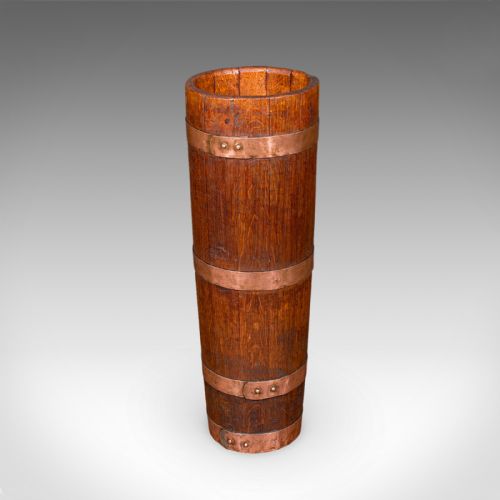


Traditional Oak Cane Stand
A traditional oak cane stand brings honest English country house utility to the hallway, holding sticks and umbrellas with understated timber presence.
Traditional Oak Cane Stand
When you search for a traditional oak cane stand, you encounter pieces designed for the entrance halls of Victorian and Edwardian homes. These practical furnishings kept walking sticks, umbrellas and parasols organised near the front door.
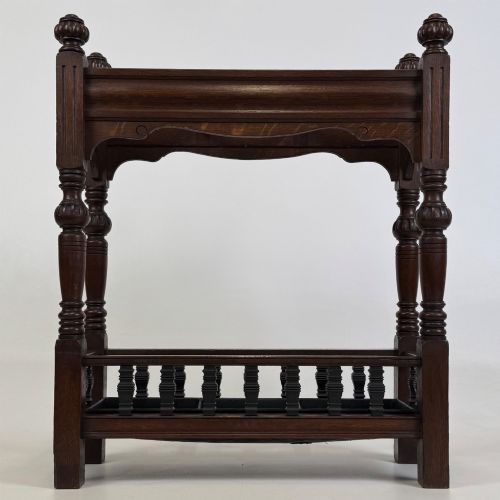
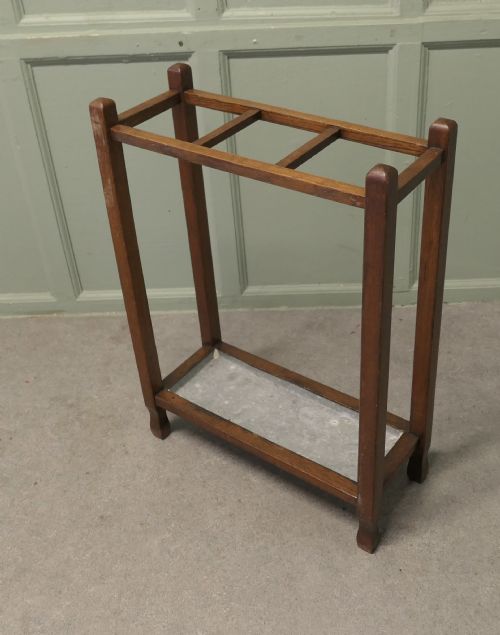
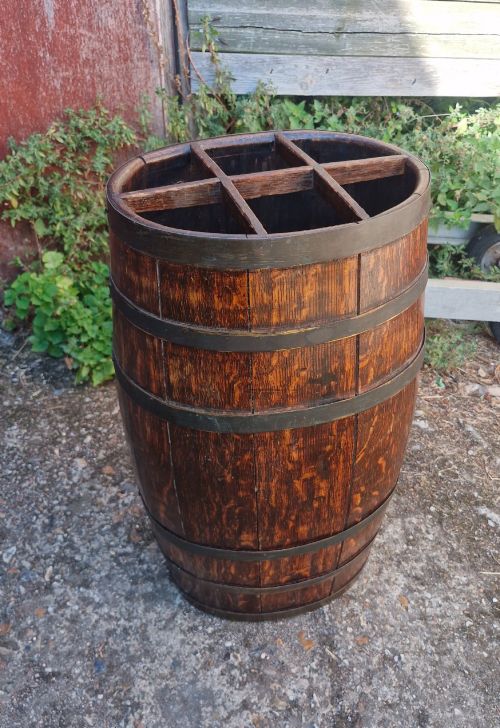
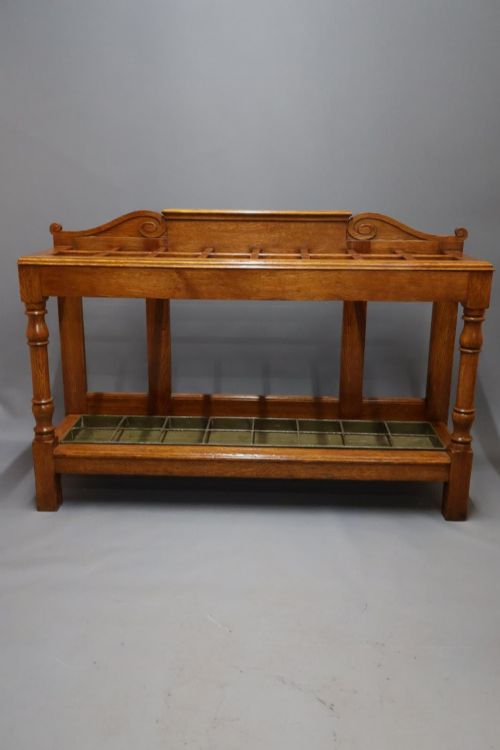
The versions most commonly met on this page span the late nineteenth century through to the early twentieth century. They adopt robust forms, ranging from panelled stick stands to coopered barrel designs.
Makers drew on vernacular English country styles as well as the simpler geometries of the Arts and Crafts movement. Their solid construction ensured they could withstand daily domestic use in busy hallways.
How they were made
Constructed primarily from solid oak, these pieces often utilise traditional coopered methods reminiscent of barrel making, held together with metal, brass, zinc or copper bands. Other examples employ panelled timber frameworks assembled with sturdy joinery.
Makers integrated functional water management by incorporating original metal drip trays or zinc liners at the base to catch moisture from wet umbrellas. Additional details include bamboo accents, cork pads, canvas elements and brass loop handles for durability.
One unexpected listing in the archive strays from hall furniture entirely, categorised instead as fishing goods.
What varies in quality
The distinction between standard examples and superior pieces rests upon the integrity of the timber and the retention of original hardware. Stands retaining their original metal drip trays and tightly bound metal hoops command greater interest from collectors.
Proportion and decorative restraint also set finer examples apart, particularly those reflecting Arts and Crafts principles or distinct country house character through skilled cooperage and rich grain patination.
The Traditional Oak Cane Stand Glossary
- Coopered
- A method of construction using curved staves of oak bound together with metal hoops, identical to the technique used for barrels and casks.
- Arts and Crafts
- A design movement valuing honest construction, simple forms and visible craftsmanship over elaborate industrial ornamentation.
- Drip tray
- A removable metal insert placed at the floor of the stand to collect rainwater from wet umbrellas and protect the wooden base.
- Stick stand
- A piece of hallway furniture specifically designed to store walking sticks, canes and riding crops upright.
- Country house style
- An interior aesthetic favouring comfortable, durable furnishings built for practical utility in large English residences.
Traditional Oak Cane Stand: Frequently Asked Questions
What is a traditional oak cane stand?
A traditional oak cane stand is a piece of hallway furniture made predominantly from oak, designed to hold walking sticks, canes and umbrellas.
These pieces typically date from the Victorian and Edwardian periods, reflecting practical domestic requirements of the era.
How were these stands used originally?
In nineteenth and twentieth century homes, they were positioned in entrance halls and vestibules as a tidy repository for outdoor accessories.
Family members and guests placed walking sticks and wet umbrellas into the stands immediately upon entering the house.
Do they include drip trays?
Many traditional stands feature an integrated metal, zinc or copper drip tray at the bottom to catch moisture.
Finding a stand with its original tray intact is common and helps protect the underlying wooden floor from water damage.
How do I date an oak stick stand?
Dating relies on observing construction methods, materials, and stylistic cues such as Arts and Crafts influences or Victorian proportions.
Pieces seen here generally range from the late nineteenth century through the early twentieth century.
What styles are available?
The available styles range from plain barrel-shaped coopered designs to rectilinear panelled racks and Arts and Crafts interpretations.
English country house aesthetics heavily influence their appearance, prioritising sturdy utility over excessive ornament.