


Rustic Oak Long Table
A rustic oak long table brings substantial timber and deep patination into a dining space, offering generous proportions built for gathering.
Rustic Oak Long Table
A rustic oak long table spans several historical periods, appearing frequently in 18th century, 19th century, and early 20th century examples. These pieces originate from English and French country houses, farmhouses, and workshops, reflecting practical domestic and commercial use.
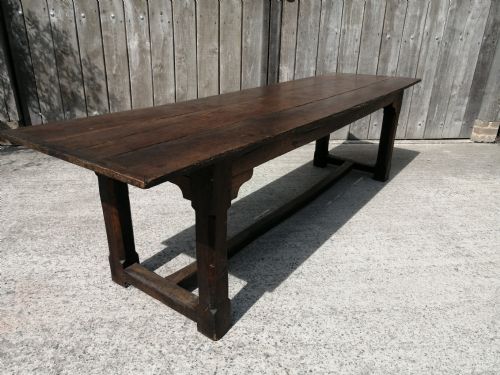
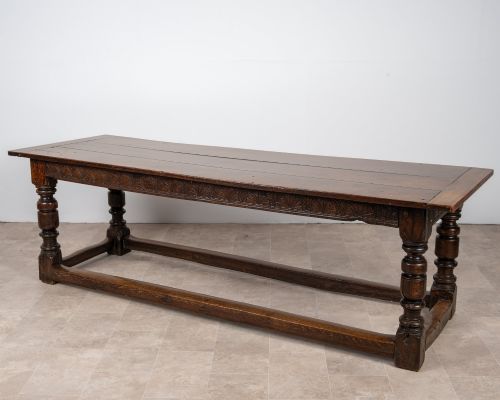
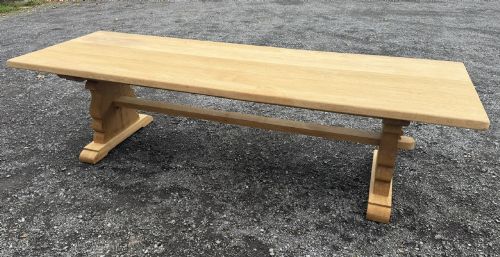
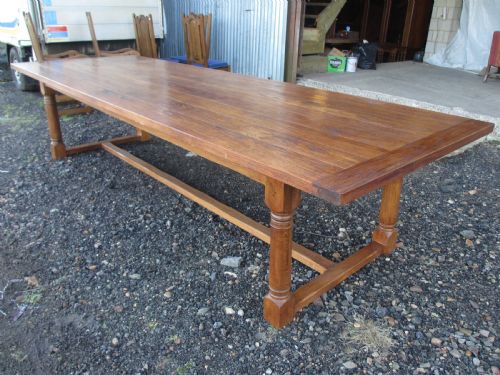
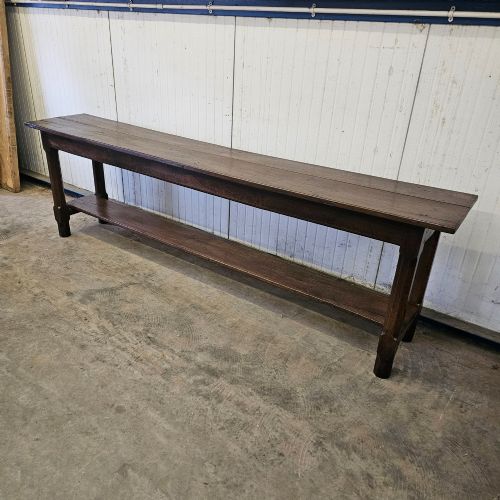
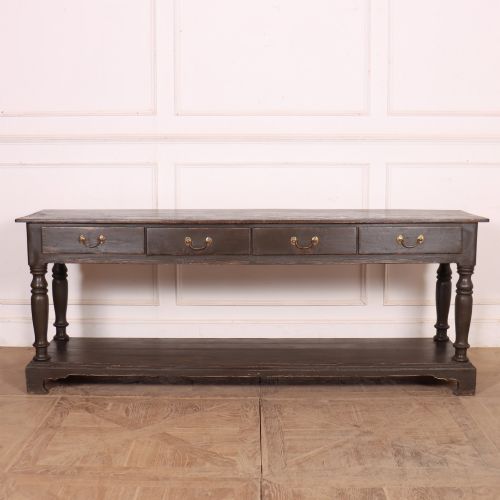
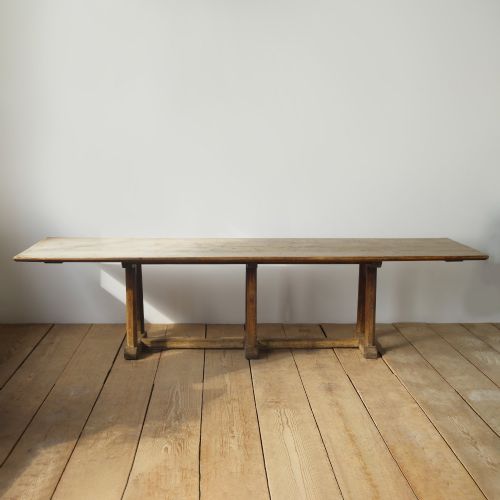
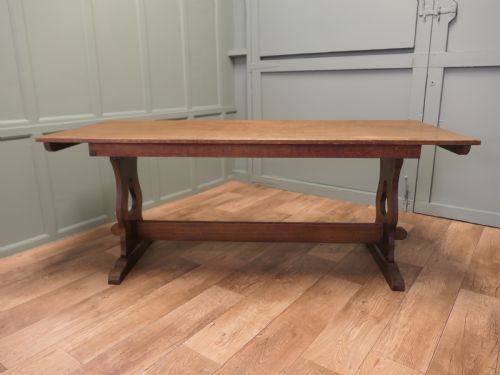
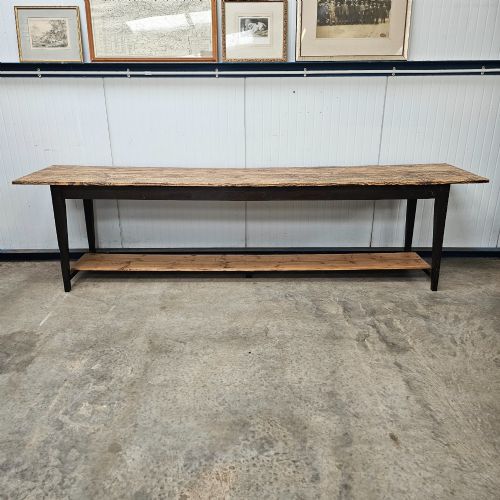
The physical form typically takes shape as a refectory table, harvest table, or drapers table, often measuring eight feet or longer. Oak dominates the construction, sometimes paired with elm, beech, pine, or pitch pine for secondary timbers or tops.
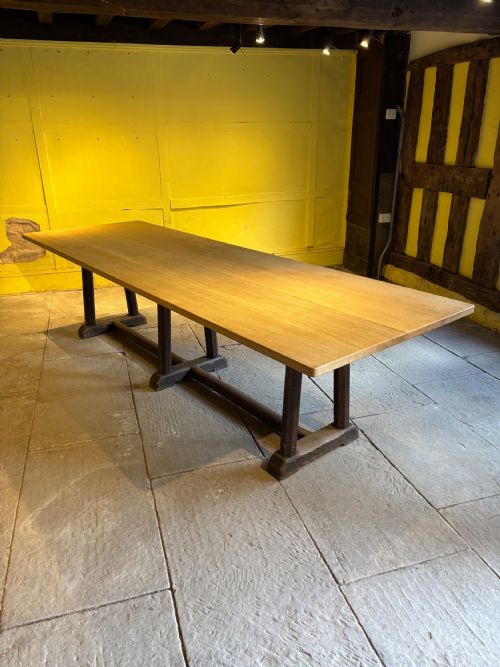
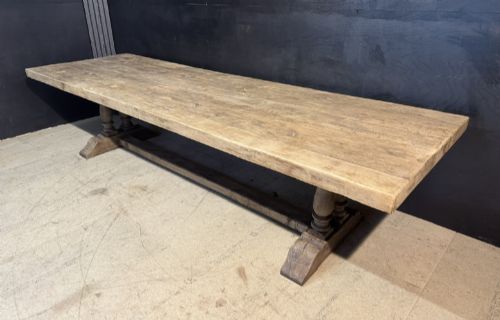
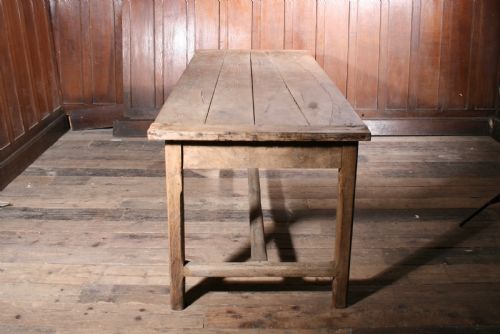
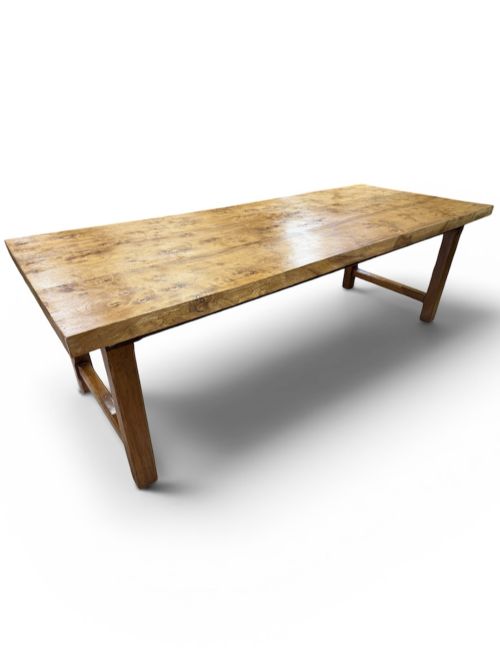
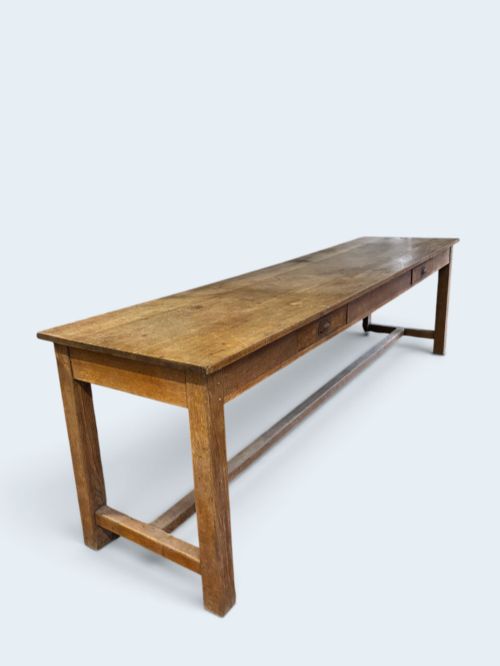
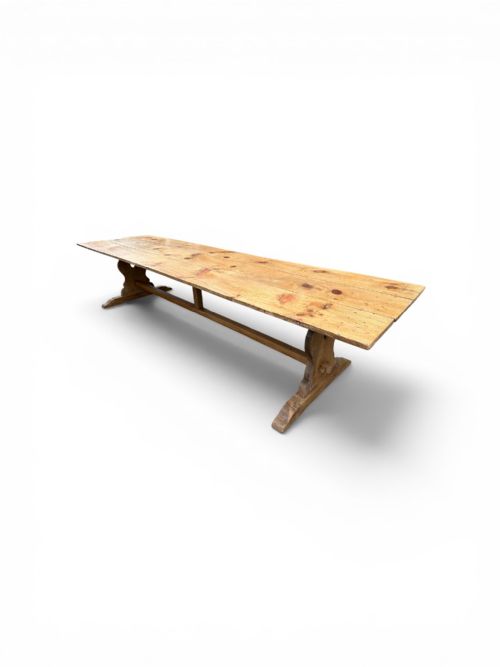
Buyers encounter heavy planked tops, trestle bases, and H-stretcher supports alongside variations featuring drawers or narrow proportions. The selection ranges from vernacular farmhouse designs to more formal Georgian and Jacobean styles adapted for everyday dining.
Materials and Construction
Makers utilised solid oak for the primary framework and tops, frequently selecting native timbers or imported hardwoods. Secondary woods like pine, elm, and beech appear in stretcher systems, drawer linings, and underneath framing.
Construction methods rely on pegged mortise and tenon joints, heavy timber stretchers, and thick plank tops secured to sturdy underframes. Iron, brass, and occasional timber pins provide structural fastening and mechanical support where movement or weight requires extra stability.
Rustic Oak Long Table Retail Price Guide 2026
Typical asking prices for rustic oak long table among the pieces listed under this phrase on Sellingantiques today, from the lower quarter to the upper quarter. They describe what is for sale here now, not the wider market.
Listings feature oak alongside pitch pine, elm, and iron, spanning the seventeenth to the twentieth centuries.
Proportion and Timber Integrity
The distinction between ordinary and exceptional pieces rests in the integrity of the timber and the harmony of the proportions. Single-piece or two-plank oak tops exhibiting deep natural grain and untouched surface patination outrank boards patched from disparate sections.
Originality of the underframe and stretchers determines structural merit. Tables retaining their early leg supports, undisturbed pegging, and honest wear show a coherence that altered or heavily restored examples lack.
The Rustic Oak Long Table Glossary
- Refectory table
- A long narrow dining table originally built for monastic dining halls. These pieces evolved into domestic dining tables with sturdy legs and horizontal stretchers.
- Harvest table
- A long utility table featuring narrow proportions and overhangs, designed to accommodate large groups during seasonal gatherings. They frequently combine oak tops with pine or fruitwood frames.
- Drapers table
- A monumental long table utilised in textile trade and mercer shops for folding cloth. Their exceptional length and narrow width make them suited for modern hallway or dining use.
- H-stretcher
- A horizontal timber brace connecting the legs of a table in the shape of the letter H. This component provides lateral stability to long timber frames.
- Plank top
- A table surface constructed from solid boards joined edge to edge. Older examples utilise wide individual planks showing surface grain and historic wear.
Rustic Oak Long Table: Frequently Asked Questions
How do I clean a rustic oak long table?
Maintenance requires only a soft cloth and occasional application of natural wax to protect the dry grain. Avoid chemical sprays that strip the historical patination.
Moisture and heat present risks to antique timber, so coasters and placemats help preserve the surface during daily dining use.
Can I seat ten people comfortably?
Tables measuring eight feet or longer generally accommodate eight to ten diners depending on the width of the chairs. Trestle bases offer an advantage by allowing chairs to push fully underneath without hitting corner legs.
Checking the clearance beneath the side stretchers ensures proper legroom for seated guests.
What is the difference between a refectory and a farmhouse table?
Refectory tables traditionally feature longer, narrower proportions with inset legs joined by continuous stretchers, originating from institutional dining halls. Farmhouse tables often display wider boards, simpler frame constructions, and occasional utility drawers.
Both categories overlap significantly in country houses, where robust oak construction served similar daily purposes.
How do I date an old oak table?
Dating relies on examining tool marks, joint construction, timber shrinkage, and surface wear patterns. Hand-sawn boards, pegged joints, and deep patination indicate earlier 17th and 18th century handiwork.
Later 19th century and Edwardian pieces display more uniform machine sawing and standard iron fixings while maintaining traditional oak forms.