
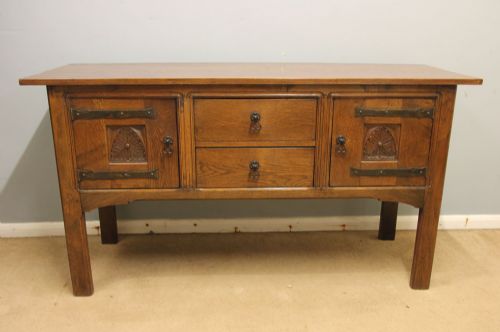
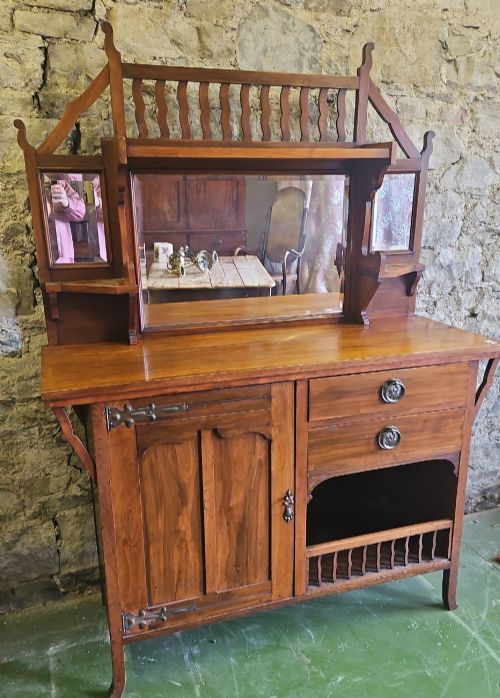


Rustic Oak Credenza
A rustic oak credenza brings substantial timber presence and grounded utility into a modern interior.
Rustic Oak Credenza
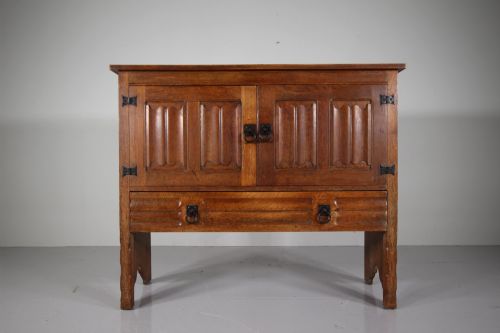
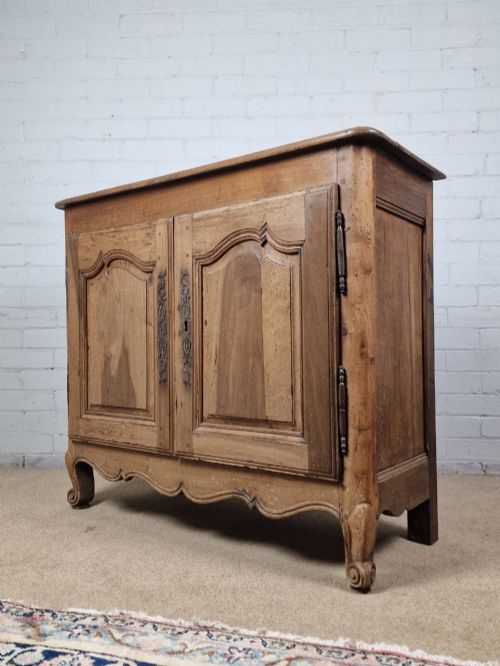
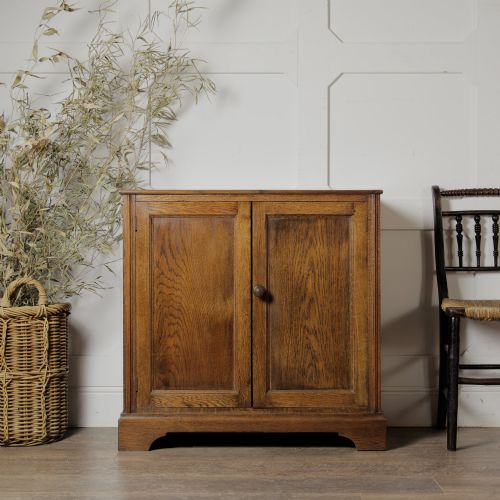
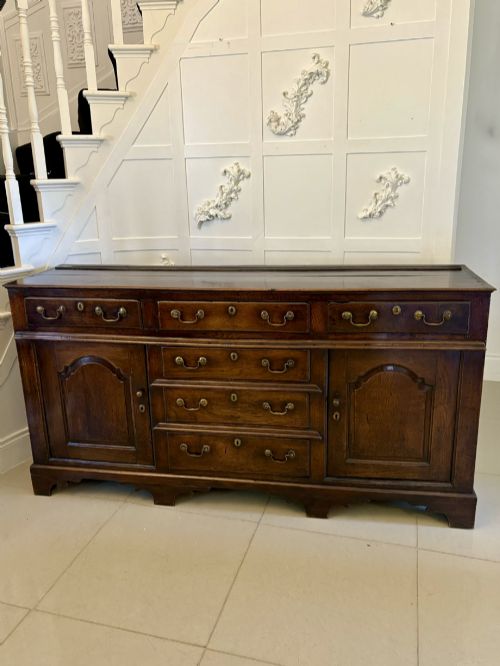
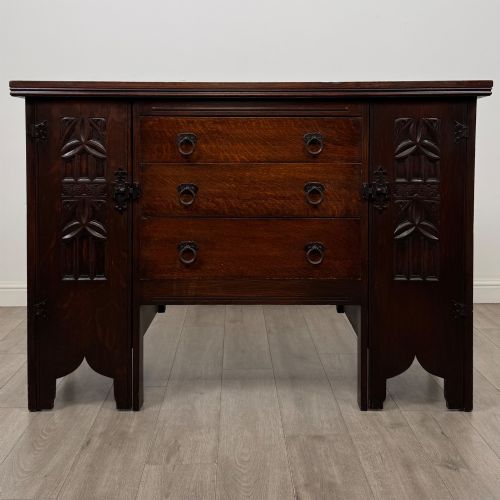
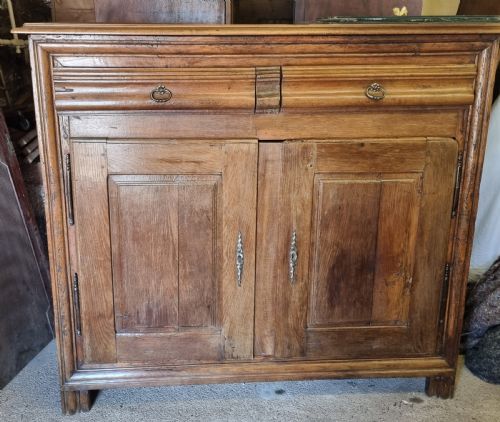
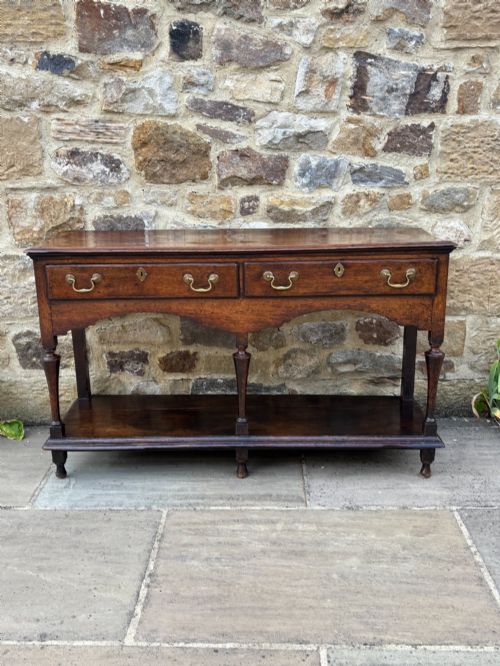
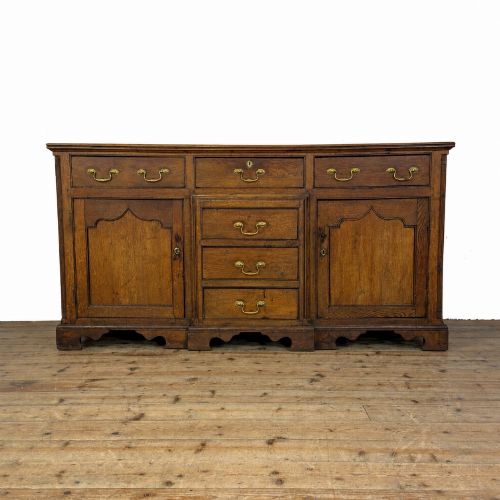
The pieces appearing here span several centuries, reaching from the seventeenth century through the Georgian era into early twentieth-century revivals. Sideboards and cupboards dominate the selection, offering practical surface area and deep internal storage.
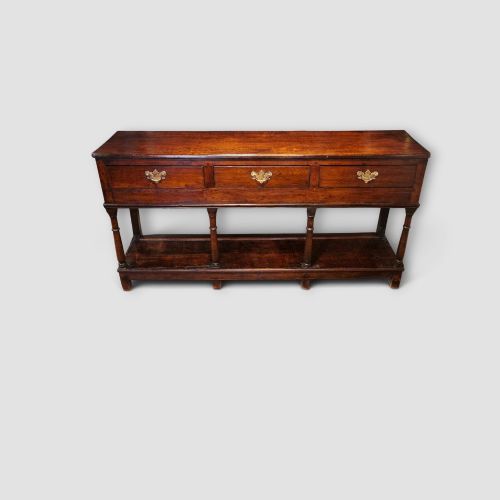
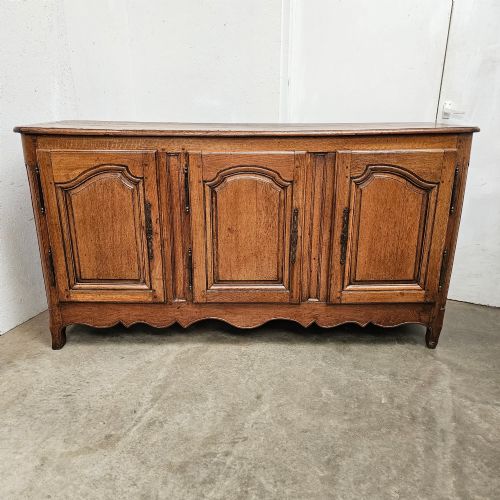
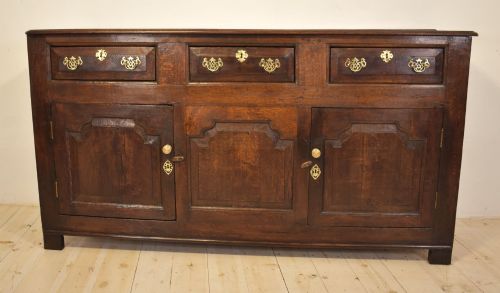
Regional variations reveal distinct character, such as the low profile of French provincial buffets or the linear drawer arrangements of Welsh dresser bases. Selecting the right form depends on the scale of the room and the intended daily function.
Materials and construction
Carpenters relied primarily on solid oak for its durability and dense grain, sometimes combining it with secondary woods like fruitwood or walnut for internal elements. Metal hardware such as brass handles and iron or wrought iron hinges provided functional reinforcement.
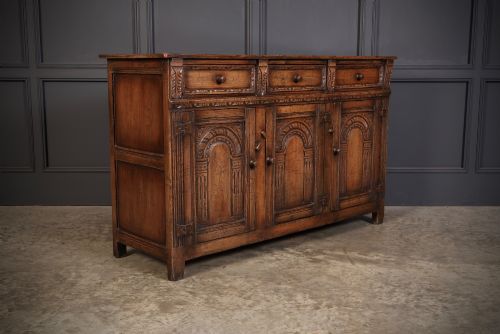
Joinery methods involved traditional pegged mortise and tenon frames designed to withstand heavy daily use in domestic kitchens and dining halls. Surfaces often show the marks of hand planing and simple carving rather than mechanized industrial production.
The listings show forms spanning the seventeenth century through to the Edwardian period, constructed mainly in solid oak with occasional fruitwood and walnut.
Distinguishing quality
Quality rests in the integrity of the timber selection and the retention of original structural surfaces, such as bleached patinas or deep wax finishes. Pieces displaying honest wear and minimal timber replacement hold greater visual harmony.
Proportion and the handling of carved details differentiate standard utilitarian furniture from finer regional examples. The crispness of drawer construction and the original state of iron or brass mounts indicate the care taken by the maker.
The Rustic Oak Credenza Glossary
- Dresser base
- A low wooden storage unit featuring drawers and sometimes a lower shelf or potboard, originally designed for domestic food preparation and service.
- Enfilade
- A long sideboard or buffet featuring multiple doors in a row, traditionally utilised in European dining spaces for serving.
- Potboard
- An open slatted lower shelf integrated into the base of a dresser, historically used for storing heavy pots and ceramic vessels.
- Court cupboard
- An antique enclosed cabinet structure built with upper and lower tiers, often featuring heavy paneling and decorative carving.
Rustic Oak Credenza: Frequently Asked Questions
Where should I place a rustic oak credenza?
These low storage units function well in dining rooms, wide hallways, or living spaces as substantial sideboards.
Their sturdy timber construction allows them to support heavy lamps, ceramics, or serving dishes while anchoring the room visually.
How do I care for antique oak furniture?
Maintain the timber by applying natural beeswax periodically to nourish the dry grain and protect the surface from moisture.
Keep pieces away from direct heat sources and strong sunlight to prevent the solid wood from splitting over time.
How can I tell an eighteenth-century piece from a later revival?
Early pieces exhibit hand-cut joinery, pegged framing, and timber surfaces shaped by centuries of waxing and natural handling.
Revival furniture made during the Arts and Crafts period or later often shows standardised machine sizing and different interior timber choices.