


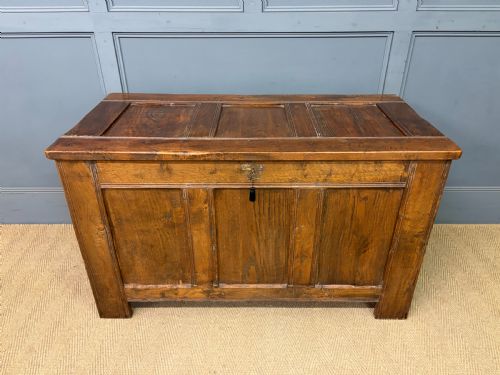
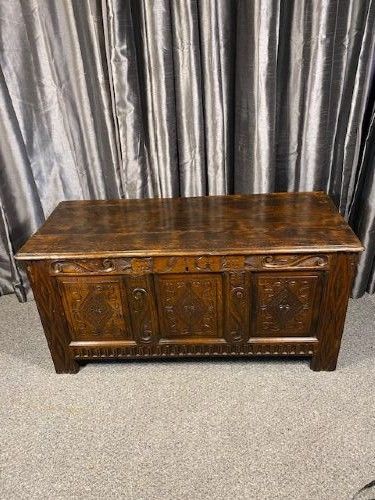
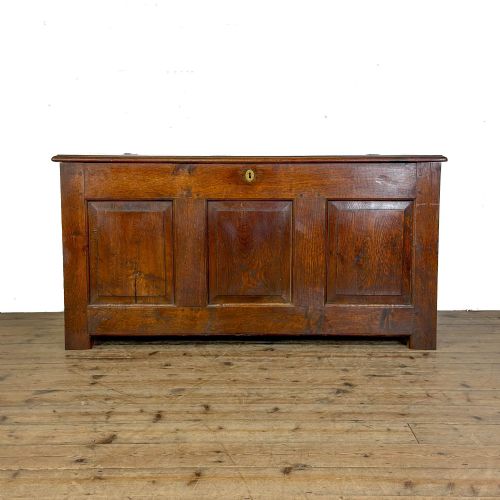
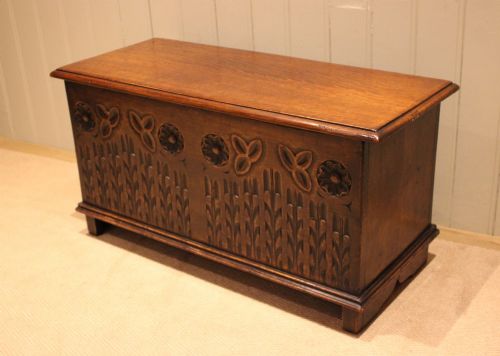
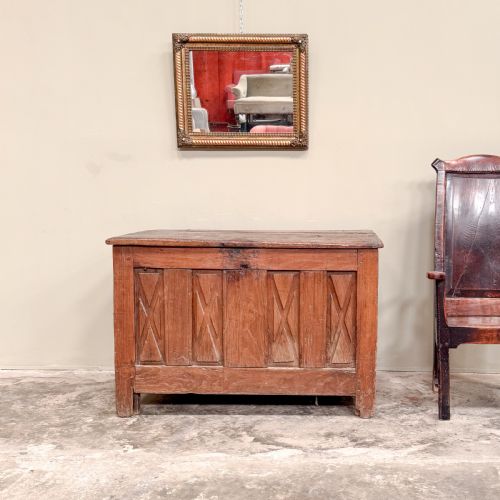
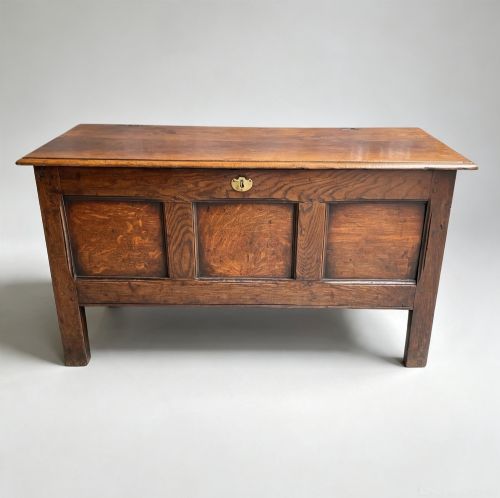
Rustic Oak Coffer Chest
A rustic oak coffer chest offers robust historic storage, bringing centuries of English and European craftsmanship straight into your home.
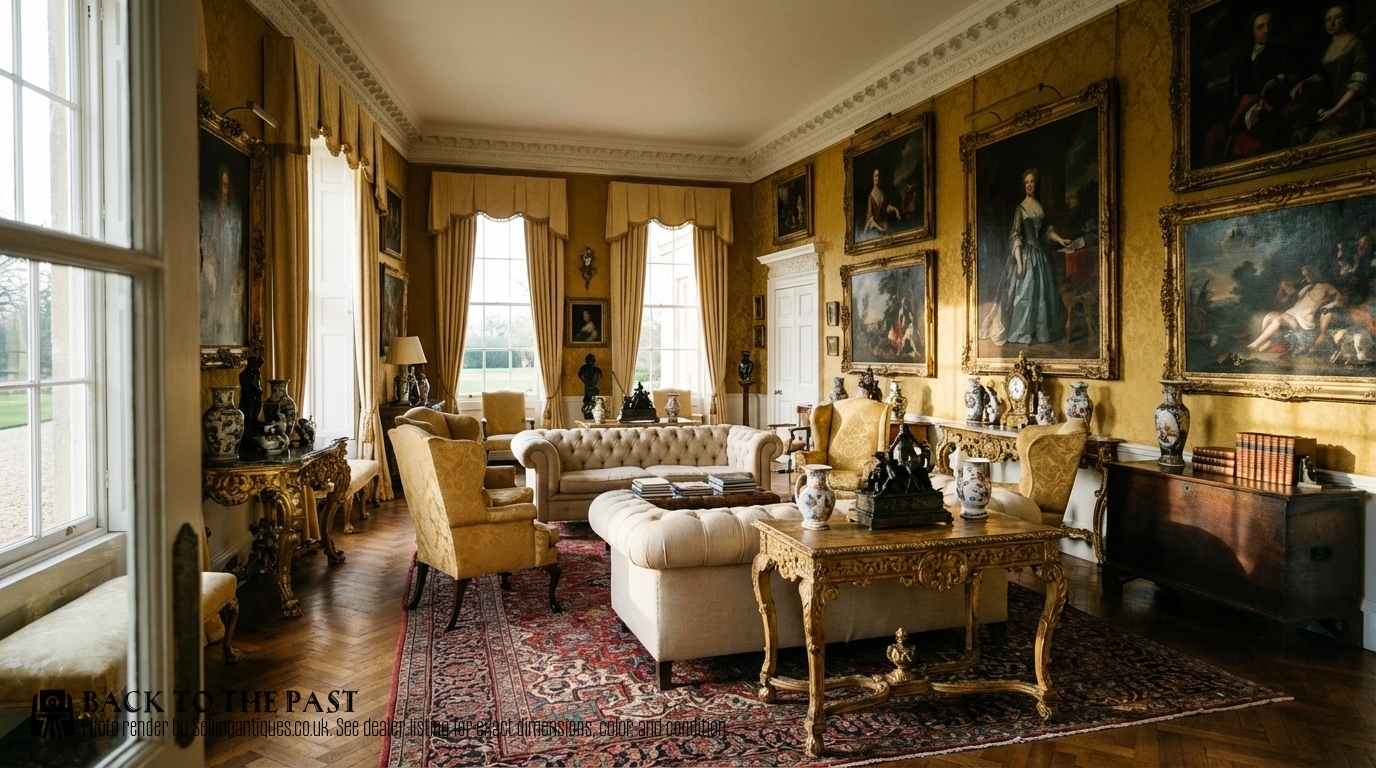
Rustic Oak Coffer Chest
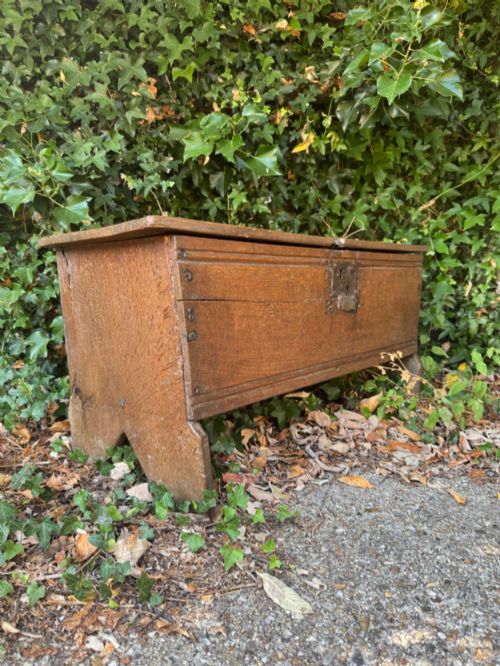
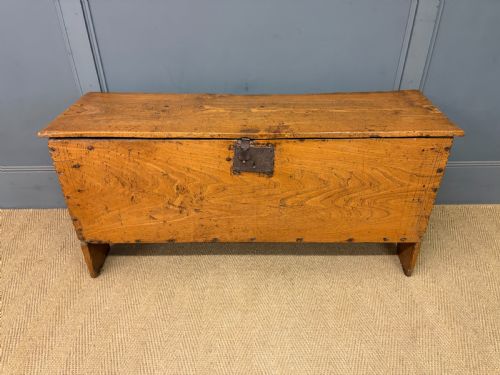
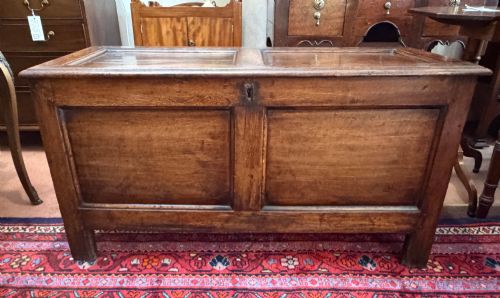
A rustic oak coffer chest is a sturdy storage box designed for household goods, blankets, and documents. When exploring this selection, buyers encounter heavy timber storage forms spanning from the sixteenth century through to the twentieth century.
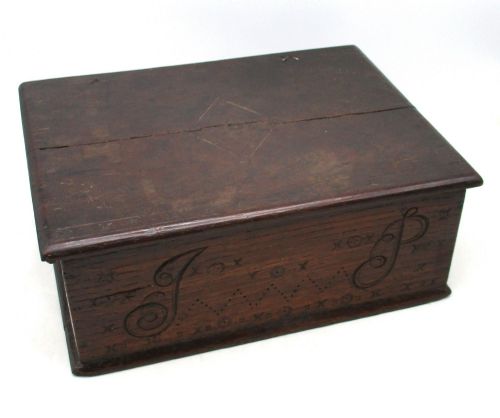
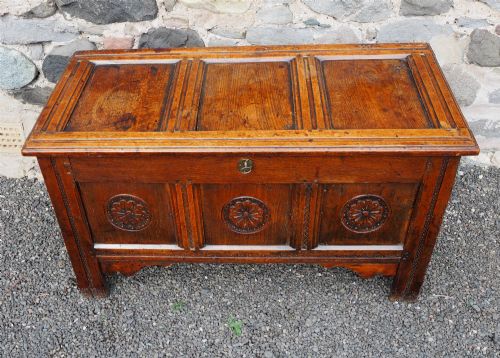
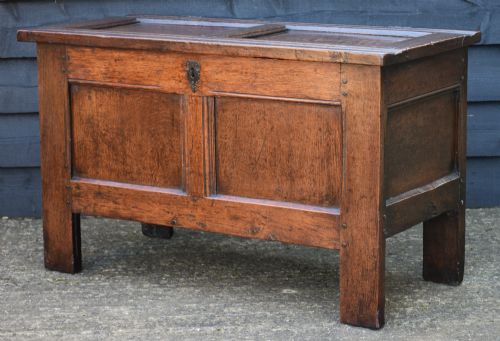
The most common version met on this page is the eighteenth-century oak coffer, alongside seventeenth-century panelled examples and smaller bible boxes. Pieces originate from English country workshops as well as Welsh and continental provincial makers.
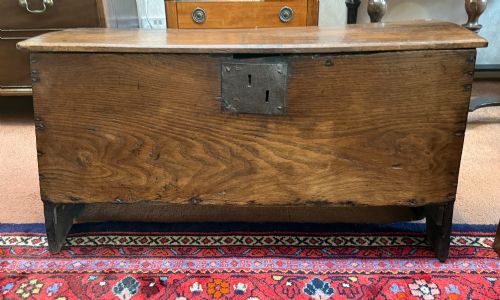
Forms range from long blanket chests and mule chests fitted with drawers to small document boxes and sword chests. Each piece shows the practical storage needs of past centuries executed in solid native timbers.
How they were made
Makers utilised solid oak as the primary material, frequently complemented by secondary woods such as elm, pine, and burr elm panels. Iron and wrought iron hardware, including strap hinges and locks, secured the heavy lids and provided structural reinforcement.
Construction relied on traditional frame and panel techniques, allowing the timber to expand and contract naturally over centuries without splitting the main structure. Surfaces were often left plain or finished with hand carving, paint, and simple mouldings.
Joinery involved pegged tenons and dovetailed joints, particularly on later boxes and chests fitted with internal till compartments or bottom drawers. Blacksmith-made brass or iron handles and escutcheons completed the construction.
Some seventeenth-century chests still retain traces of ancient travels, carrying the lingering scent of old timber and forgotten family secrets beneath their heavy lids.
What varies in quality
Quality separates through the integrity of the timber selection and the crispness of the hand-carved decoration. Pieces featuring burr elm panels or sophisticated seventeenth-century geometric mouldings sit at the higher end of the range.
Proportion and scale dictate desirability, with small proportions and untouched original surfaces commanding greater appreciation. Untouched patination on solid oak boards reflects superior preservation through the centuries.
The sophistication of the ironwork and the survival of original hinges, locks, and feet distinguish standard provincial utility items from finer workshop commissions.
Jack Grimble
The Rustic Oak Coffer Chest Glossary
- Coffer
- A heavy wooden chest traditionally used for storing valuables, plate, or documents. Most examples feature a hinged lid and robust boarded or panelled construction.
- Mule chest
- A traditional storage chest featuring one or more drawers built into the base beneath the main compartment. This form bridges the gap between the simple coffer and the chest of drawers.
- Bible box
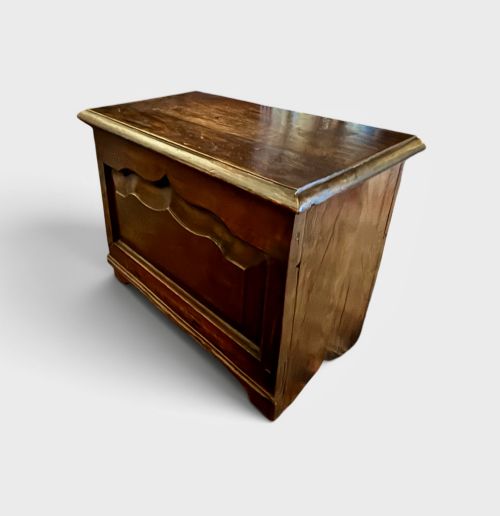
- A small tabletop or desk box designed to hold family scriptures and writing materials. Many feature sloping lids used for reading or writing.
- Sword chest
- A long, narrow storage box specifically proportioned to accommodate edged weapons. These pieces often display sturdy boarded construction and robust iron hardware.
- Panelled coffer
- A chest constructed with a frame enclosing thin wooden panels, allowing the wood to move with changes in humidity. This technique represents standard cabinet-making practice from the seventeenth century onward.
- Vernacular furniture
- Domestic pieces made by local regional craftsmen using native materials without high-style metropolitan influence. Welsh and English country pieces fall squarely into this tradition.
Rustic Oak Coffer Chest: Frequently Asked Questions
What was a coffer used for originally?
In medieval and early modern households, a coffer served as the primary secure storage unit for clothes, linen, and valuables. Families used them to transport belongings during travel as well as keeping domestic goods safe at home.
Over subsequent centuries, their role evolved into permanent household storage for blankets and precious documents, sitting securely in bedrooms or living halls.
How do I tell a seventeenth-century coffer from a later copy?
Early pieces display hand-riven oak boards, pegged frame-and-panel joinery, and forged iron hardware that shows clear hammer marks. The timber develops a deep, dry patination and natural wear patterns accumulated over hundreds of years.
Later reproductions or nineteenth-century revivals often use machine-sawn timber, modern screws, and artificial ageing that lacks the genuine structural integration of period examples.
What is the difference between a coffer and a chest?
Historically, a coffer specifically denotes a strongbox with a flat or slightly domed lid used for securing valuables, often reinforced with iron straps. A chest is a broader term that encompasses any large lidded box for general storage.
In modern antique terminology, the two words are frequently used interchangeably to describe heavy wooden storage furniture.
Where should I place an oak coffer in my home?
An oak coffer fits naturally at the end of a bed, in a hallway, or acting as a coffee table in a living space. Their flat tops provide useful surface area while concealing generous internal storage for bulkier items.
Keep solid wood furniture away from direct heat sources and dramatic humidity fluctuations to protect the ancient oak timbers from drying out.