



Rustic Oak Bedding Box
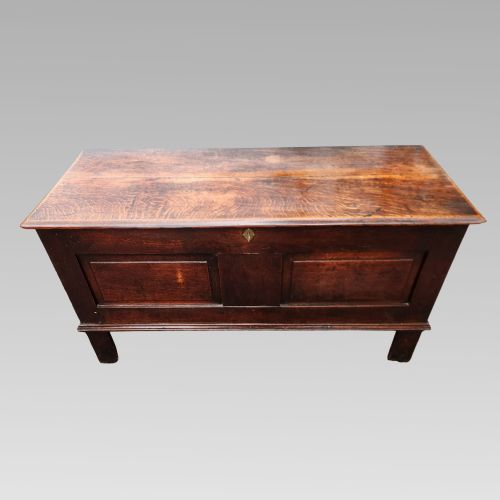
A rustic oak bedding box brings solid country utility into a room, offering robust storage built from timber that endures.

Rustic Oak Bedding Box
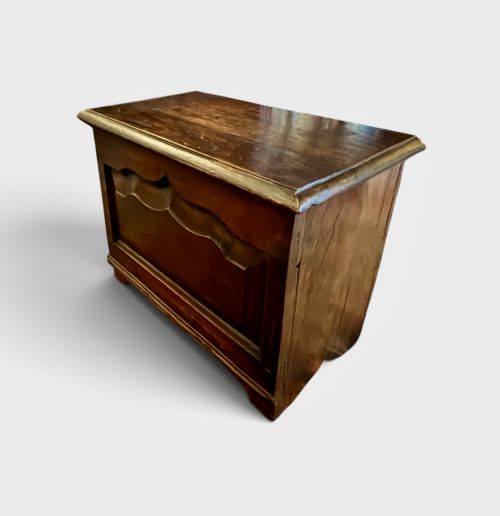
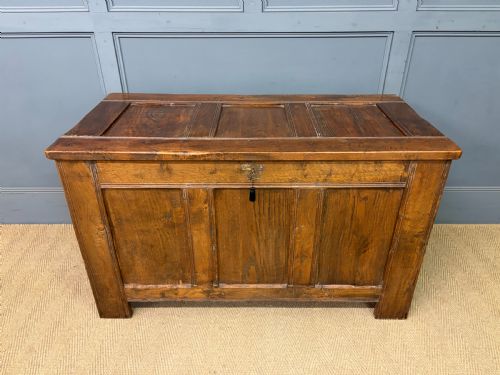
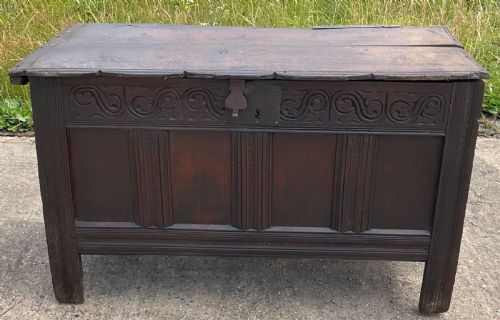
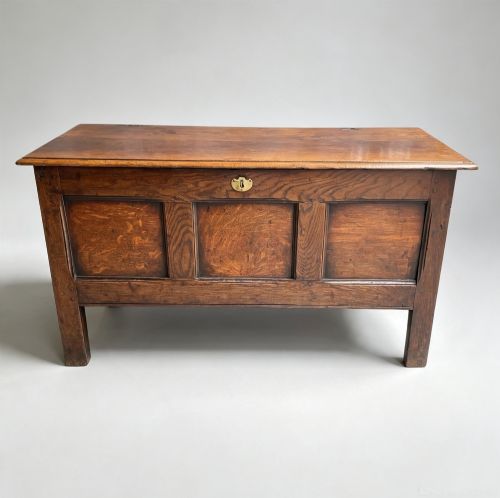
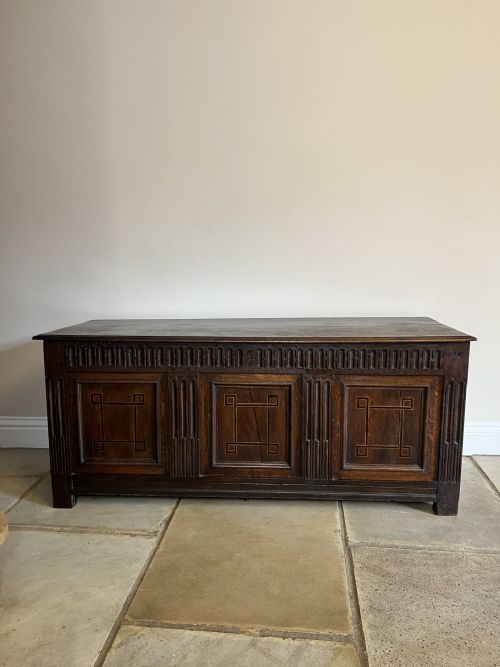
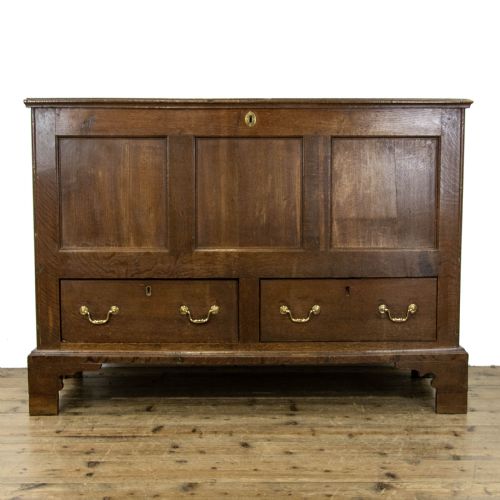
A rustic oak bedding box typically takes the form of a coffer, blanket chest, or mule chest designed for practical household storage. These pieces span from the seventeenth century through to the nineteenth century, encompassing Georgian, Jacobean, and regional country styles.
The items found here include small coffers, large blanket chests, and mule chests fitted with lower drawers. Welsh country pieces and French examples sit alongside English items, showing diverse regional vernaculars within the same heavy timber tradition.
How they were made
Construction relies heavily on solid oak boards, assembled with traditional joinery and joined to withstand generations of daily use. Metal elements such as iron and brass appear in hinges, lock plates, and carrying handles, while occasional ebonised wood provides contrast.
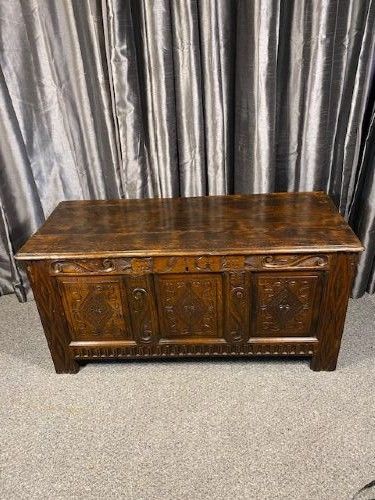
Surface finish depends on age and origin, ranging from plain waxed timber to carved decoration applied by hand. Tool marks from early saws and adzes remain visible on many surfaces, recording the manual effort behind each box.
Rustic Oak Bedding Box Retail Price Guide 2026
Typical asking prices for rustic oak bedding box among the pieces listed under this phrase on Sellingantiques today, from the lower quarter to the upper quarter. They describe what is for sale here now, not the wider market.
The inventory spans the seventeenth, eighteenth, and nineteenth centuries, featuring oak alongside iron, brass, and ebonised wood.
What varies in quality
Gradations in quality stem from the thickness of the timber, the precision of the joinery, and the presence of hand carving. Heavier boards and well-proportioned panels distinguish superior examples from simpler utilitarian boxes.
The integrity of the original hinges, locks, and feet alters the standing of a piece. Earlier seventeenth-century examples display different joinery standards compared to later nineteenth-century traditional versions.
The Rustic Oak Bedding Box Glossary
- Mule chest
- A storage chest that incorporates one or more drawers beneath the main compartment. This form bridges the gap between the traditional coffer and the chest of drawers.
- Blanket chest
- A deep box designed specifically for holding bedding and blankets. These pieces often sit low to the ground in bedrooms.
- Jacobean
- An architectural and decorative style spanning the early seventeenth century, characterised by solid construction and geometric carved panels.
Rustic Oak Bedding Box: Frequently Asked Questions
What is a rustic oak bedding box?
A rustic oak bedding box is a sturdy wooden chest used historically for storing textiles and household goods. These pieces are built from solid oak and date across several centuries.
They serve as both practical storage furniture and historical objects for contemporary interiors. Different regional traditions produce variations in scale and surface decoration.
How were these chests used?
Historically, households utilised these heavy chests to store blankets, bedding, and clothes away from damp floors and dust. Their solid construction meant lids could double as temporary benches or tables.
Today, they function well at the foot of a bed or in a hallway for stowing bulky items. Their flat tops also provide a surface for displaying objects.
How do I date an oak chest?
Dating relies on observing construction methods, tool marks, and stylistic clues like carved panels. Seventeenth-century pieces often use boarded or framed construction with distinct regional joinery.
Later nineteenth-century versions show different planing techniques and hardware styles. Comparing hardware and timber thickness helps establish the period of origin.
How do I care for antique oak?
Antique oak benefits from stable indoor humidity and protection from direct sunlight and heat sources. Applying a natural wax polish occasionally helps nourish the timber and maintain the surface sheen.
Avoid using modern liquid polishes or silicone sprays that can damage the old finish. Gentle dusting with a dry cloth keeps the wood clean.