




Rustic Kitchen Counter Stools
Rustic kitchen counter stools bring honest utility and character to an interior, built from robust timbers to last generations.
Rustic Kitchen Counter Stools
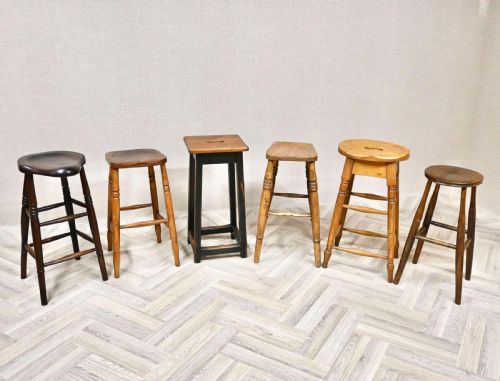
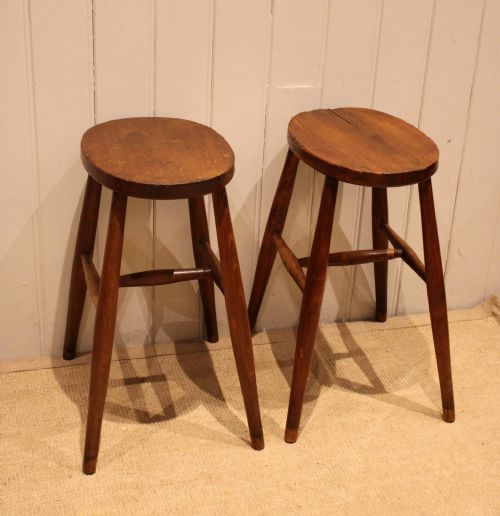
Rustic kitchen counter stools are practical high seating designed for domestic work surfaces and raised dining areas. The selection spans the nineteenth century through to the 1940s, capturing decades of utilitarian design.
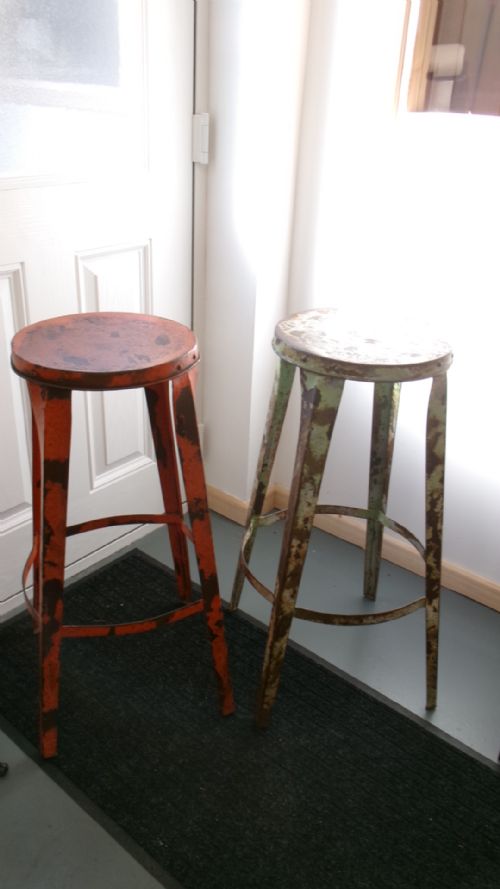
Buyers will most frequently encounter nineteenth-century examples and sturdy industrial pieces from the 1920s and 1930s. These range from tall bar stools to clerk's stools and farmhouse variants.
Origins trace through various British country traditions and industrial workshops, favouring functional forms over ornamental display. Each piece reflects the everyday needs of past kitchens, workshops, and workspaces.
Construction and materials
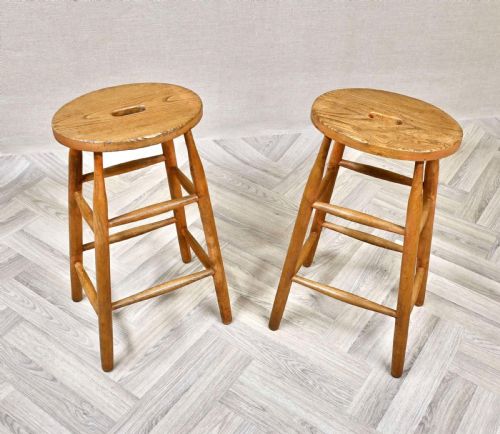
Makers relied on durable native hardwoods such as elm, beech, oak, and pine to withstand heavy daily use. Solid timber tops often paired with turned legs or riveted metal frames for structural rigidity.
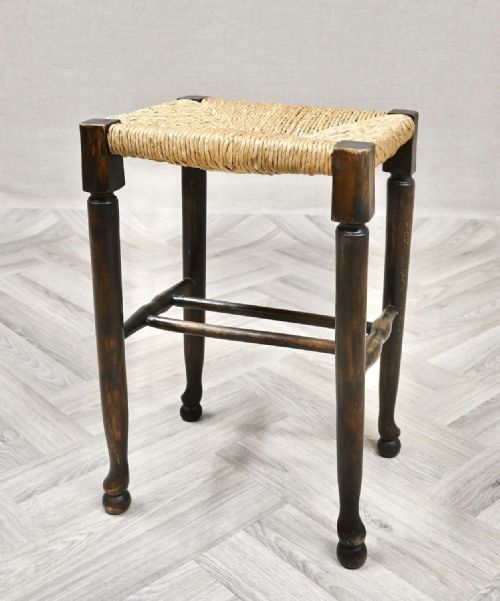
Traditional joinery techniques combined with woven rush seating in specific designs to create resilient, long-lasting high stools. Stained finishes were frequently applied to protect the wood in busy environments.
Clerk's stools were made high enough to keep nineteenth-century ledgers legible while standing.
Judging quality in high seating
Quality rests in the integrity of the timber selection and the strength of the underlying construction. Pieces built with thick elm seats and well-turned beech legs demonstrate superior craftsmanship compared to basic utility items.
Proportion and stance dictate the visual success of a stool, where balanced turned spindles and tight joints create a satisfying silhouette. Wear and patination earned through genuine use add depth, provided the foundational structure remains solid.
The Rustic Kitchen Counter Stools Glossary
- Windsor stool
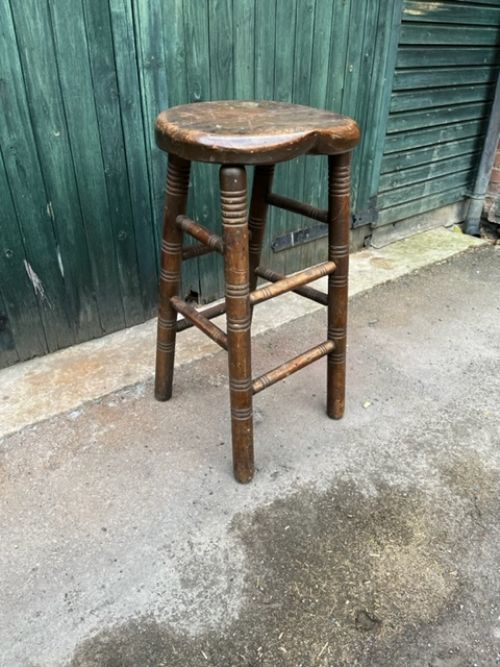
- A high stool featuring a wooden saddle-shaped seat into which the legs and back spindles are wedged independently. This traditional method ensures exceptional stability.
- Rush seat
- A seating surface woven from dried marsh plants, traditionally twisted around a wooden frame. It provides a flexible yet durable platform for prolonged sitting.
- Clerk's stool
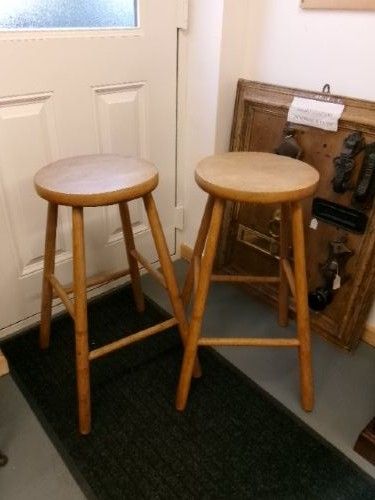
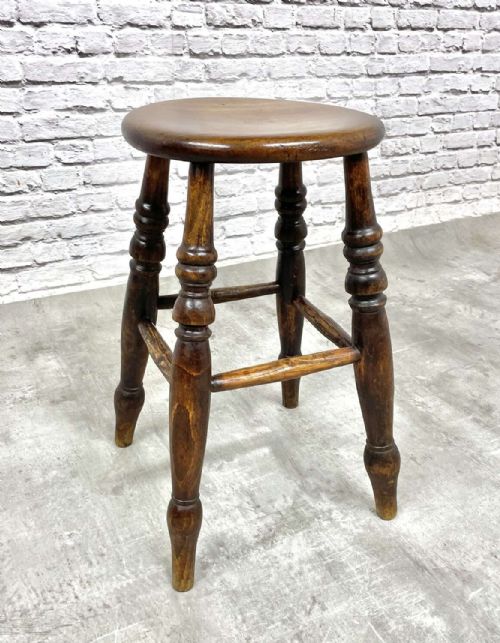
- A tall utilitarian seat historically used at high desks for bookkeeping and administrative tasks. These often feature simple turned legs and round wooden tops.
- Vernacular
- Everyday objects made by local craftspeople using regional materials, uninfluenced by high-style architectural fashions. It prioritises function and local availability above all else.
- Patina
- The surface sheen and softening of colour developed by wood and metal through decades of handling and use. It serves as a visual record of age.
Rustic Kitchen Counter Stools: Frequently Asked Questions
How do I choose the correct height?
Measure your counter or bar height carefully before selecting stools to ensure adequate legroom beneath the surface.
Traditional high stools vary by a few inches, so matching the seat height to your specific table clearance is essential for daily comfort.
Can I use these in modern kitchens?
These pieces integrate naturally into contemporary spaces by introducing warmth and tactile contrast against sleek modern surfaces.
Their honest construction and aged timber provide an earthy counterpoint to minimalist kitchen designs.
How do I care for antique wood?
Keep wooden seats away from direct heat sources and sudden temperature fluctuations to prevent the material from splitting.
Regular application of a suitable natural wax maintains the lustre of the finish without building up a heavy residue.
How do I date an old stool?
Examine the tool marks, joinery methods, and the type of wear present on the footrests and seat edges.
Turned patterns and metal riveted construction techniques also point clearly toward specific periods like the nineteenth century or the 1920s.