




Rustic Interior Oil Painting
A rustic interior oil painting brings domestic quiet, hearthside work and cottage life into a room through layered brushwork and muted pigments.
Rustic Interior Oil Painting
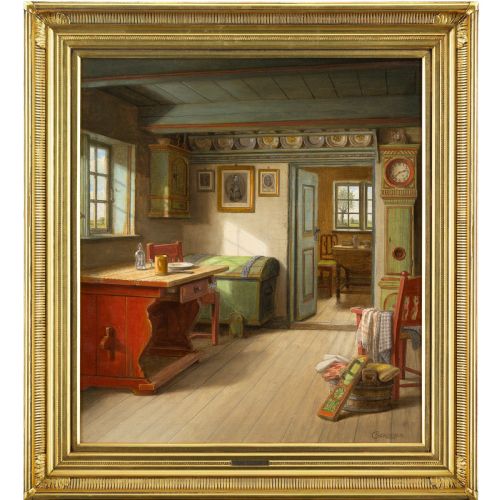
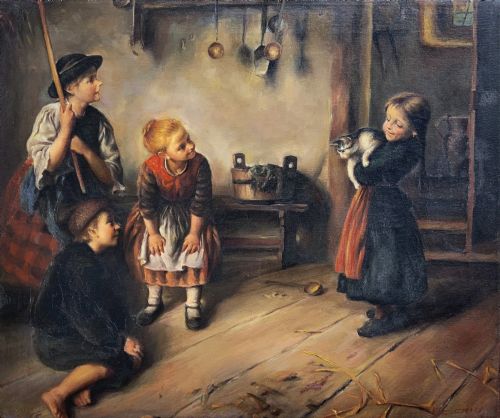
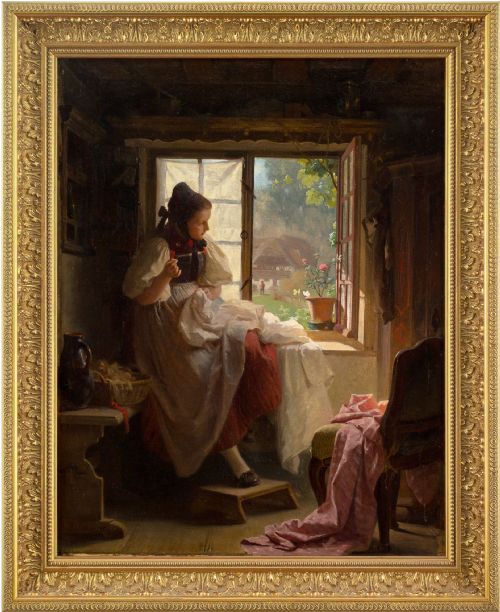
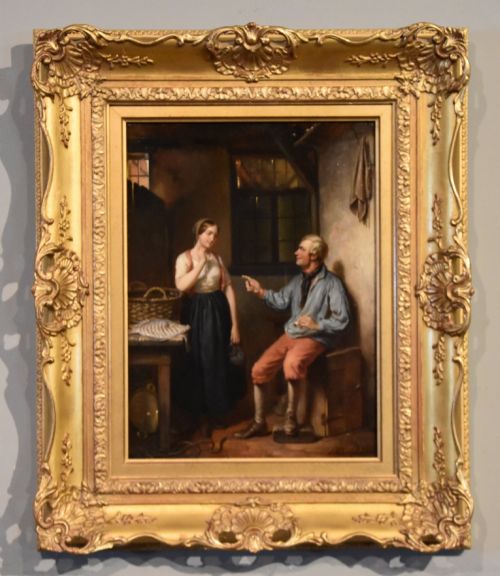
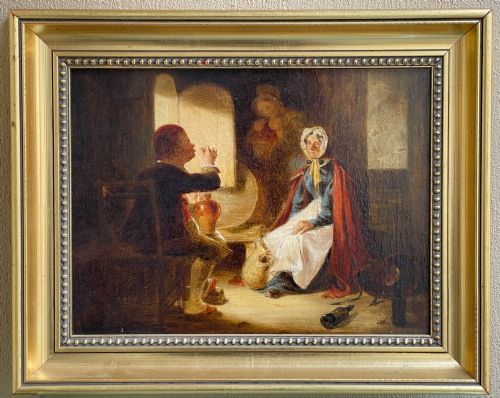
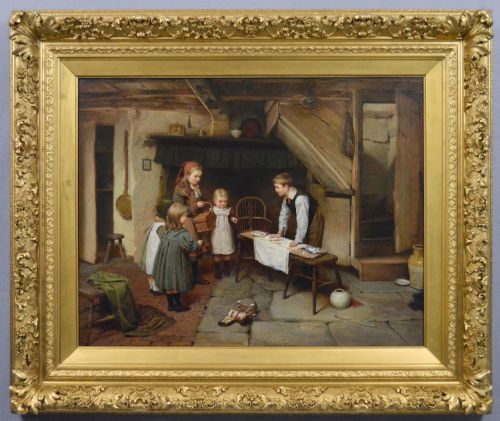
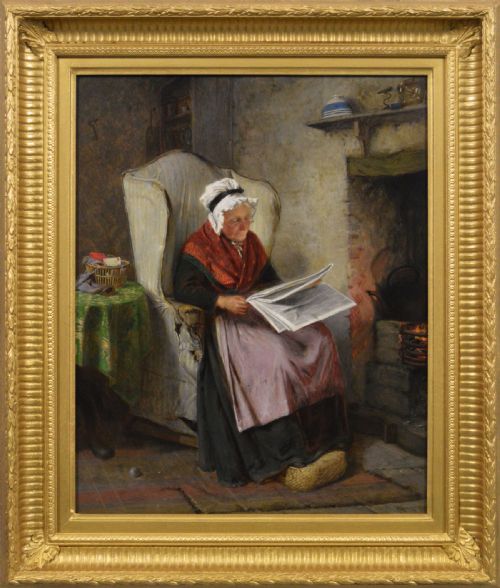
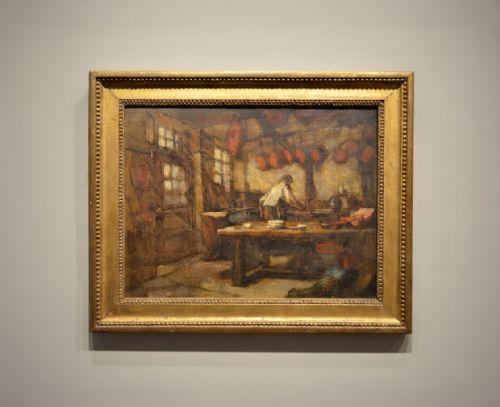
A rustic interior oil painting depicts cottage scenes, tavern rooms, smithies and farmyard interiors with domestic figures at work or rest. These works record everyday rural life through genre painting, capturing spinning maids, sewing children and blacksmiths within domestic spaces.
The pieces on this page span the Victorian era, the nineteenth century and mid-century modern periods, originating from British, Dutch, French, German and Scandinavian regional schools. Buyers encounter works executed on canvas or wood panel, often framed in giltwood with gesso mouldings.
Subjects range from quiet solitary figures by windows to lively scenes featuring children, animals and hearth fires. The compositions rely on traditional techniques such as chiaroscuro to model light falling across humble domestic items and rustic furnishings.
Quality Variations
Quality rests in the handling of light and shadow, particularly how artists managed chiaroscuro to illuminate cottage interiors and dark hearths. Finer examples display subtle transitions across faces and fabrics, whereas simpler works rely on heavier outlines and flat tones.
The precision of figure drawing and the complexity of the composition distinguish regional school pieces. Works featuring multiple figures and animals demand greater skill in arrangement and anatomical rendering than single-figure tavern or cottage scenes.
Rustic Interior Oil Painting Retail Price Guide 2026
Typical asking prices for rustic interior oil painting among the pieces listed under this phrase on Sellingantiques today, from the lower quarter to the upper quarter. They describe what is for sale here now, not the wider market.
Several cottages manage to accommodate an improbable menagerie of donkeys, piglets, rabbits and guinea pigs right beside the hearth.
Max Kaltenmoser·Jacob Akkersdijk·Harry Brooker·Haynes King·James Kyd·Edwin Thomas Roberts·Théophile Emmanuel Duverger·Gustav Goemans·Alfred Provis·Henry Collins·Frank Moss Bennett·Louis Marie Dominique Robbe·Jonathan Pratt·William Shayer Snr·Charles Hunt Jnr·George Harcourt Sephton
The Rustic Interior Oil Painting Glossary
- Genre painting
- Depiction of aspects of everyday life by depicting ordinary people engaged in common activities. These scenes often unfold within cottages, taverns or farmyards.
- Chiaroscuro
- The use of strong contrasts between light and dark, usually bold contrasts affecting a whole composition. This technique creates a dramatic sense of volume in rustic interior scenes.
- Gesso
- A plaster mixture used as a base coat for fine wood carving on picture frames before gilding. It provides a smooth surface for applying gold leaf.
- Giltwood
- Wood that has been gilded with gold leaf or gold paint. Frames made from this material surround many nineteenth-century canvases.
- Panel painting
- A painting made on a flat panel of wood rather than canvas. These supports are common in earlier and regional works.
Rustic Interior Oil Painting: Frequently Asked Questions
What is a rustic interior oil painting?
These works are oil paintings on canvas or wood panel that depict domestic scenes in cottages, farmyards, blacksmiths and taverns. They record the daily lives of peasants, spinning maids and families through nineteenth-century and Victorian genre painting.
Subjects often focus on quiet moments by the hearth, children playing or workers busy with daily trades. Artists utilised traditional techniques to capture the play of light across humble rooms.
How do I date a rustic oil painting?
Dating relies on the style of clothing, the canvas preparation, the type of wood panel and the framing materials used by the artist. Victorian and nineteenth-century works frequently employ specific pigment mixtures and stretcher frame constructions.
Inscriptions on the reverse of the canvas or panel, along with signatures from known regional school painters, also help establish the decade of creation.
Where should I hang these paintings?
These works suit dining rooms, studies and living spaces where warm lighting enhances the darker, rich tones of oil paint and giltwood frames. They pair well with traditional wooden furniture and neutral wall colours.
Keep paintings away from direct sunlight and damp environments to protect the oil paint, canvas and gesso frames over time.
What subjects appear in these scenes?
Common subjects include elderly women resting, children sewing by windows, blacksmiths at work and families gathered around cottage hearths. Many compositions incorporate domestic animals such as dogs, pigs, sheep and poultry.
These narratives reflect nineteenth-century romanticism and realism regarding rural labour and home life across Britain and continental Europe.