

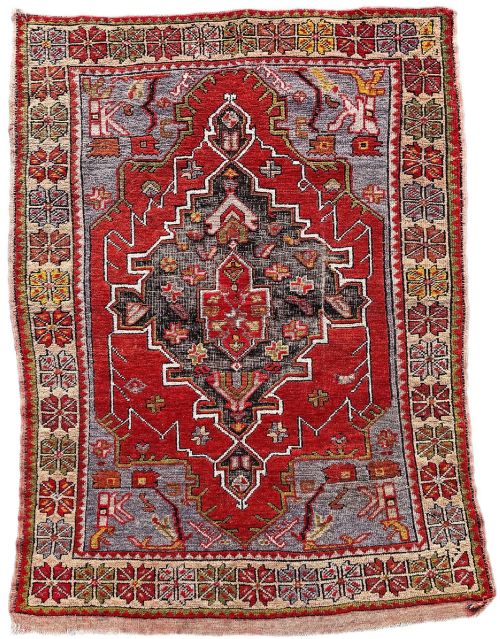


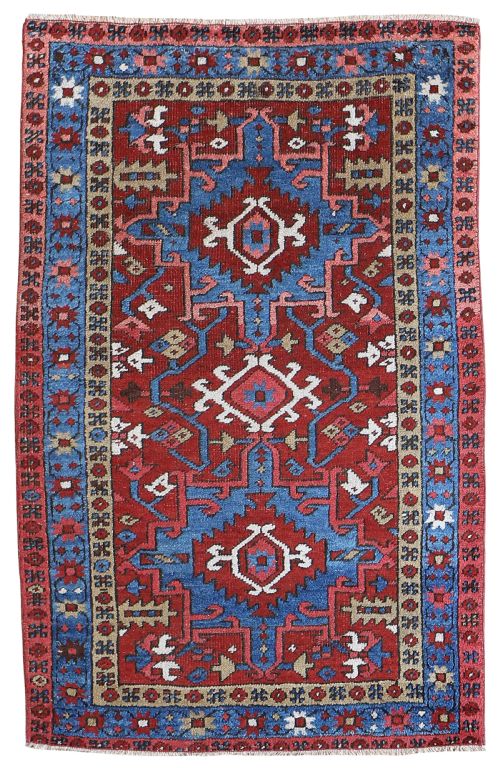


Rustic Hand Woven Rug
These rustic hand woven rug examples are genuine tribal and village floor coverings offering tactile warmth and honest character.
Rustic Hand Woven Rug
A rustic hand woven rug represents traditional village and tribal weaving traditions from Persian, Anatolian, and Caucasian regions. When you search for a rustic hand woven rug, you encounter pieces originating primarily between the late nineteenth century and the early twentieth century.
The selections on this page span diverse regional formats including Heriz, Baluch, Shiraz, Gendje, and Yuruk rugs alongside functional cushion covers. These items reflect the domestic handiwork of nomadic and village weavers utilising traditional motifs.
You will find formats ranging from square area pieces and long runners to compact bag faces. Each specimen displays the distinct design vocabulary of its specific tribal group.
Materials and construction
These floor coverings are constructed primarily from hand-spun wool and camel wool, providing robust natural pile and foundation threads. The employment of native animal fibres ensures durability and a tactile surface texture unique to historical village production.
Weavers utilised traditional hand-knotting and weaving techniques passed down through generations within specific tribal communities. The application of local dyestuffs yields the grounded, earthy palettes characteristic of these regional textiles.
Rustic Hand Woven Rug Retail Price Guide 2026
Typical asking prices for rustic hand woven rug among the pieces listed under this phrase on Sellingantiques today, from the lower quarter to the upper quarter. They describe what is for sale here now, not the wider market.
Several nomadic weavers cleverly repurposed storage bags into compact rugs, ensuring their geometric patterns survived centuries of travel.
Assessing quality and character
Quality in these textiles depends upon the integrity of the wool, the tightness of the weave, and the clarity of the tribal design. Finer examples exhibit balanced proportions and robust structural foundations despite significant age.
The distinction between standard village production and superior tribal work lies in the handling of natural materials and the expressive execution of traditional geometric or figurative motifs.
The Rustic Hand Woven Rug Glossary
- Baluch
- A tribal designation for rugs woven by nomadic groups inhabiting the borderlands of Persia and Afghanistan. These pieces frequently incorporate deep indigo and camel wool details.
- Heriz
- A style of carpet originating from the Northwest of Persia known for bold geometric medallions and robust structural foundation. They are typically durable room-size or square formats.
- Shiraz
- A classification for rugs produced in the Fars province of Persia by various tribal confederacies. They often feature multiple medallions and rich wool piles.
- Camel wool
- Un-dyed or natural fleece sourced from camels, utilised by tribal weavers to impart a characteristic soft golden-brown hue and durable handle.
- Bag face
- The functional front panel of a nomadic storage bag, repurposed as a small decorative mat or cushion cover.
Rustic Hand Woven Rug: Frequently Asked Questions
How do I clean a rustic rug?
Gentle surface brushing and professional specialist cleaning preserve the natural wool fibres without damaging historic foundations. Avoid harsh chemical immersion.
Regular low-suction vacuuming prevents grit accumulation within the pile while maintaining the structural integrity of the weave over time.
Where were these rugs made?
These textiles originate from village workshops and nomadic tribal camps across Persia, Anatolia, and the Caucasus. Weavers utilised locally sourced materials.
Each region developed distinct geometric patterns and colour palettes reflecting their specific cultural heritage and environment.
Can I use these rugs in high traffic areas?
The robust wool construction of these tribal pieces suits them well for moderately active hallways, living rooms, and studies. Proper underlay prevents slip and wear.
Heavier traffic zones benefit from thicker piled village runners and sturdy room-size carpets that withstand daily use.
How do I date an old rug?
Dating relies on assessing material characteristics, natural dye chemistry, structural wear patterns, and regional design evolution. Comparative analysis of known tribal motifs provides reliable timelines.
Consulting structural attributes like edge finishes and foundation materials helps narrow down the period of production alongside stylistic evidence.