


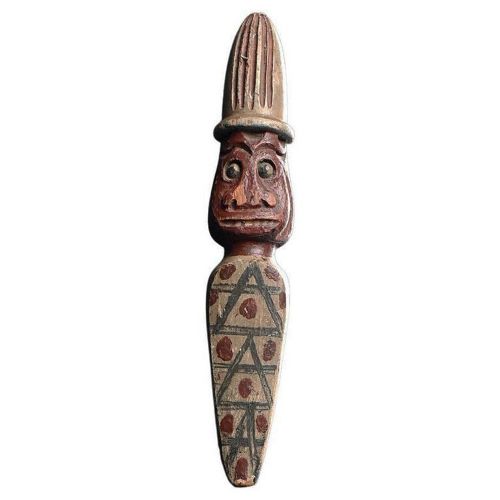

Rustic Folk Art Toy
These rustic folk art toy pieces are honest, hand-made survivals in wood and metal that bring immediate character to a room.
Rustic Folk Art Toy
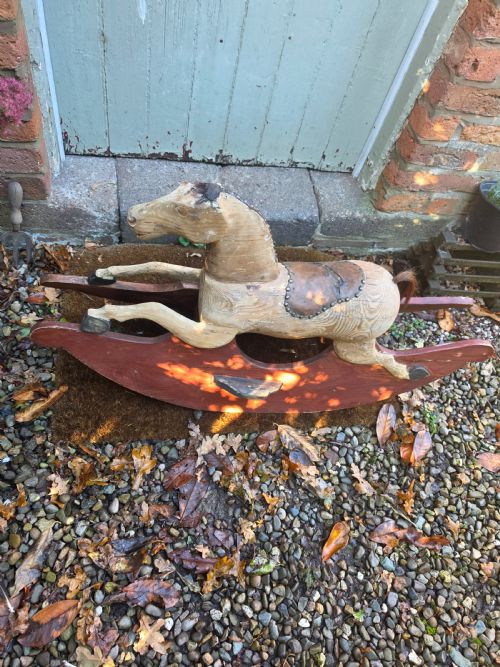
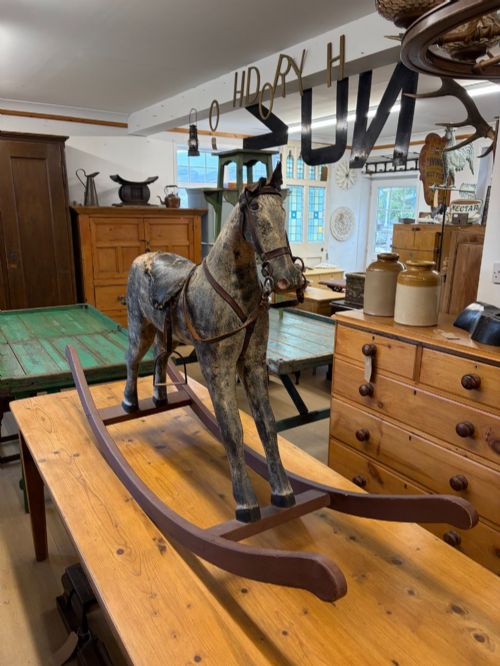
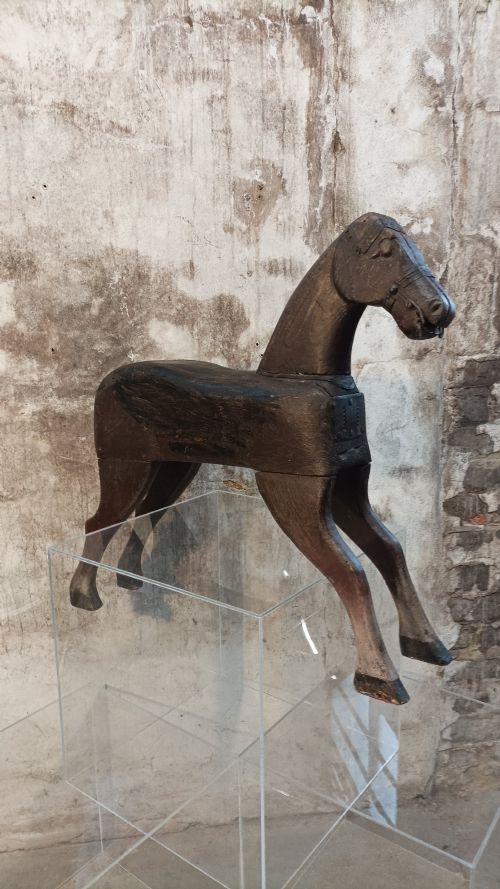
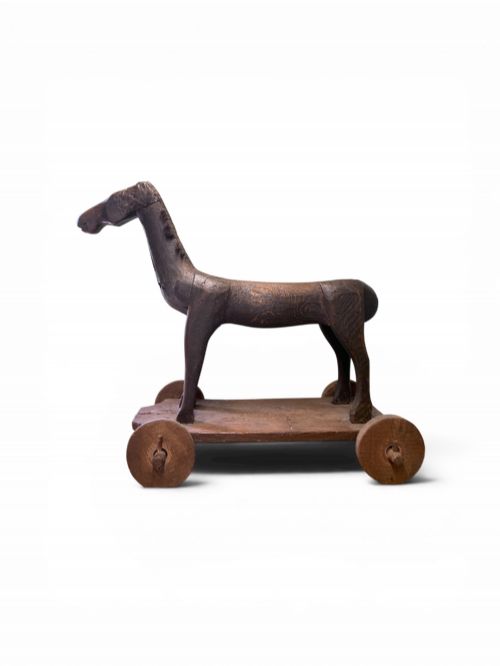
When you search for a rustic folk art toy, you encounter hand-carved horses, balance toys, and kinetic sculptures shaped by makers using timber, paint, and sheet metal. These objects span the eighteenth, nineteenth, and early twentieth centuries, reflecting utilitarian domestic craft rather than commercial factory production. The most common form on this page is the wooden toy horse, appearing in primitive, naive, and painted finishes across multiple periods.
Beyond horses, the selection includes teeter-totters, balance toys, and early American whirligig figures that demonstrate simple mechanical ingenuity. Materials range from carved oak and simple timber to painted surfaces and iron components, often showing heavy wear from actual use by children. Origins trace through nineteenth-century British and American traditions, preserving the straightforward shaping of early makers.
How they were made
Makers fashioned these pieces from available woods such as oak and general timber, utilising hand-carving techniques to shape horses, figures, and kinetic structures. Surfaces were frequently treated with paint, adding simple colour and definition to the carved forms without masking the tool marks underneath.
Metal components, including iron and sheet metal, were incorporated into balance toys and whirligigs to create movement and weight distribution. Construction relied on basic joinery and pinning, suiting the functional demands of a child's toy rather than fine cabinetmaking standards.
Listings span the eighteenth, nineteenth, and early twentieth centuries, featuring wood, paint, iron, and sheet metal in sculptural forms.
What varies in quality
The distinction between ordinary and exceptional pieces lies in the strength of the carving and the character of the surface patination. Direct, unpretentious tool work and surviving original paint layers elevate a piece above standard examples that lack visual punch.
Proportion and stance dictate the visual success of figurative carvings, particularly among the various toy horses and animal figures. Pieces that retain their original mechanical balance or kinetic function demonstrate superior initial design alongside successful survival.
The Rustic Folk Art Toy Glossary
- Folk art
- Creative work produced by self-taught or indigenous makers within a community tradition. It prioritises utility and direct expression over academic precision.
- Primitive
- A term describing objects made with basic tools and straightforward methods. It denotes an unrefined, early character in construction and design.
- Kinetic sculpture
- Art that incorporates actual movement as part of its visual expression. In this context, it includes whirligigs and balance toys moved by wind or touch.
- Whirligig
- A wind-driven toy or garden ornament with rotating parts. Early examples often feature carved figures whose arms or blades spin in the breeze.
Rustic Folk Art Toy: Frequently Asked Questions
What is a rustic folk art toy?
These pieces are hand-made playthings and kinetic sculptures created by vernacular makers using wood, paint, and metal. They reflect the domestic traditions and practical craftsmanship of past centuries.
Items range from carved wooden horses to balanced metal figures and wind-driven whirligigs, each shaped by hand without commercial manufacturing processes.
How were these toys used?
Original owners used these objects as playthings for children or as kinetic garden ornaments moved by the wind. Many pieces show the distinct wear and tear of active childhood use.
Over time, surviving items transitioned from active playthings into decorative objects valued for their sculptural qualities and historical character.
How do I live with them?
These pieces fit naturally into rooms that benefit from organic textures, weathered wood surfaces, and tactile historical objects. They anchor tabletops, shelves, and mantelpieces with quiet sculptural presence.
Display them away from direct heat sources and strong sunlight to protect aged painted surfaces and dry timbers from environmental stress.
How do I tell periods apart?
Differentiating periods relies on observing tool marks, wood species, and the ageing of paint layers. Earlier eighteenth-century examples often display heavier primitive shaping and simpler joinery.
Nineteenth and early twentieth-century pieces introduce varied mechanics in balance toys and whirligigs, alongside different paint chemistries that show distinct craquelure and wear.