
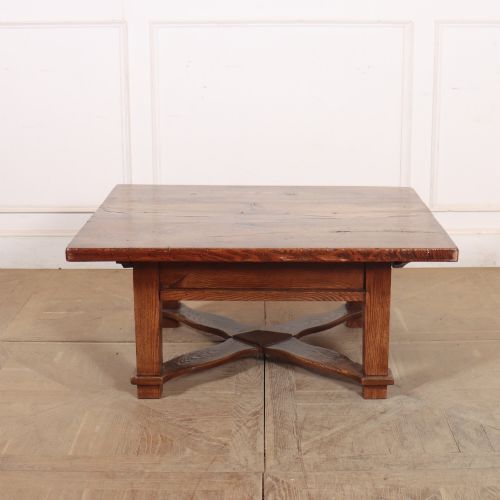


Rustic Elm Farmhouse Table
A rustic elm farmhouse table brings centuries of honest utility and timber character into a modern dining room.
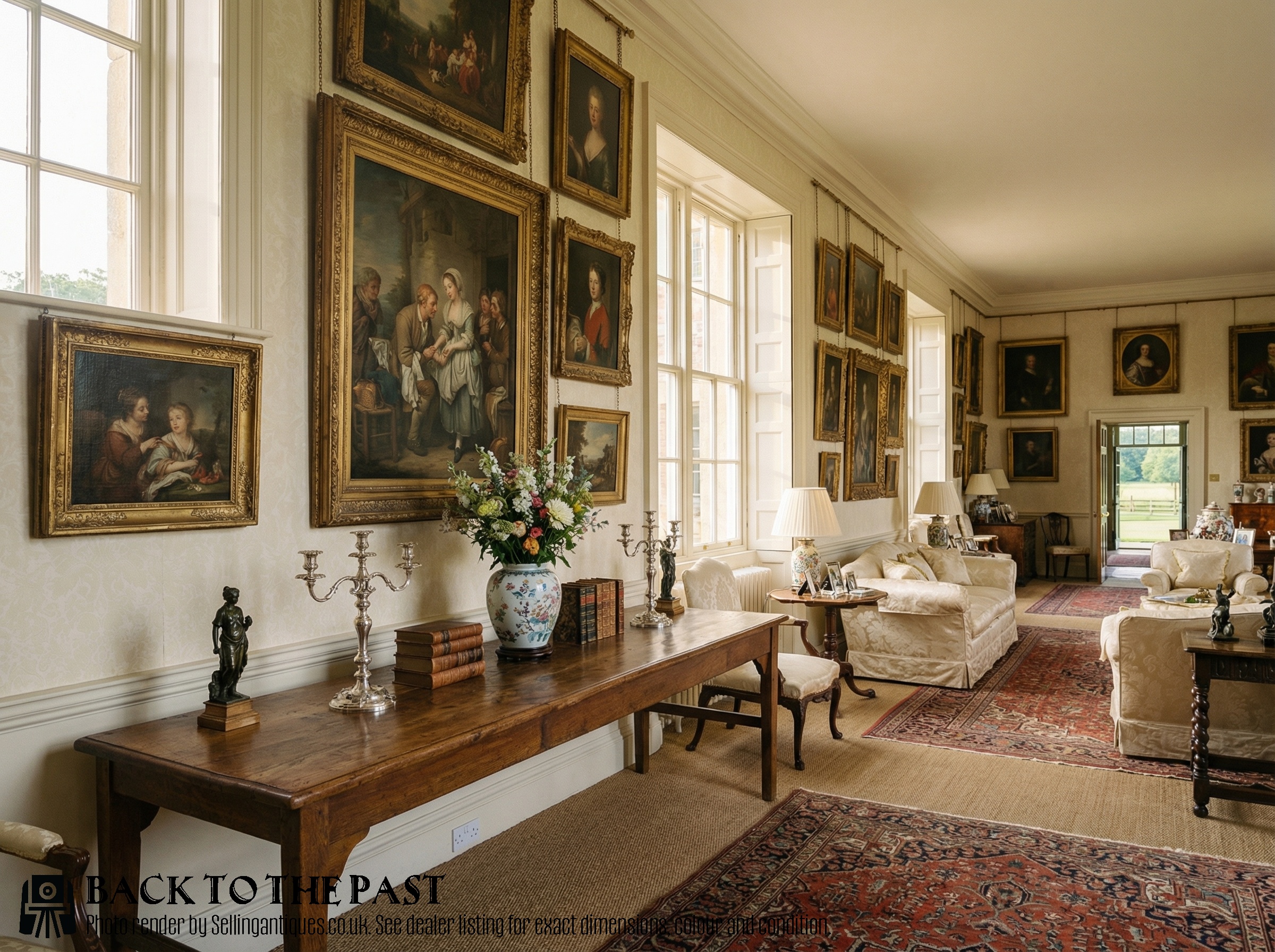
Rustic Elm Farmhouse Table
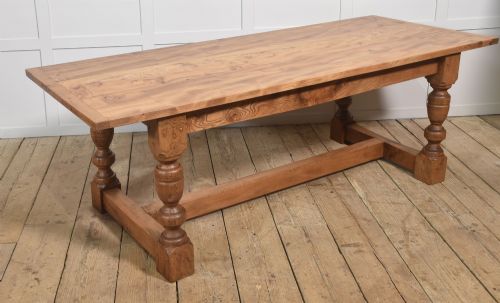
A rustic elm farmhouse table is a sturdy timber surface built for practical use, drawing on traditions from French, English, Spanish, and Austrian country houses. These pieces span dining tables, refectory designs, harvest tables, and coffee tables produced across the eighteenth and nineteenth centuries.
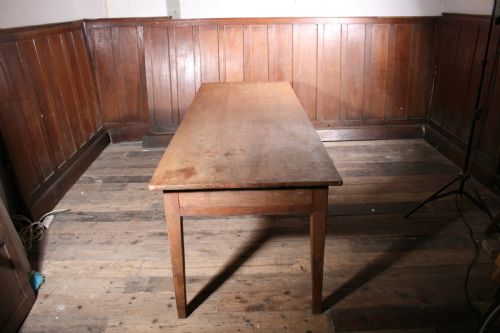
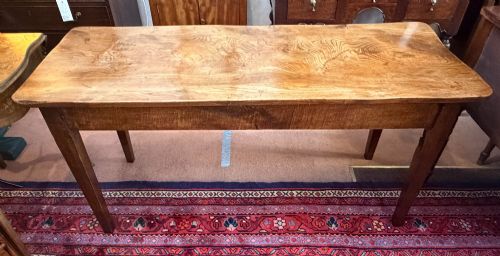
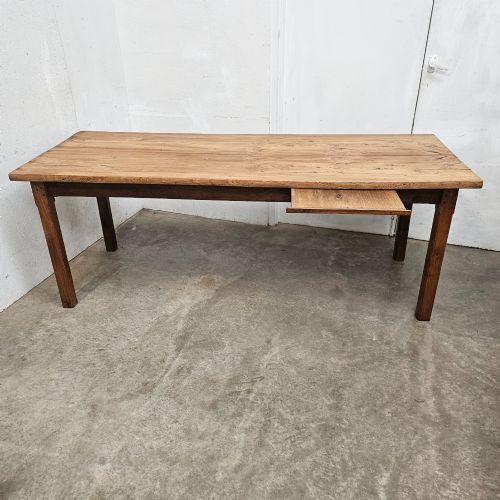
The version most commonly met on this page is the nineteenth century French or English country dining table, often constructed with a solid timber top and turned or square legs. Many examples show the marks of daily domestic life, from scrubbed surfaces to occasional drawers and two-board tops.
Beyond standard dining formats, the selection includes related timber forms such as trestle tables, benches, and dough bins. These functional pieces share the same heavy hardwood construction and provincial aesthetic that defines the group.
What varies in quality
Quality rests upon the integrity of the timber selection and the retention of original surface patination. Tables featuring dense, well-figured elm boards with deep, honest wear demonstrate superior character compared to heavily restored or artificially aged examples.
Proportion and structural balance dictate the success of the piece, with finer examples displaying well-turned legs and harmonious dimensions. The relationship between the top boards and the supporting frame reveals the skill of the original country carpenter.
Several listings include historic West Country pig benches, proving that eighteenth-century livestock furniture makes a fine modern seat.
The Rustic Elm Farmhouse Table Glossary
- Refectory table
- A long dining table traditionally used in communal halls and country kitchens. These forms are characterised by substantial length and stretcher-supported legs.
- Trestle table
- A table design where the top is supported by two or more vertical frames or trestles. This construction allows for maximum seating space along the length.
- Dough bin
- A lidded wooden box mounted on a frame, historically used for kneading and proving bread. In modern interiors, these serve as low storage furniture.
- Pig bench
- A low wooden bench originally utilised for agricultural or butchery tasks in country regions. These items now function as narrow seating or low display surfaces.
- Scrubbed top
- A wooden surface cleaned repeatedly with water and abrasive brushes to remove grease and stains. This process leaves the timber pale, smooth, and tactile.
Rustic Elm Farmhouse Table: Frequently Asked Questions
How do I clean a rustic elm table?
Wipe the surface with a damp cloth and mild soap, avoiding harsh chemical cleaners that strip the grain.
Dry the timber thoroughly afterwards to prevent moisture damage to the antique wood.
Can I use an antique farmhouse table daily?
These tables were originally built for heavy daily use and handle modern family life with ease.
Using placemats and coasters helps protect the historic surface from heat and moisture marks.
How do I date an elm farmhouse table?
Examine the construction methods, tool marks beneath the top, and the type of timber grain.
Eighteenth-century examples often display wider single planks and hand-pegged joinery compared to later pieces.
Are these tables suitable for small kitchens?
While many examples are long dining tables, smaller coffee tables and narrow benches are available.
Measuring the room space carefully ensures the chosen table leaves adequate clearance for chairs.