
Vintage Timber Kitchen Table
A vintage timber kitchen table brings honest character and practical weight to a room, offering a hardworking surface shaped by decades of domestic life.
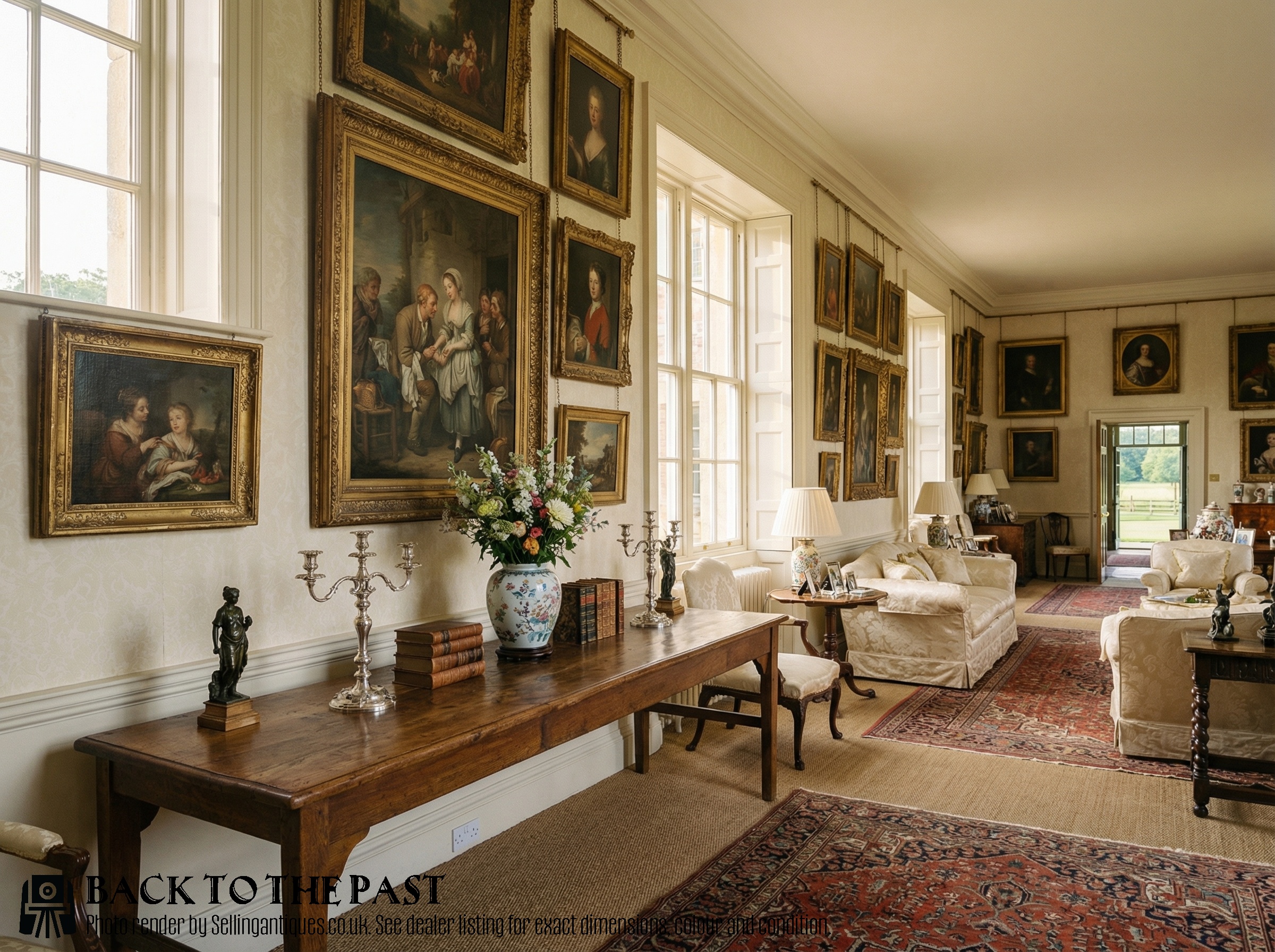
Vintage Timber Kitchen Table
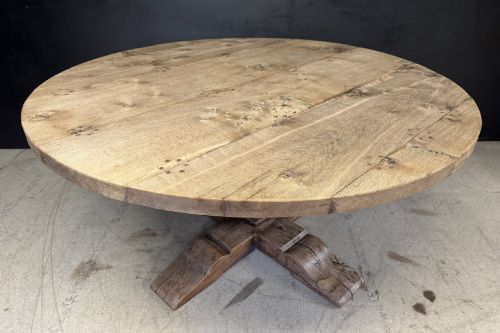
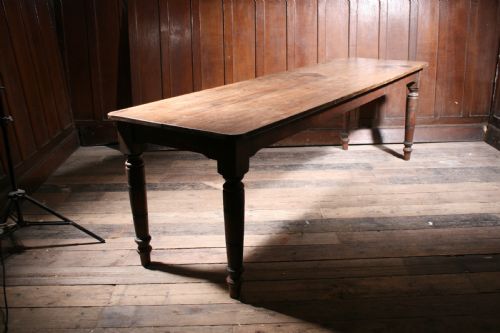
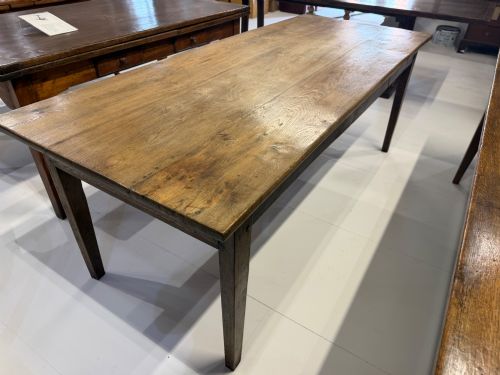
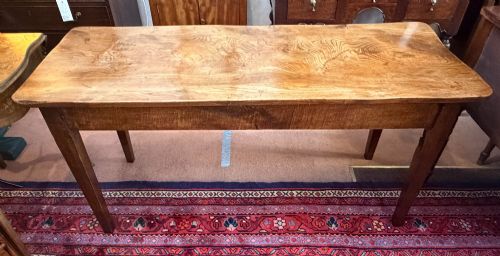
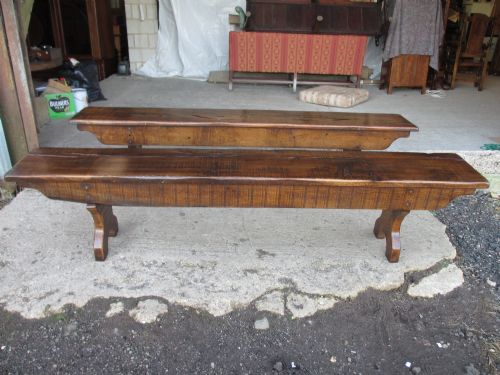
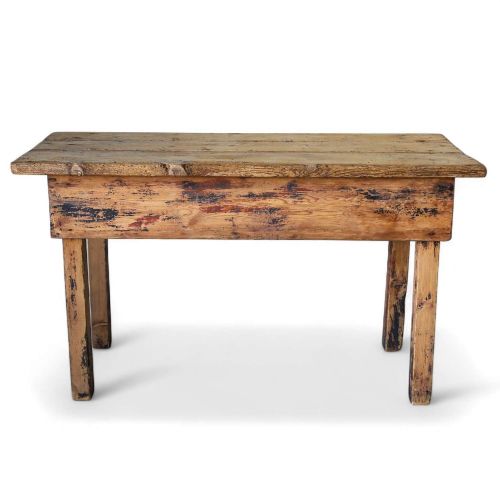
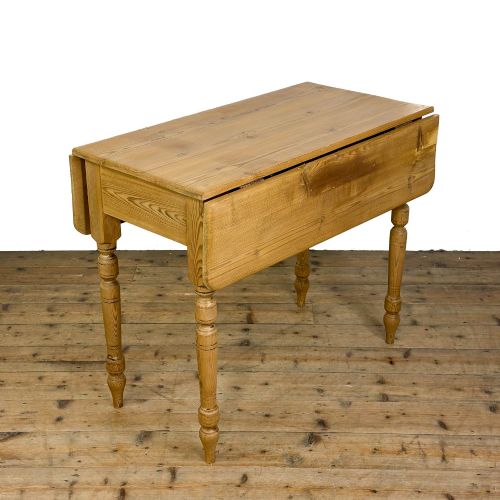
A vintage timber kitchen table encompasses sturdy utilitarian furniture designed for domestic food preparation, dining, and daily family gathering. These examples span the nineteenth century, the Edwardian era, and the early decades of the twentieth century, reflecting practical working traditions.
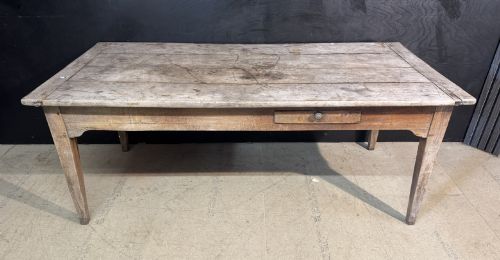
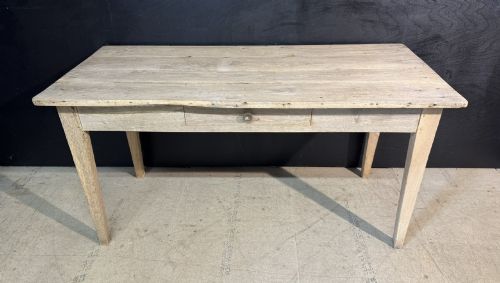
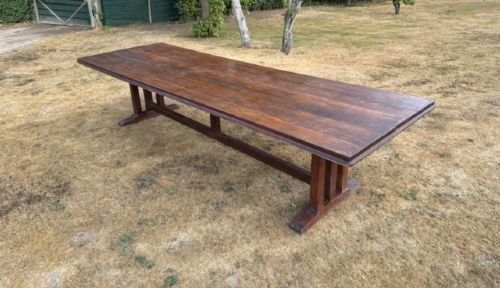
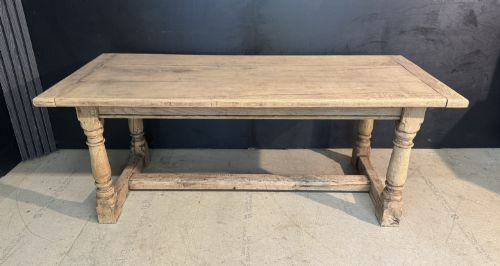
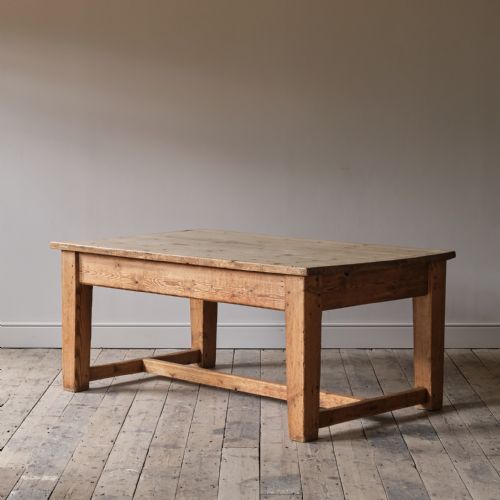
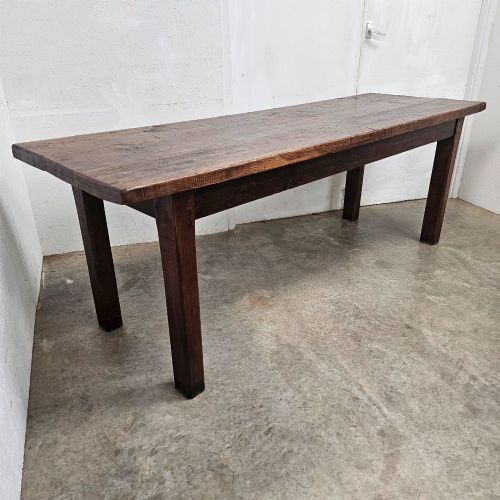
The versions most commonly met on this page include robust pine farmhouse tables, scrubbed top boards, oak refectory designs, and heavy chopping blocks. Origins range across English country houses, French provincial workshops, and Scandinavian settings.
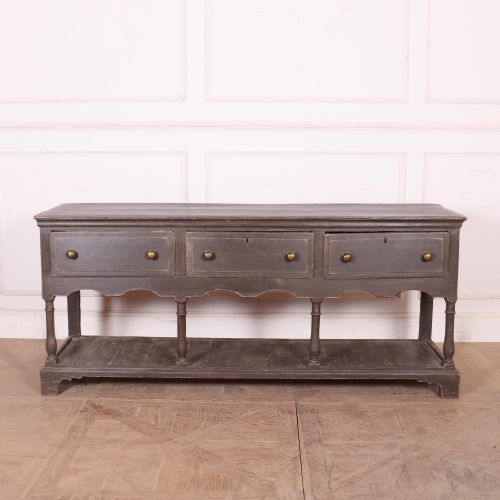
Related utilitarian forms also appear alongside the tables, such as painted dresser bases, butchers blocks, dairy prep tables, and artisans workbenches fitted with vices. Each form retains the marks of its original labour and functional purpose.
How they were made
Construction relies upon durable hardwoods and softwoods including oak, pine, elm, beech, and sycamore, joined to withstand heavy daily use. Thick timber tops sit upon substantial square section supports, trestle ends, or robust legs.
Surfaces show the effects of traditional finishes and natural wear, incorporating scrubbed bare wood, historical paint layers, and iron or brass hardware. Joinery techniques prioritise stability and utility above ornament.
The furniture forms include dining tables, dresser bases, butchers blocks, and artisans workbenches.
What varies in quality
Quality rests upon the integrity of the original timber and the proportion of the piece, where thick top boards and uncompromised structural supports distinguish superior examples. Substantial framing and honest signs of period use elevate a table above standard utilitarian grade.
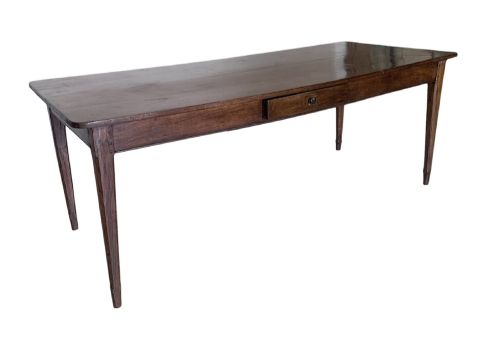
The character of the surface timber creates distinction, ranging from deeply scrubbed pine grains to dense, figured oak and bleached finishes. Original fittings, such as integrated drawers or working vices on workbenches, preserve the authenticity of the piece.
The Vintage Timber Kitchen Table Glossary
- Potboard dresser base
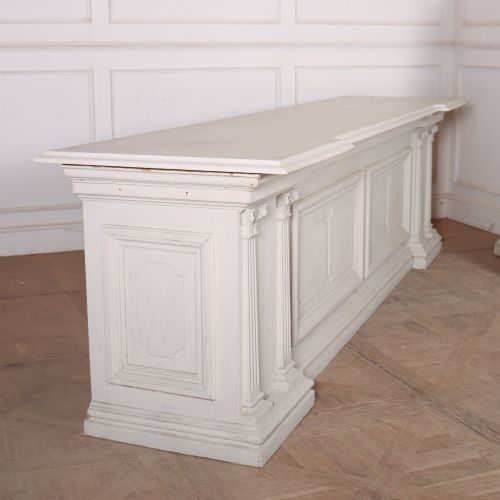
- A low sideboard featuring an open lower shelf used historically for storing pots and domestic utensils. These pieces typically display heavy timber construction and painted finishes.
- Refectory table
- A long, narrow dining table originally built for communal dining halls. Examples in these listings utilise sturdy oak construction with thick tops.
- Butchers block
- A dense, thick wooden block designed for meat preparation and heavy chopping. These utilitarian objects often stand on robust legs and display significant surface marks from daily use.
- Workbench
- A heavy table utilised by artisans or craftspeople, frequently fitted with wooden vices and tool wells. French and English versions appear with substantial timber tops.
- Scrubbed pine
- Pine timber that has been repeatedly washed and scrubbed to create a pale, clean surface texture. This finish is typical of nineteenth-century kitchen and dairy tables.
Vintage Timber Kitchen Table: Frequently Asked Questions
How do I clean a timber kitchen table?
Maintain the wood by wiping surfaces with a damp cloth and mild soap, avoiding harsh chemical cleaners that strip historical patina. Regular gentle care preserves the natural grain and dry texture of the old timber.
Allow the wood to dry naturally after cleaning. Avoid placing hot dishes directly onto unprotected antique surfaces to prevent marking the historic finish.
Can I use a workbench as a kitchen island?
Workbenches and butchers blocks provide exceptional utility as central kitchen preparation surfaces due to their sturdy construction and generous proportions. Their integrated vices and heavy timber tops lend both character and practicality to modern spaces.
Ensure you measure the height and floor space carefully before placement, as these industrial and agricultural pieces often possess substantial physical presence. Their heavy frames anchor a room effectively.
What is the difference between pine and oak tables?
Pine tables offer a softer, lighter appearance with visible knots and a surface that readily accepts scrubbing and historic paint treatments. They typically represent country domestic use and utility.
Oak tables provide greater density, darker grain patterns, and formal refectory styling associated with substantial country houses. Oak structures endure heavy wear while retaining crisp structural lines.