
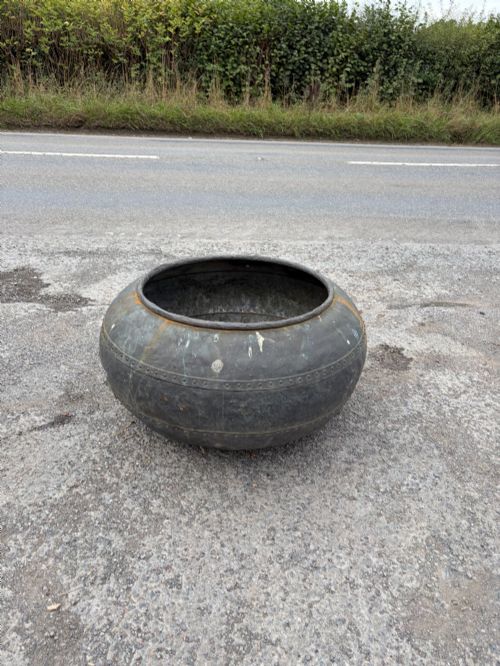
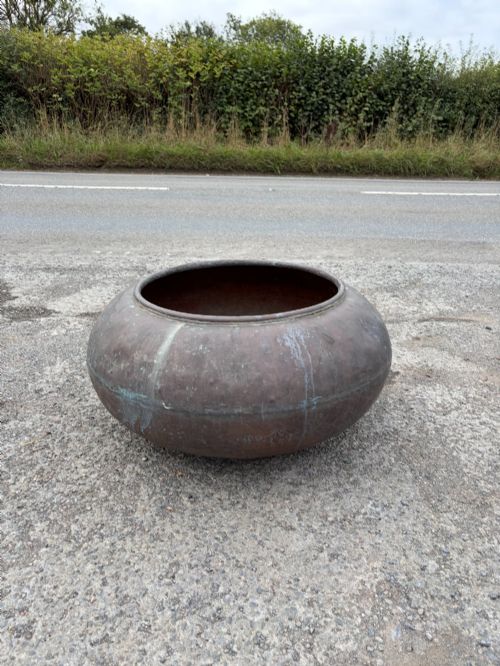
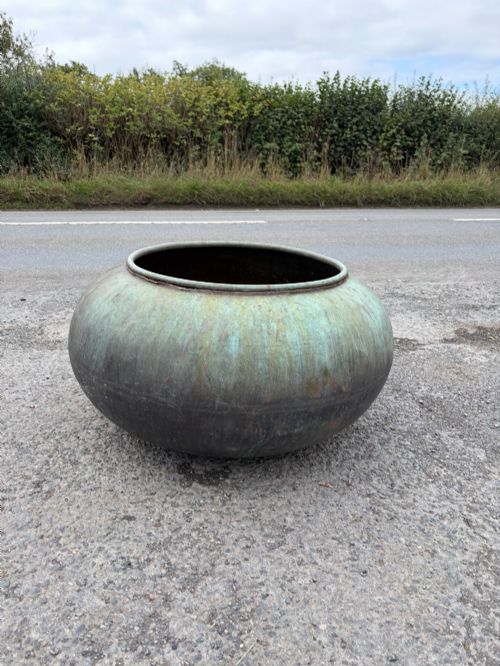
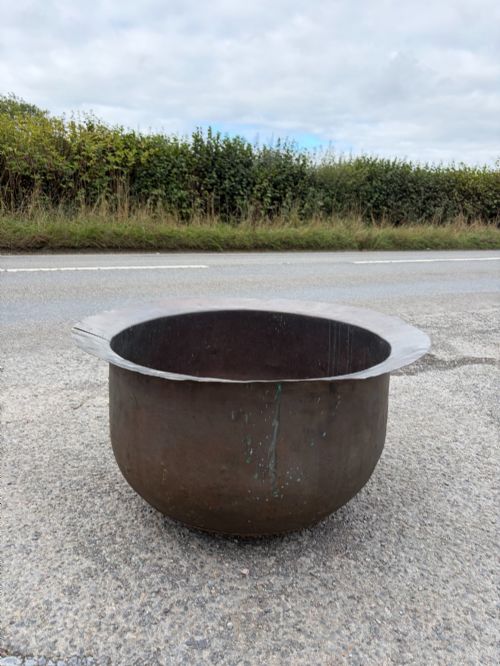


Rustic Copper Cauldron
These heavy rustic copper cauldron pieces bring industrial warmth and historical utility to modern rooms as log bins, planters and fireside vessels.
Rustic Copper Cauldron
A rustic copper cauldron represents sturdy utilitarian metalwork originating from the eighteenth, nineteenth, and early twentieth centuries. These vessels served practical roles in domestic kitchens, laundries, and farmhouses before transitioning into decorative roles today.
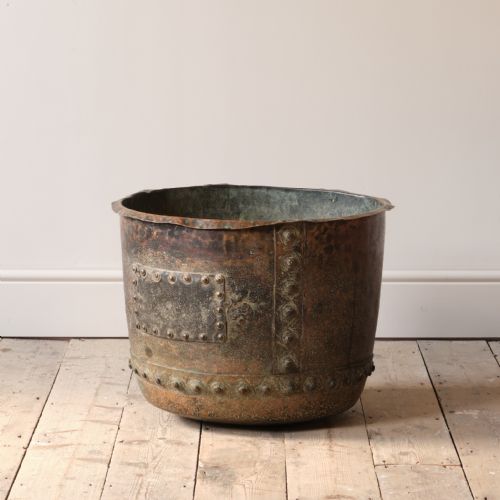
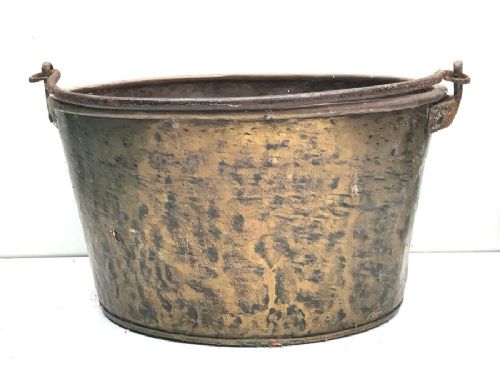
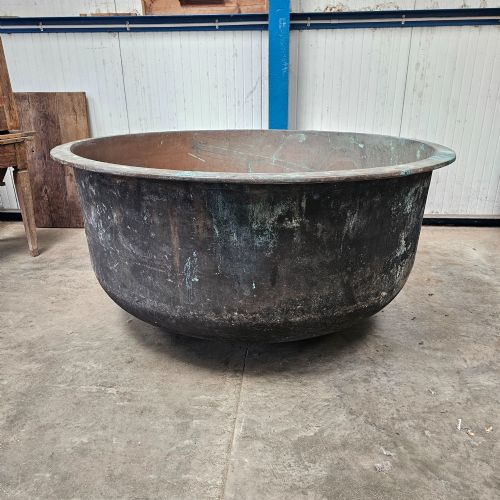
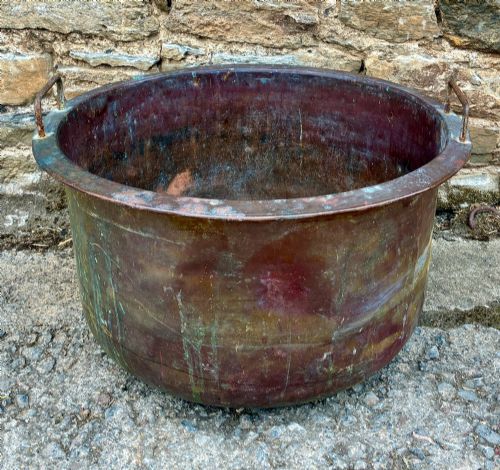
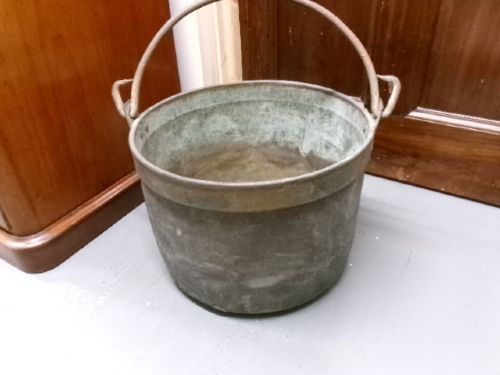
The objects appearing on this page span several functional forms, most notably large copper pots, log bins, garden planters, wash tubs, and cheese vats. Many pieces retain their original heavy iron or brass swing handles used for lifting heavy loads of water or fuel.
Origins stretch across British and continental workshops, including French provincial examples alongside Georgian and Victorian items. Buyers commonly encounter large cooking vessels and boilers adapted over time to hold firewood or display plants.
How they were made
Construction relies heavily on hammered or riveted sheet copper joined to provide watertight and durable vessels. Smithing techniques involved shaping metal over forms and securing seams with iron rivets.
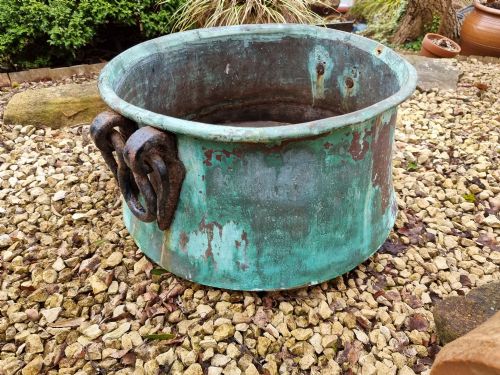
Handles and attachments incorporate wrought iron, cast iron, and brass fittings secured firmly to the copper body. Surfaces often display natural patination, verdigris finishes, and traces of historical paint resulting from age and use.
Some nineteenth-century vessels arrive bearing decades of hearth soot, whispering tales of forgotten stews and Victorian laundry days.
What varies in quality
Quality rests in the integrity of the original construction, particularly the strength of riveted seams and the substantial weight of the metal. Thicker gauge copper maintains structural stability better over centuries of heavy use.
The presence of original hardware, such as authentic wrought iron swing handles and brass attachments, distinguishes superior examples. Surface character also matters, with honest patination and minimal modern intervention holding greater appeal for collectors.
The Rustic Copper Cauldron Glossary
- Cauldron
- A large metal pot with a swing handle used traditionally for boiling or cooking over an open fire. These vessels now frequently serve as decorative log bins and planters.
- Verdigris
- A green patina that forms naturally on copper and brass surfaces through atmospheric oxidation over long periods. This finish is prized for its visual depth and historical character.
- Swing handle
- A movable arched handle attached to opposite sides of a pot or cauldron, typically forged from wrought iron or cast brass. It allowed heavy vessels to be lifted safely.
- Log bin
- A deep container utilised beside a fireplace for storing firewood. Many antique copper vessels find a second life in this domestic role.
- Cheese vat
- A massive specialised vessel used historically in dairies for warming and curdling milk. These French provincial items offer exceptional scale for interior spaces.
Rustic Copper Cauldron: Frequently Asked Questions
How do I clean a rustic copper cauldron?
Dust the surface gently with a dry cloth to preserve the historical patina and verdigris finish accumulated over the centuries.
Avoid harsh chemical metal polishes unless you specifically wish to strip the aged surface down to bright, reflective metal.
Can I use these copper pots outdoors?
Many of these vessels function well as garden planters or pots on patios, provided they are placed on stable, flat surfaces.
Copper withstands outdoor weathering robustly, though iron handles may develop additional rust if exposed continuously to moisture.
How do I tell a Georgian cauldron from a Victorian one?
Georgian and early nineteenth-century pieces often display hand-be hammered textures and heavier wrought iron elements reflecting earlier smithing traditions.
Late Victorian examples sometimes incorporate machine rolling, embossed brass details, or standardised riveted seams associated with industrial production.
Are these cauldrons watertight?
While originally designed to hold liquids for cooking, boiling, or washing, antique metal vessels can develop minor porous spots over long periods.
It is wise to test a pot for leaks before filling it with water for interior display or using it as a living planter.