

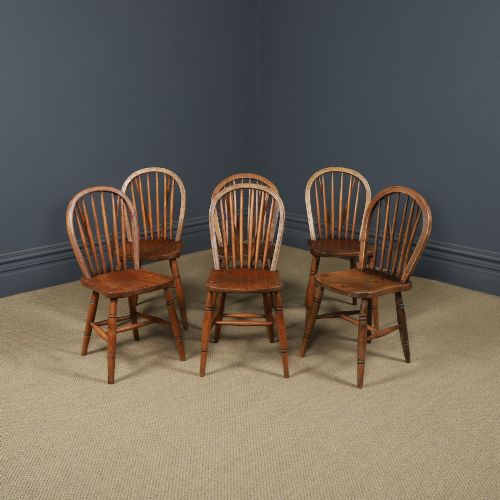
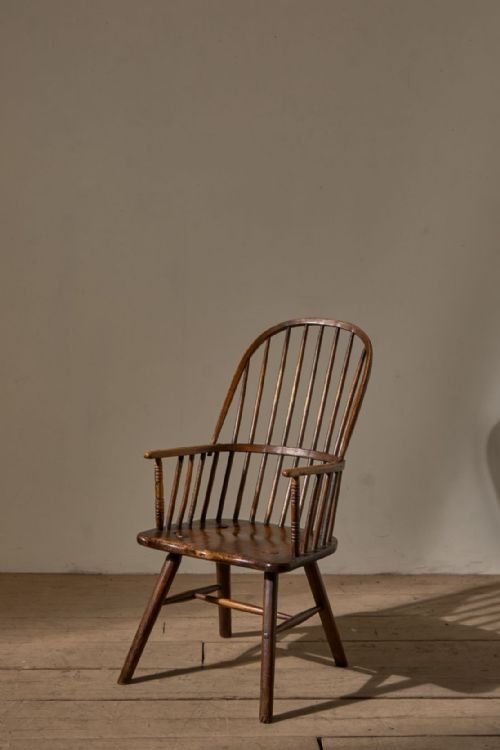

Rustic Ash Windsor Chair
A rustic ash windsor chair is a sturdy country seat built from robust timbers, offering honest utility and traditional craft to a room.
Rustic Ash Windsor Chair
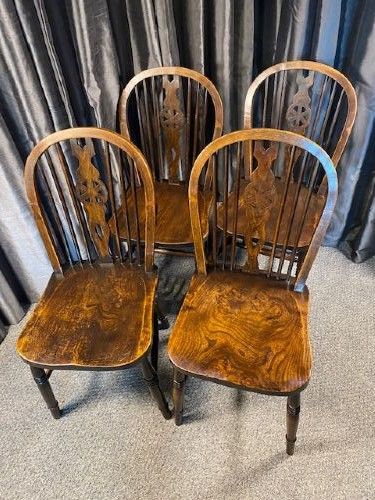
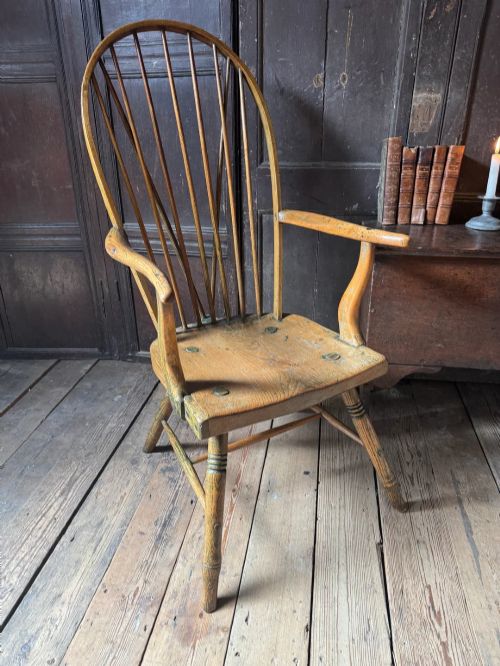
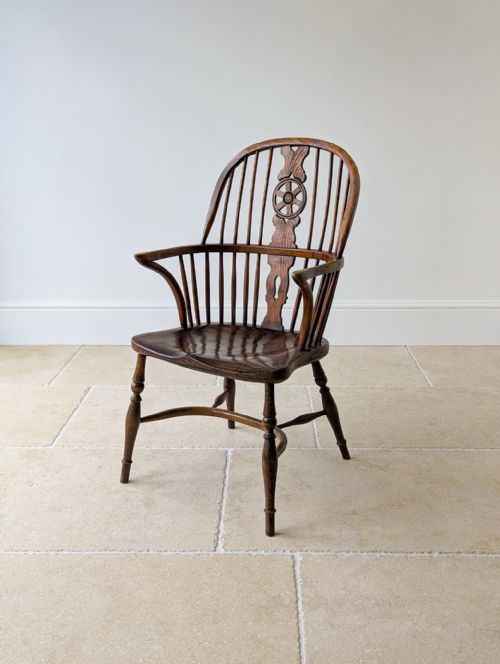
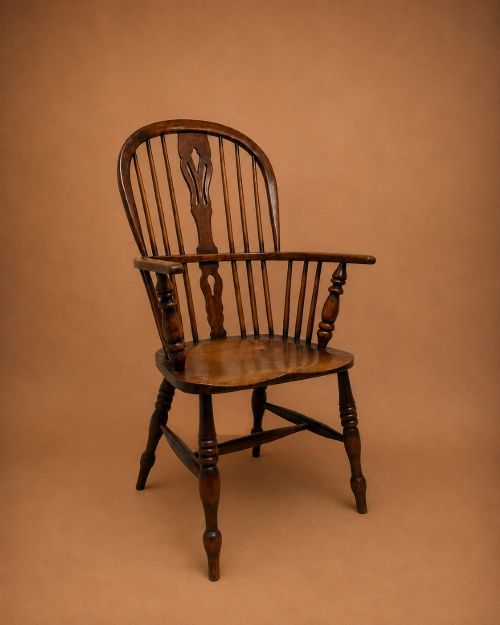
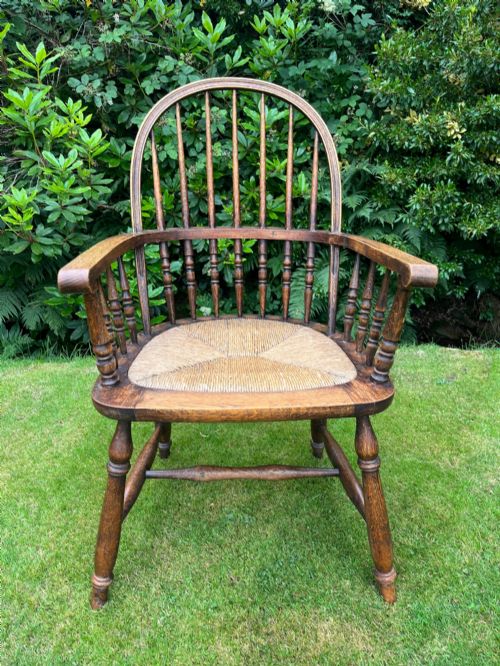
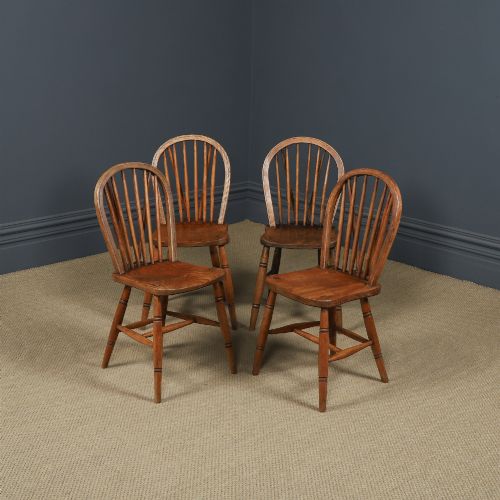
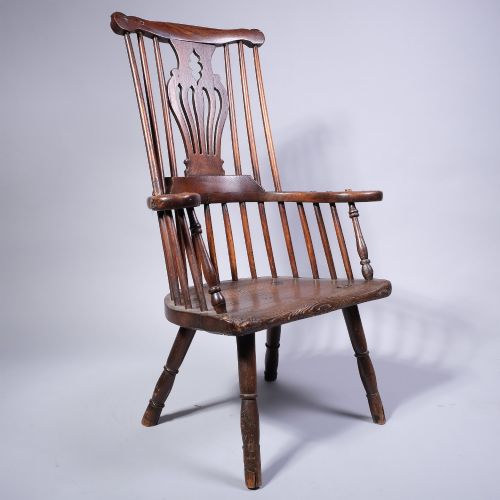
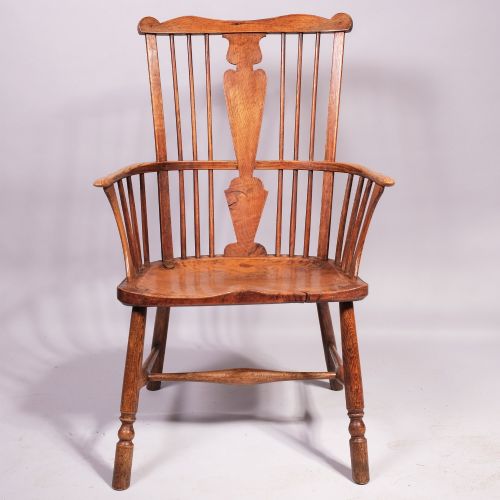
A rustic ash windsor chair brings together vernacular seating traditions from the eighteenth and nineteenth centuries, often appearing as high hoop-back, comb-back, or low stick-back armchairs. These pieces emerge from English country workshops, ranging from Georgian vernacular iterations to Victorian kitchen and dining sets.
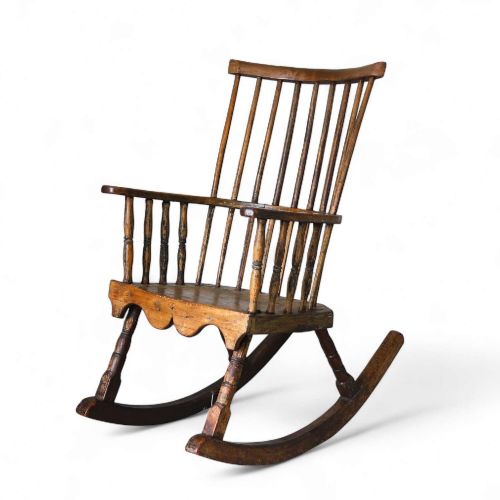
The most common examples encountered on this page pair an ash framework with an elm seat, frequently featuring characteristic turnings and stretcher arrangements. Makers shaped these seats for everyday utility in farmhouses and cottages, producing sturdy armchairs, carvers, and rocking chairs.
How they were made
Makers constructed these chairs by wedging individual spindles, legs, and back-sticks directly into a solid, thick wood seat rather than utilising traditional frame joinery. Ash supplied strong, flexible wood for bent hoops and spindles, while elm provided a dense, splitting-resistant timber for carved saddle seats.
Regional craftsmen shaped components using drawknives, pole lathes, and steam-bending techniques to form curved backs and arm rests. Additional timbers like beech, sycamore, yew, and fruitwood occasionally appeared in the spindle assemblies or framing.
Materials recorded across the inventory include ash, elm, beech, yew, sycamore, oak, rush, and burr elm.
What varies in quality
The distinction between standard utility seating and exceptional pieces often rests in the sculptural depth of the saddle seat and the complexity of the timber grain. Burr elm seats and well-figured ash display superior visual richness compared to plain, utilitarian equivalents.
Refinement in the spindle turnings, the grace of the bentwood hoop, and the retention of original surface patination distinguish master regional work from simpler provincial output. Structural integrity relies on the tightness of the wedged joints and the minimal loss of original timber over centuries of use.
The Rustic Ash Windsor Chair Glossary
- Comb-back
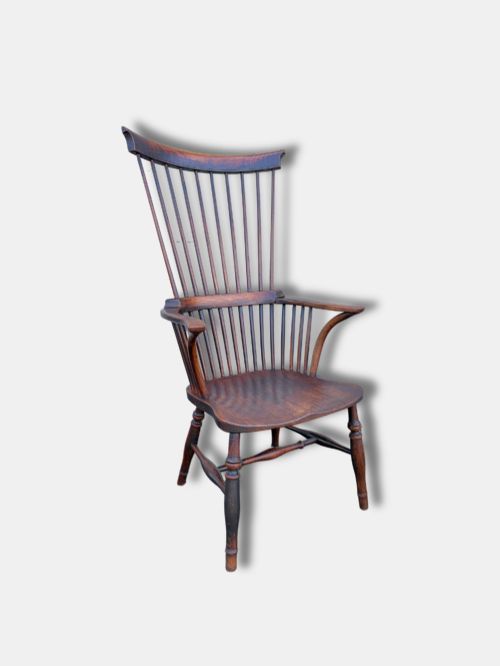
- A Windsor chair variation where the vertical spindles extend upward to support a horizontal head-rest piece resembling a traditional hair comb. This style appears frequently on eighteenth-century primitive models.
- Crinoline stretcher
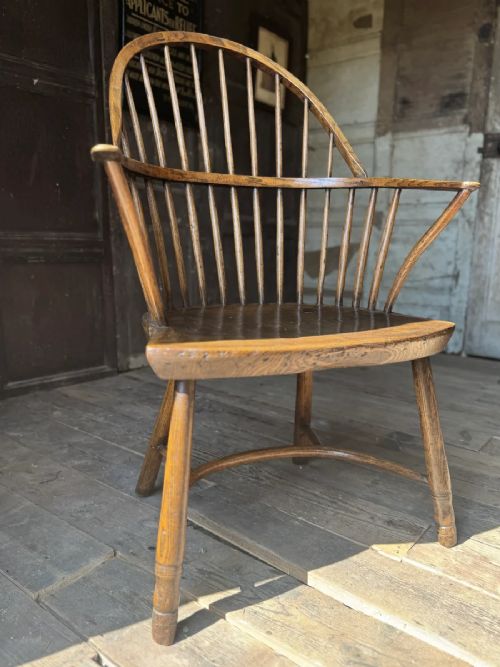
- An arched under-framing rail connecting the legs of a Windsor chair in a continuous curve, often found on West Country pieces. It provides structural reinforcement while echoing the hoop form of the back.
- Hoop-back
- A continuous piece of steam-bent wood forming the upper back and arm support of a Windsor chair. This element requires considerable skill in timber selection and steaming.
- Smokers bow
- A low-backed Windsor armchair with a rounded, continuous rail resting on short spindles, commonly used in nineteenth-century smoking rooms and inns. It combines compact dimensions with sturdy elm and ash construction.
Rustic Ash Windsor Chair: Frequently Asked Questions
What is a rustic ash windsor chair?
A rustic ash windsor chair is a traditional wooden seat constructed with individual spindles socketed into a solid carved timber base. These chairs rely on vernacular country craftsmanship rather than urban cabinet-making standards.
Most surviving examples combine an ash frame with an elm seat, originating from regional English workshops during the eighteenth and nineteenth centuries.
How do I date an old windsor chair?
Dating relies on examining the construction methods, the turning style of the legs, and the wear patterns on the wooden seat. Earlier eighteenth-century pieces often feature thick, sculpted comb-backs and crinoline stretchers.
Later Victorian and early twentieth-century examples tend to show standardised spindle work and broader kitchen-chair formats, though vernacular traditions persisted for generations.
Are these chairs comfortable for daily use?
These chairs are generally comfortable due to the ergonomic saddle shaping carved directly into the solid elm seats. The raked legs and supportive spindles encourage an upright, stable posture.
Placing a sheepskin or loose cushion on the timber seat adds softness for prolonged sitting while preserving the historic wood.
Can I mix different windsor chairs around a table?
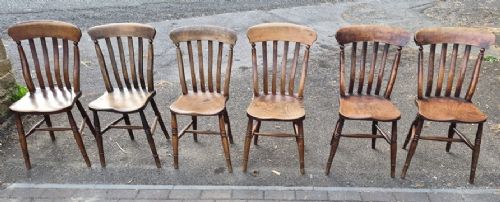
Mixing different Windsor chairs creates a traditional harlequin set that reflects how country households accumulated furniture over time. Matching wood tones like ash and elm helps unify varying back styles, such as hoop-backs and stick-backs.
Ensuring consistent seat heights matters most for dining comfort when combining dissimilar regional country armchairs and side chairs.