




Rush Seated Elbow Chairs
Rush seated elbow chairs bring vernacular comfort to a room, offering sturdy wood frames paired with woven rush.
Rush Seated Elbow Chairs
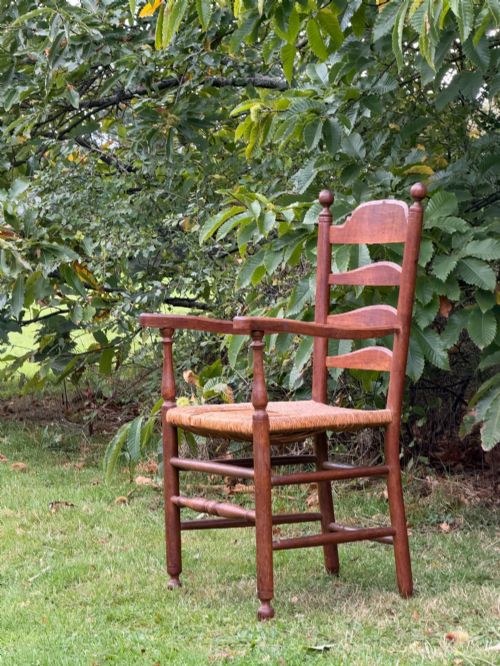
Rush seated elbow chairs comprise armchairs and carvers rooted in English country traditions, spanning the Georgian, Regency, and Victorian periods up to the Arts and Crafts movement. Buyers looking at rush seated elbow chairs will find sturdy seating designed for daily use rather than formal display.
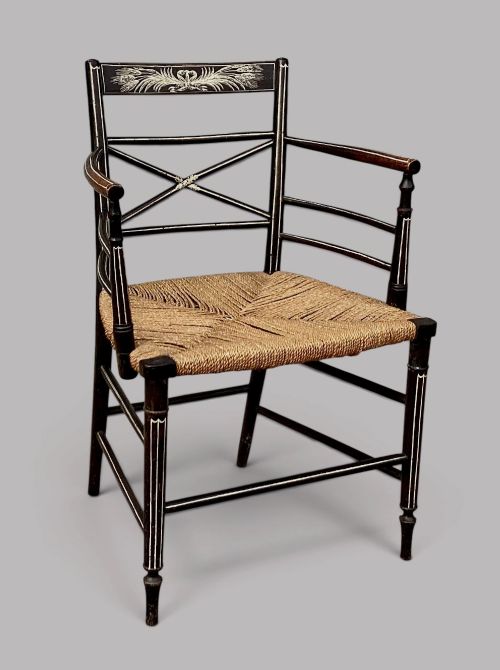
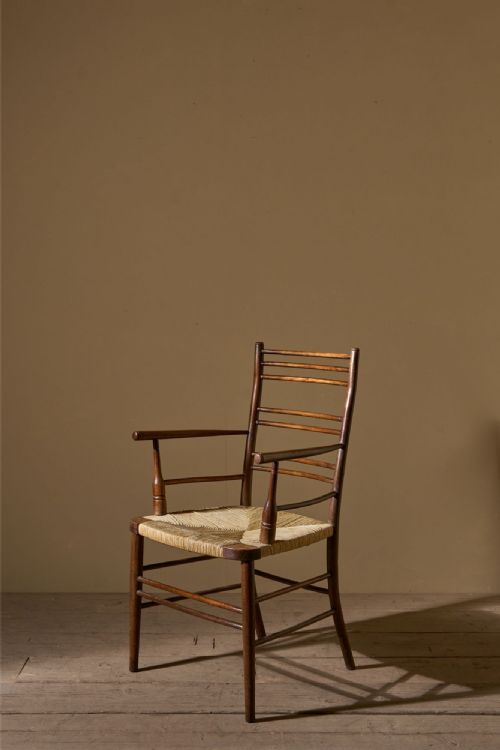
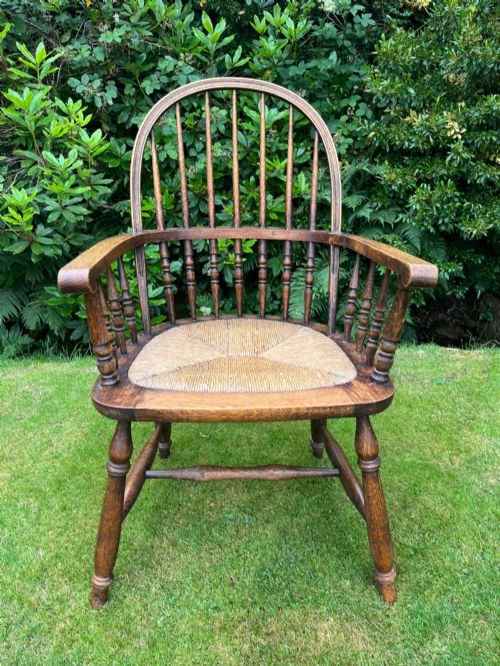
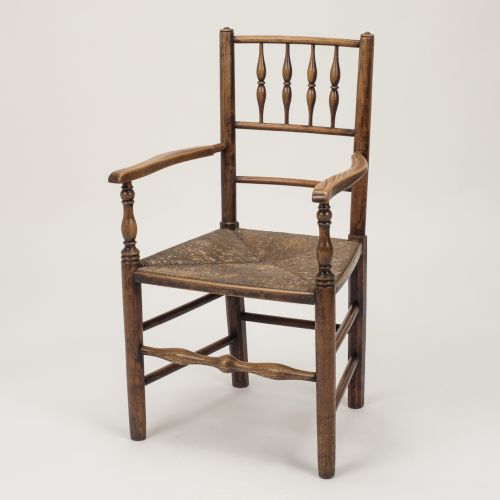
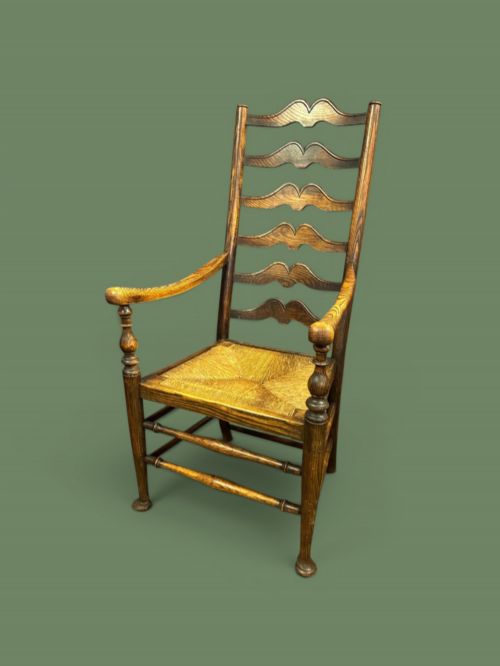
The most common examples on this page are elm, oak, and ash vernacular chairs featuring ladderbacks or spindlebacks, alongside painted Regency models and late nineteenth century iterations associated with Liberty and Co.
How they were made
Makers utilised native hardwoods such as elm, ash, oak, beech, and fruitwood to construct the frames, often turning spindles and shaping ladderbacks on a lathe. These wooden components were joined using traditional pegged or mortise and tenon construction.
The seats themselves were formed by hand-weaving dried marsh rush tightly around a wooden frame to create a resilient, textured surface. Some later examples also incorporated painted finishes or fabric details to complement the woven rush.
Rush Seated Elbow Chairs Retail Price Guide 2026
Typical asking prices for rush seated elbow chairs among the pieces listed under this phrase on Sellingantiques today, from the lower quarter to the upper quarter. They describe what is for sale here now, not the wider market.
Materials recorded across the selection include oak, elm, ash, beech, painted wood, and traditional rush.
What varies in quality
Quality in these chairs rests upon the selection and retention of timber, where dense native hardwoods like elm and oak hold structural integrity far better than softer woods. The tightness and uniformity of the rush weave further dictate the grade of the piece.
Design nuance also separates standard utility pieces from exceptional works, seen in the elegance of Regency proportions or the refined craftsmanship of attributed Arts and Crafts production.
Liberty Morris And Co·E W Godwin·Liberty And Co
The Rush Seated Elbow Chairs Glossary
- Rush
- Dried marsh plant material woven tightly to form durable, textured chair seats. It provides a resilient and traditional surface found across vernacular seating.
- Elm
- A tough, interlocking native hardwood frequently utilised for country chair seats and frames due to its resistance to splitting. It forms the foundation of many regional English armchairs.
- Ladderback
- A chair back construction featuring horizontal slats stacked between the upright posts. This regional style appears across Georgian, Victorian, and Arts and Crafts examples.
- Carver
- A traditional term for an armchair, typically designed to sit at the head of a dining table or serve as an occasional seat. These pieces match or complement sets of side chairs.
Rush Seated Elbow Chairs: Frequently Asked Questions
How do I care for a rush seat?
Keep woven rush seats away from excessive moisture and direct heat sources to prevent the natural plant material from becoming brittle over time.
Cleaning is best managed with a soft brush to remove dust from the crevices of the weave without saturating the fibres.
Can these chairs be used daily?
Most vernacular armchairs were built for practical domestic life and easily withstand regular sitting when structurally sound.
Checking the joints and the tightness of the rush ensures the chair remains stable for everyday use in a modern home.
How do I spot an Arts and Crafts chair?
Arts and Crafts examples often display honest construction methods, simplified ladderback designs, and direct associations with makers like Liberty and Co.
They favour unpretentious materials like oak and rush, celebrating traditional craftsmanship over ornate decoration.
What is a harlequin set?
A harlequin set consists of chairs that share similar vernacular styles, periods, or materials rather than being strictly manufactured as an identical batch.
This grouping method reflects how country dining sets were historically gathered and used around a table over time.