





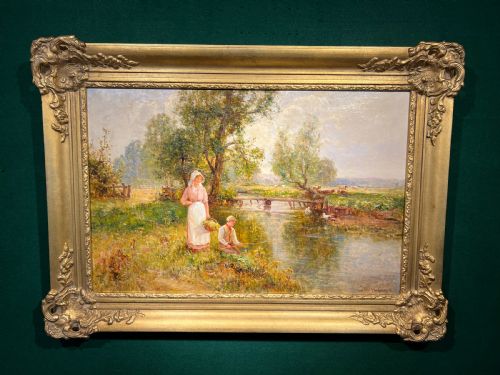

Rural River Scene
When you search for a rural river scene, you are looking at pastoral views of waterways rendered in oil or watercolour.
Rural River Scene
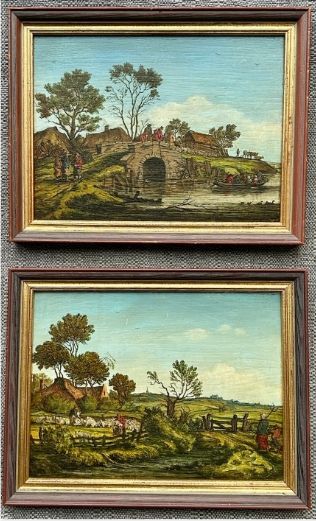
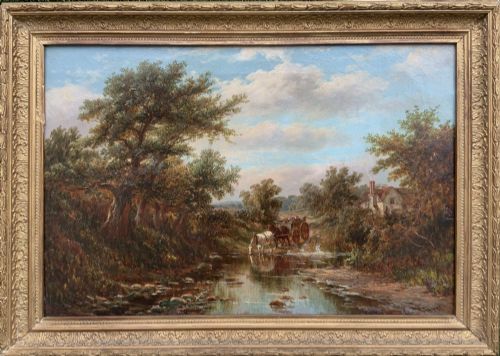
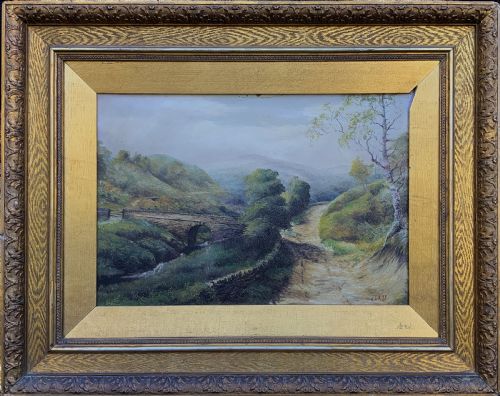
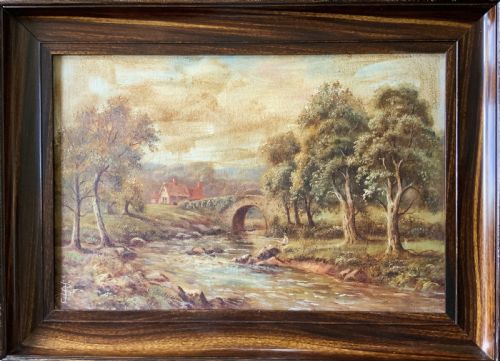
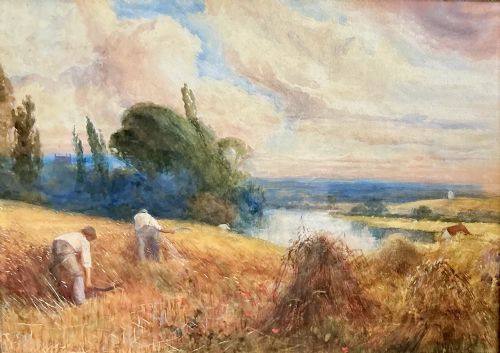
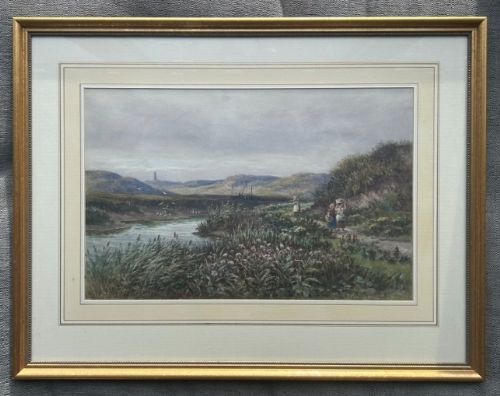
A rural river scene depicts pastoral landscapes featuring streams, rivers, and banks populated by figures fishing, harvesting, or boating. These works capture countryside life along waterways, spanning the Victorian and Edwardian periods into the mid-twentieth century.
The most common formats you will encounter on this page are oil paintings on canvas or wood panels, alongside detailed watercolour paintings on paper. Many are housed in period giltwood frames that complement the natural subject matter.
Origins range across British regional views from Yorkshire, Wales, and Devon to continental subjects, executed in styles from traditional realism to British impressionism. The compositions frequently incorporate cottages, bridges, and livestock alongside the riverbanks.
Materials and Techniques
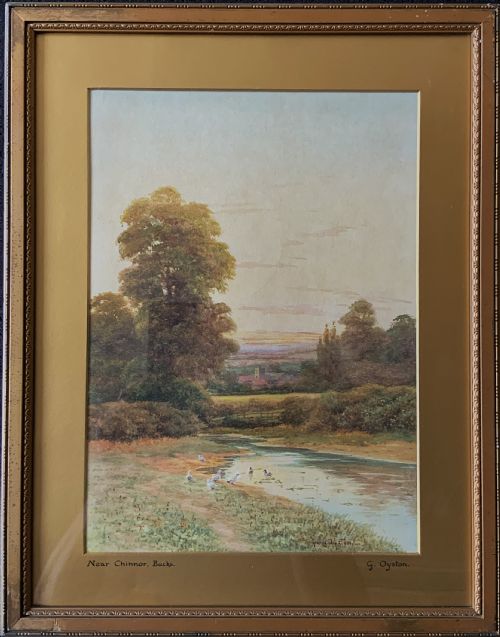
Artists painted primarily with oil paint on stretched canvas or wooden panels, building up texture and depth through layered brushwork. Watercolour paintings on paper utilise washes and fine linework to achieve luminous effects of light on water.
Support materials include canvas, heavy paper, and wood panels, often framed in gilt wood moulding that reflects the aesthetic tastes of the nineteenth and early twentieth centuries.
Rural River Scene Retail Price Guide 2026
Typical asking prices for rural river scene among the pieces listed under this phrase on Sellingantiques today, from the lower quarter to the upper quarter. They describe what is for sale here now, not the wider market.
Listings feature works from the nineteenth and twentieth centuries, utilising oil paint, canvas, watercolour, and wood.
Assessing Quality
Quality rests upon the artist's handling of light, atmospheric perspective, and water surface reflection. Superior works demonstrate confident brushwork and precise anatomical rendering of figures and animals.
The integration of the river setting with human activity distinguishes finer compositions from generic landscapes. Original framing and clear provenance further elevate the standing of a piece.
George Graham·Robert W. Macbeth·George Oyston·Sydney Yates Johnson·Robert Winchester Fraser·William Langley·William Manners·Thomas James Lloyd·Gudrun Sibbons·Harry Pennell·William Sidney Cooper·Alois Arnegger·George Turner·Henry John Sylvester Stannard·Henry H Parker·Antoine Bouvard·Robert Gallon·Robert John Hammond·Charles McAuley
The Rural River Scene Glossary
- Watercolour painting
- A work executed with water-soluble pigments on paper. This medium allows for transparent washes that capture light and atmospheric conditions effectively.
- Oil on canvas
- Pigments bound in a drying oil applied to a woven fabric stretched across a wooden frame. This combination provides durability and rich colour saturation.
- Gilt wood
- Wood decorated with a thin layer of gold leaf or metallic gilt. It frequently surrounds nineteenth-century landscape paintings to enhance their visual presence.
- Wood panel
- A rigid flat wooden support used as a base for painting instead of canvas. Artists employed panels particularly for smaller works during the nineteenth century.
Rural River Scene: Frequently Asked Questions
What is a rural river scene?
A rural river scene is an artwork depicting a natural waterway in the countryside, often including figures engaged in traditional activities like fishing or harvesting.
These pieces reflect pastoral life and landscape traditions from the Victorian era through the mid-twentieth century.
How were these paintings created?
Artists used oil paint on canvas or wood panels, as well as watercolour on paper, to capture the light and movement of rivers.
Works were frequently finished with gilt wood frames that were standard for the period.
How do I care for an antique painting?
Keep paintings away from direct sunlight and dramatic shifts in temperature or humidity to protect the canvas and paint layers.
Dust surfaces gently with a soft, dry brush and avoid using liquid cleaners on oil or watercolour works.
How can I tell the period of a painting?
Examining the materials, stretcher bars, framing style, and artist signatures provides clear indicators of when a piece was produced.
Stylistic conventions like Victorian realism or Edwardian pastoralism also help date the artwork accurately.