


Rural Landscape Scene
Rural landscape scene works open windows into pastoral life, showing agricultural work and quiet village vistas through traditional paintings and watercolours.
Rural Landscape Scene
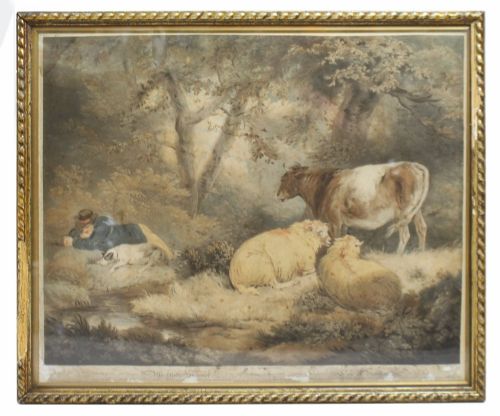
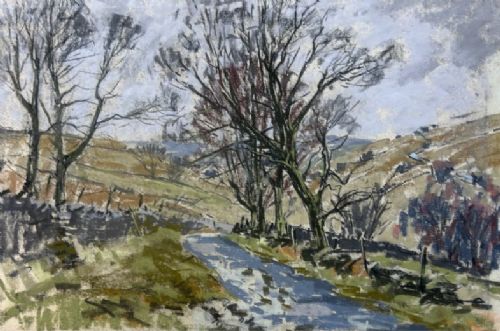
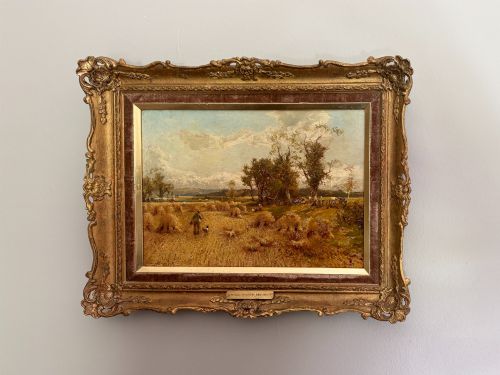
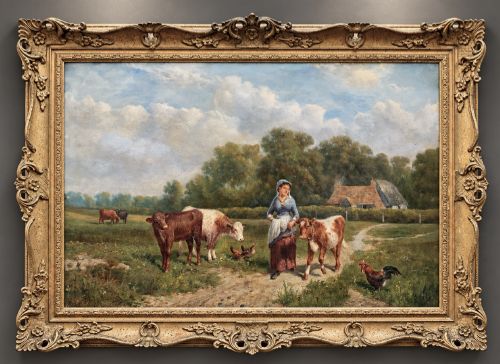
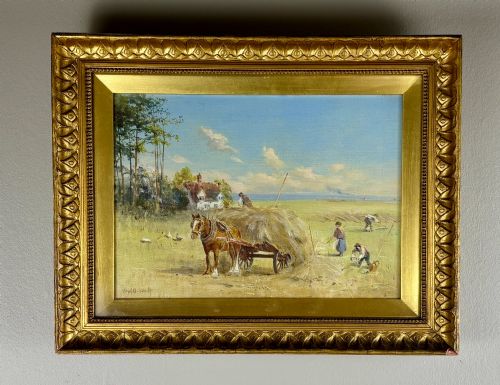
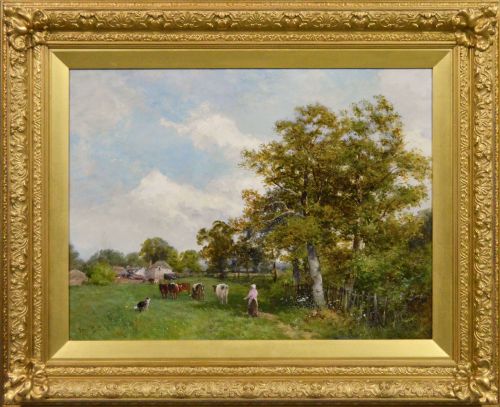
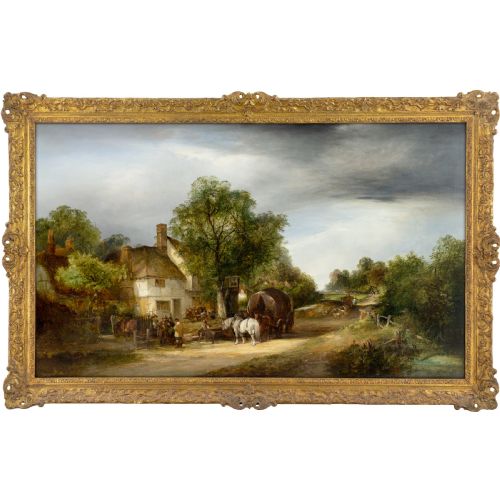
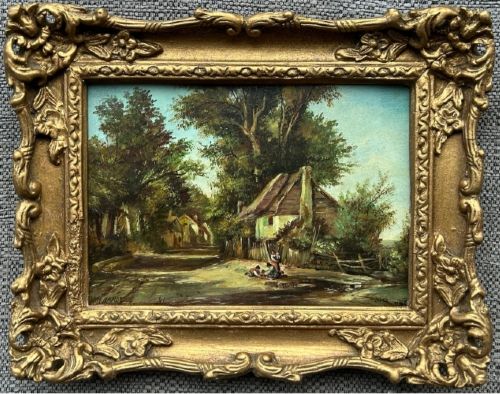
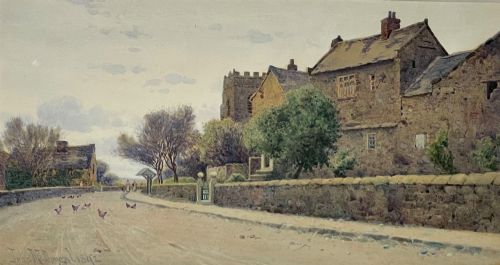
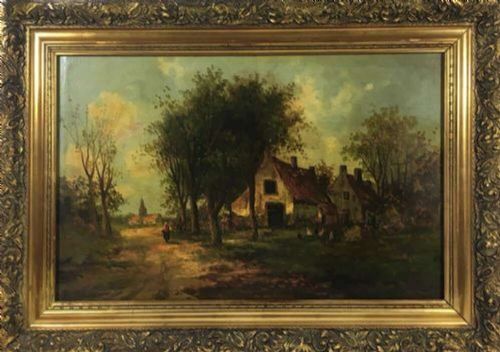
A rural landscape scene captures the quiet rhythms of the countryside, focusing on farmyards, harvesting, cottages and herdsmen tending livestock. These works record an earlier rural reality through the eyes of Victorian and Edwardian artists who observed agricultural life directly.
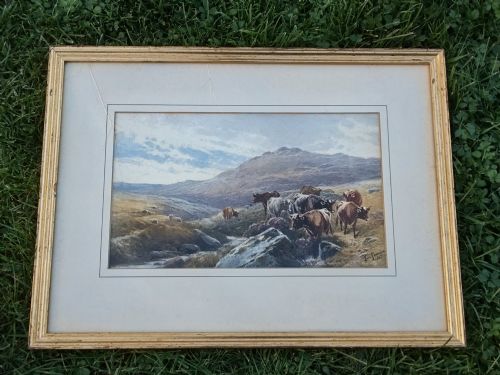
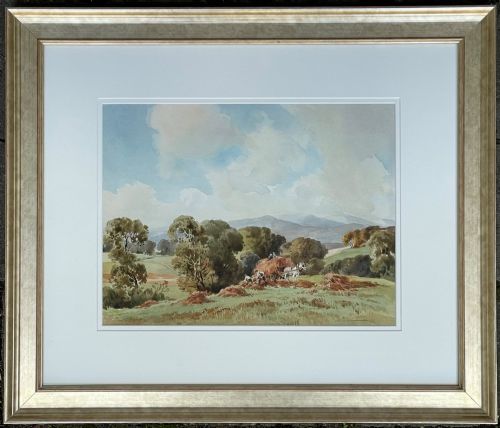
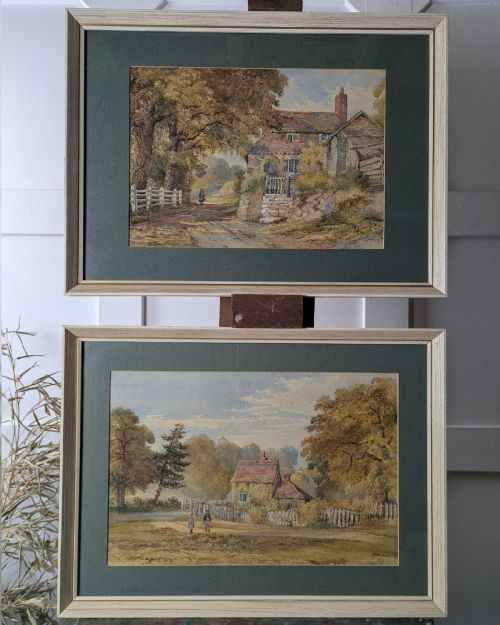
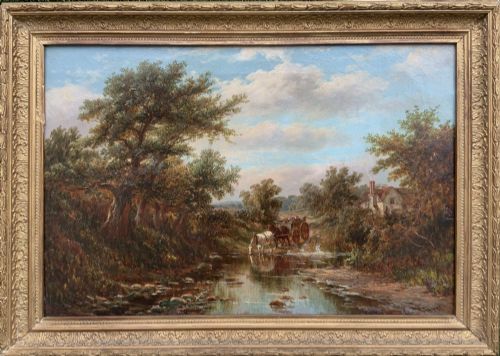
The most common form on this page is the framed oil painting on canvas or wooden panel, alongside detailed watercolours on paper. Pieces range from mid-19th-century works to early 20th-century impressionist interpretations.
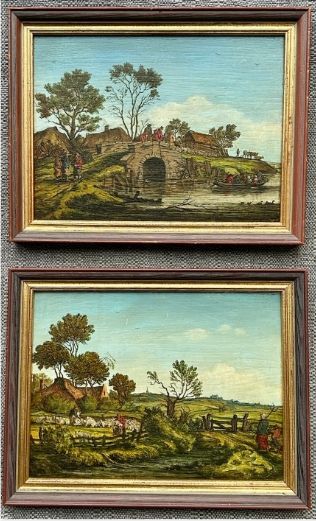
Subjects often include figures working the land, horses by troughs, cattle grazing, and thatched village dwellings. British schools dominate, accompanied by select continental examples from Flemish and French traditions.
How They Were Made
Artists built these rural landscape scene works using oil paint applied to canvas, wood panels or card, or watercolour pigments worked onto paper. Supports were frequently prepared and mounted within gilt wood and glass frames.
Makers applied pigments with varying brushwork, moving from tight academic realism in the mid-19th century to looser impressionist marks by the early 20th century. Gold leaf often decorated the frames that housed these paintings.
Rural Landscape Scene Retail Price Guide 2026
Typical asking prices for rural landscape scene among the pieces listed under this phrase on Sellingantiques today, from the lower quarter to the upper quarter. They describe what is for sale here now, not the wider market.
Listings span the nineteenth and twentieth centuries, featuring oil on canvas, wood panels, watercolours on paper and gilt wood frames.
What Varies in Quality
Quality rests in the handling of light, atmospheric depth and the naturalistic rendering of figures and animals within the landscape. Superior works demonstrate confident brush control and a convincing sense of space, whereas weaker examples rely on formulaic compositions.
The choice of support and the integrity of the original pigments also dictate standard. Works on wood panels and well-preserved canvases retain their tonal richness better than those affected by heavy past restoration.
Samuel Joseph Clark·Hugh Barry-Scott·William Manners·Thomas Thomas·Edward Charles Williams·William Shayer·W Klombeck·Percy Lancaster·William Howard Hardy·A. Marie Parsons·John McDougal·EJ Letheren·David Bates·Robert John Hammond·Charles Houben·Robert W. Macbeth·John Horace Hooper·Raymond Booth·Frederick Walker·Eric Brown·George Oyston·Frederick James Kerr·John Bond·Umberto Volpato·William Greaves
The Rural Landscape Scene Glossary
- Oil on Canvas
- Pigment mixed with drying oil applied to a woven fabric stretched across a wooden frame. This medium allowed artists to build rich textures and deep tones.
- Watercolour
- A paint consisting of water-soluble pigments used on paper supports. It produced translucent washes suited to capturing changing light in rural settings.
- Gilt Wood
- Timber carved and coated with a thin layer of gold leaf or metallic gilt powder. Frames made this way often accompanied 19th-century oil paintings.
- Barbizon School
- A French movement dedicated to realistic landscape painting outside the studio. Members focused on unidealised views of farms and forests.
- British Impressionism
- A late 19th-century style influenced by French techniques yet retaining a domestic focus on local light and weather.
Rural Landscape Scene: Frequently Asked Questions
What periods do these paintings cover?
The pieces span the nineteenth and early twentieth centuries, centring heavily on the Victorian and Edwardian eras. You will find works dated from the eighteen-fifties through to the nineteen-thirties.
This timeframe captures the transition from detailed realism to early impressionist approaches within landscape art.
Where should I hang a rural landscape?
These works suit traditional living spaces, studies or hallways where natural light complements the subdued tones of fields and cottages. Pairing them with wooden furniture reinforces their rustic character.
Keep them away from direct sunlight to protect watercolours and oil pigments from fading over time.
How do I identify a watercolour from an oil painting?
Watercolours are painted on paper, usually displayed under glass, showing translucent washes of colour where the paper grain remains visible. Oil paintings use heavier paint layers on canvas, board or wood panels.
Oils have a tangible texture and depth that stands apart from the flat surface of a watercolour.
What subjects appear most often?
Common subjects include agricultural labour such as harvesting, haymaking and herding cattle along country lanes. Village inns, thatched cottages and river scenes also feature frequently.
These motifs reflect nineteenth-century artistic interest in rural traditions and pastoral life.