

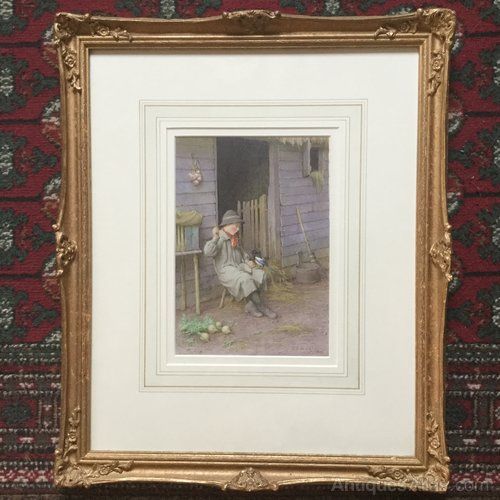


Rural Genre Scene Painting
A rural genre scene painting captures the quiet rhythm of nineteenth-century country life through domestic chores, farmyard animals and cottage gardens.
Rural Genre Scene Painting
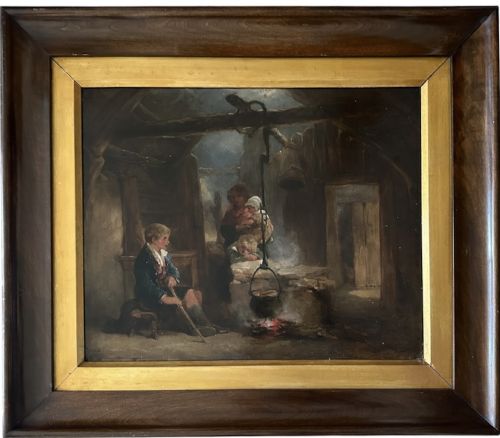
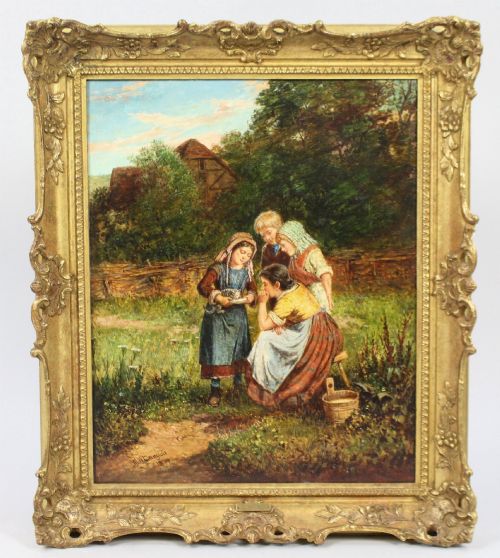
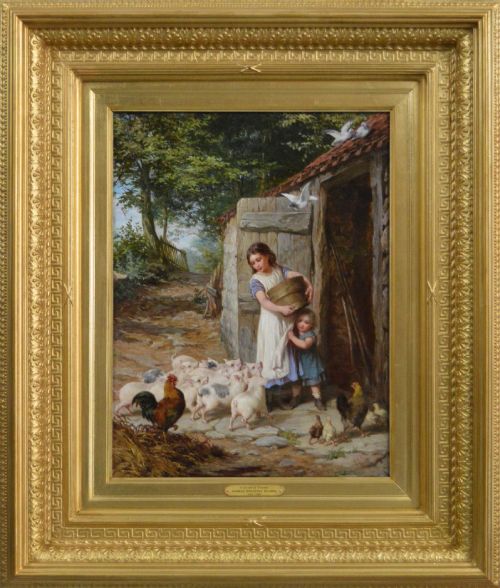
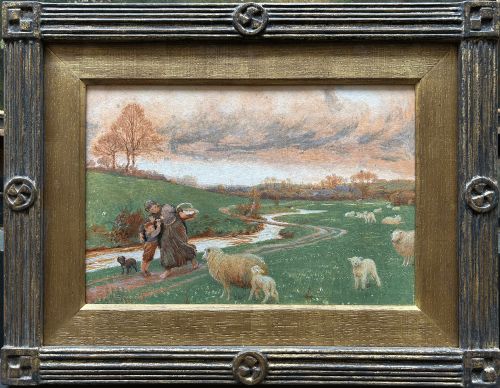
A rural genre scene painting depicts everyday country life, typically focusing on cottage doorways, farmyards, children and agricultural labourers at work or rest. These works span from the eighteenth century through the Victorian period and into the early twentieth century, reflecting a romanticised view of rural existence.
Buyers will most frequently encounter nineteenth-century and Victorian examples on canvas or paper, rendered in oil or watercolour. Common subjects include children with pets, women beside streams, blacksmiths at work and farmworkers with horses.
The origins of these pieces trace primarily to British artists working within pastoral, realist and idyllic traditions, occasionally extending to continental European scenes. The compositions range from intimate watercolours to large oil paintings housed in period frames.
How They Were Made
Artists built these works primarily using oil paint on canvas or board, alongside delicate watercolours on paper. Grounds were prepared with gesso on wood or canvas supports before the application of pigments.
Frames play an integral role in the physical construction of these pieces, frequently constructed from wood, giltwood and finished with gold leaf. Lithographs and prints also appear, reproducing original compositions for a wider audience.
The selection spans the eighteenth century, the Victorian era, and the early twentieth century up to nineteen-thirty.
What Varies in Quality
The fidelity of draughtsmanship and the handling of light separate standard decorative works from accomplished compositions. Masterly brushwork brings textures such as animal fur, homespun fabric and weathered timber to life with convincing weight.
Compositional complexity dictates the standing of a piece, moving from simple single-figure portraits to bustling farmyard scenes populated by multiple figures, livestock and detailed architectural backgrounds. The integration of original giltwood or gold leaf frames adds historical integrity to the painting.
Mark William Langlois·George Augustus Holmes·Miles Birkett Foster·Charles Edward Wilson·James Kyd·Henry John Yeend King·James Hardy Junior·Arthur Longley Vernon·Helena Maguire·R. Palnay·Edward Brice Stanley Montefiore·John Henry Dell·George Kilburne·Daniel Pasmore·Ernest Walbourn·Alfred Banner·John Frederick Herring Jnr·Edward Killingworth Johnson·Robert McGregor·Arthur Claude Strachan·George Cole·Henry Charles Bryant·William Stephen Coleman·James Ward·George Morland
The Rural Genre Scene Painting Glossary
- Genre painting
- Depiction of aspects of everyday life by depicting ordinary people engaged in common activities. These scenes offer a social record of historical daily routines.
- Oil on canvas
- Pigments bound in a medium of drying oil applied to stretched fabric. This technique allowed artists to achieve rich colour saturation and subtle blending.
- Watercolour
- Paint consisting of colour suspended in a water-soluble vehicle, typically applied to paper. It yields transparent washes that capture bright, natural light.
- Gesso
- A paint mixture consisting of a neutral binder mixed with chalk, pigment, or plaster. It was used to prepare rigid surfaces and wooden frames for gilding.
- Chiaroscuro
- The use of strong contrasts between light and dark, usually bold contrasts affecting a whole composition. Artists utilised this method to create volume in modelling three-dimensional objects.
Rural Genre Scene Painting: Frequently Asked Questions
What is a rural genre scene painting?
A rural genre scene painting depicts the daily lives and labours of country people, farmworkers and children within pastoral settings. These artworks celebrate traditional rural existence through depictions of cottages, farmyards and agricultural tasks.
Created primarily during the nineteenth and early twentieth centuries, these works document historical clothing, trades and domestic animals. They provide a window into nineteenth-century ideals of country tranquility and community life.
How do I date a rural painting?
Dating relies on stylistic clues, framing materials, signatures and artist biographical dates recorded on the canvas or reverse. Victorian works often display specific Realist or Pastoral conventions tied to mid-to-late nineteenth-century tastes.
Examining the stretcher frames, canvas type and backing boards offers further chronological markers. Written inscriptions or labels left by previous framers can also confirm the era of production.
Where should I hang these paintings?
These works suit traditional living spaces, studies and dining rooms where their warm palettes and pastoral subjects complement period interiors. They pair well with natural wood furniture and traditional country decor.
Keep oil paintings and watercolours away from direct sunlight and damp environments to protect the canvas, paper and giltwood frames. Proper placement ensures the pigments and gold leaf remain stable over time.
Are watercolours as durable as oils?
Watercolours on paper require protective glass framing to prevent moisture damage and fading from environmental light exposure. Oil on canvas offers greater physical resilience due to the stability of the oil medium.
Both formats survive well when housed in appropriate period frames and kept in stable indoor conditions. Regular gentle dusting of the frame helps maintain the overall presentation.