


Rural Farmyard Oil
Rural farmyard oil paintings capture historic pastoral life through canvas and board, offering an authentic glimpse into nineteenth and twentieth-century agricultural scenes.
Rural Farmyard Oil
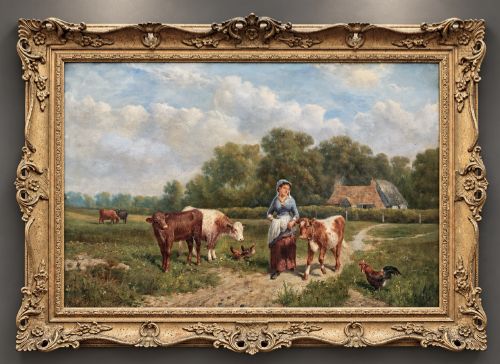
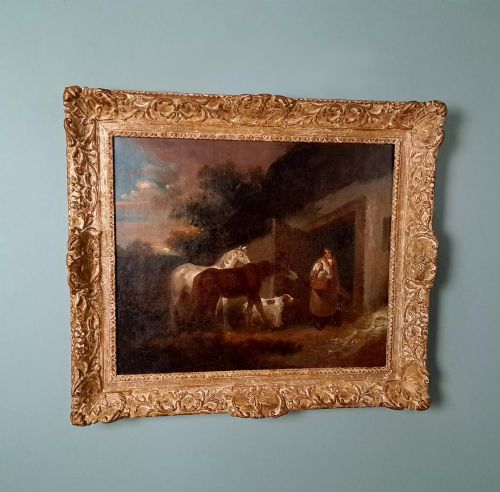
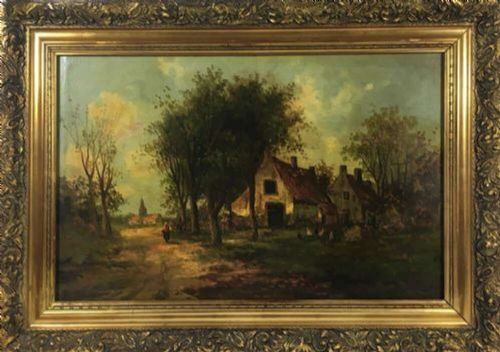
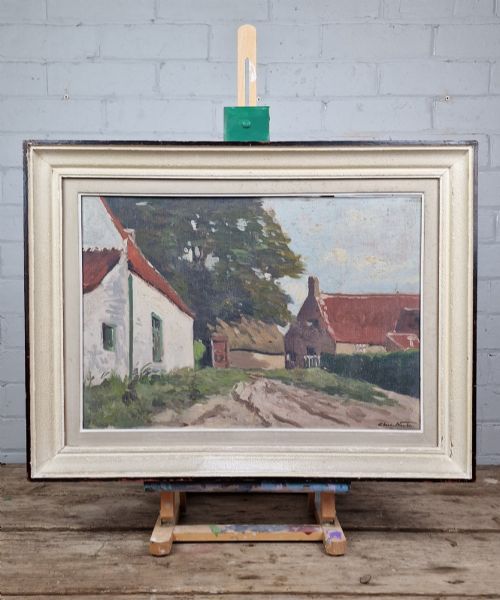
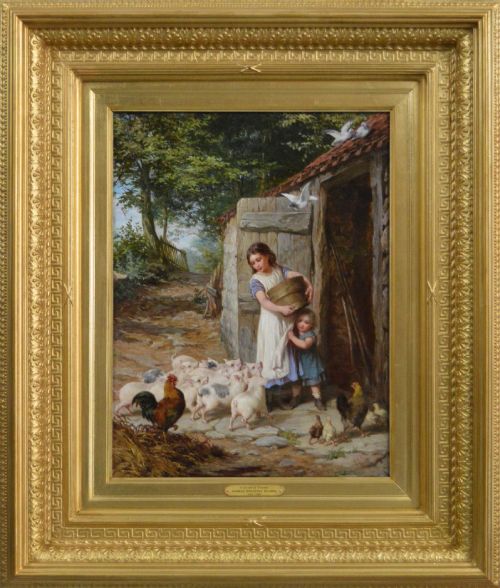
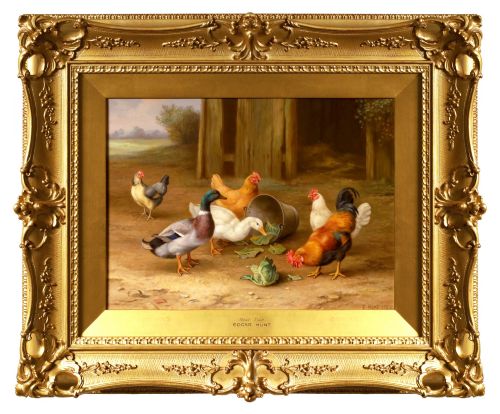
When you search for rural farmyard oil, you encounter works depicting agricultural buildings, livestock, and country laborers. The selection spans the nineteenth century through the twentieth century, encompassing British pastoral and post-impressionist movements.
You are most likely to meet framed canvas or board paintings from the Victorian era and early decades of the twentieth century. These pieces frequently feature horses, poultry, and pigs situated around barns and rural yards.
The subjects range from detailed animalier studies to broader landscape and genre scenes. Painters recorded daily rural routines, capturing horses at rest, ducks near ponds, and workers beside farm carts.
How they were made
Artists applied oil paint to prepared canvas, stretched wooden boards, or wooden panels. These traditional supports were coated with gesso or priming layers to accept the pigment.
Makers framed many of these works in wood and giltwood frames, sometimes incorporating gold leaf. The brushwork varies from tight academic precision to looser, impressionistic strokes.
Listings feature works utilising oil paint on canvas and board across the nineteenth and twentieth centuries, categorized under British Impressionism and Victorian Pastoral styles.
What varies in quality
Quality rests in the draughtsmanship of the figures and animals, alongside the handling of light and atmospheric depth. Superior works demonstrate precise anatomy in horses and cattle, combined with balanced compositional structure.
The sophistication of the palette and the subtlety of pigment layering distinguish accomplished works from simpler primitive folk art. The integration of landscape background with foreground livestock reveals the artist's competence.
William Joseph Shayer Senior·Charles Houben·George Augustus Holmes·Edgar Hunt·Herbert Royle·William JB Jenkins·Frederick W Jackson·John Linnell·John Frederick Herring Jnr·Julius Caesar Ibbetson·Arthur Charles Dodd·Robert Russell MacNee·Owen Bowen·Arthur Walker Redgate·Ernest Higgins Rigg·Georgina Lara·Thomas Blinks·James William Booth·Kershaw Schofield
The Rural Farmyard Oil Glossary
- Oil on Canvas
- Pigment bound in drying oil applied to woven fabric stretched across a wooden frame. This primary support method permits varied textures and large compositions.
- Oil on Board
- Paint applied to a rigid wooden panel or stiff board rather than flexible fabric. This medium often appears in smaller studies and plein-air works.
- Giltwood
- Wood carved and coated with gold leaf or metallic powder to form decorative picture frames. It provides a reflective border that complements the tones of the painting.
- Animalier
- Art focusing primarily on the realistic depiction of animals. This style flourished in the nineteenth century among specialised painters.
- Genre Painting
- Depiction of aspects of everyday life by subjects from ordinary life. These scenes often include figures working or interacting in farm environments.
Rural Farmyard Oil: Frequently Asked Questions
What subjects appear in farmyard oils?
These paintings depict horses, cattle, sheep, pigs, and poultry alongside barns, cart sheds, and farmhouses. Human figures such as laborers and children also feature frequently.
The compositions range from intimate animal studies to wide pastoral landscapes showing daily agricultural work.
How do I date an oil painting?
Dating relies on stylistic evidence, signatures, frame construction, and canvas preparation methods. Nineteenth-century works often show distinct Victorian pastoral or animalier characteristics.
Twentieth-century pieces introduce looser post-impressionist brushwork and different stretcher frame designs.
Where were these artists working?
The creators of these works include members of British pastoral schools, French Barbizon artists, and continental painters. Many recorded specific regional locations across Britain and Europe.
Studio sales and inscriptions on the reverse often record the precise farms or villages depicted.
How should I hang an oil painting?
Hang these works away from direct sunlight and steady heat sources to protect the canvas and oil pigments. Secure the frame using appropriate wall fixings suited to the weight of the wood and gilt.
Ensure proper ventilation behind the canvas to prevent moisture accumulation.