


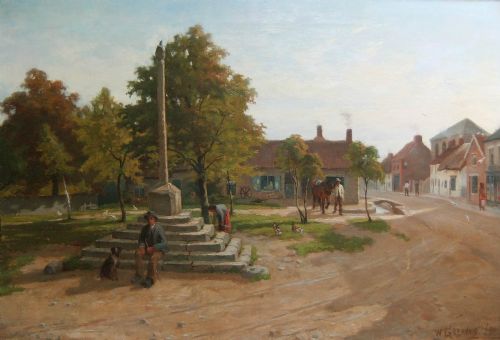

Rural English Scene
A rural english scene captures the quiet rhythm of nineteenth and early twentieth century countryside life on canvas, paper, and glass.
Rural English Scene
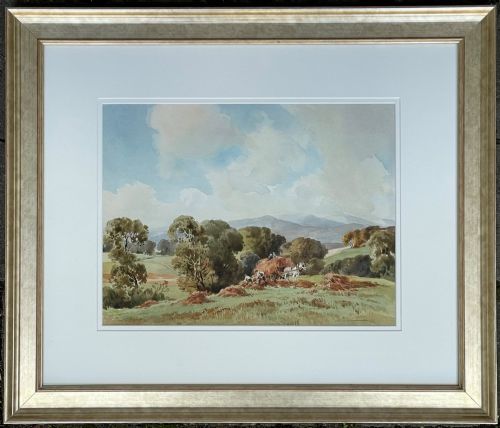
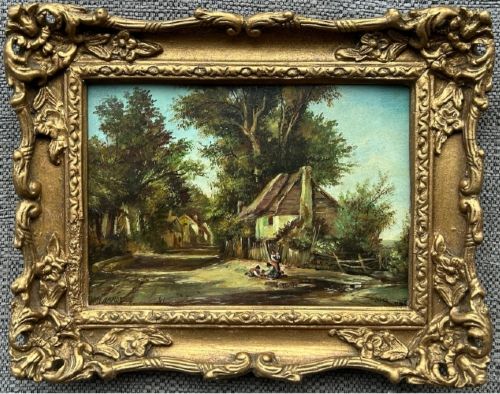
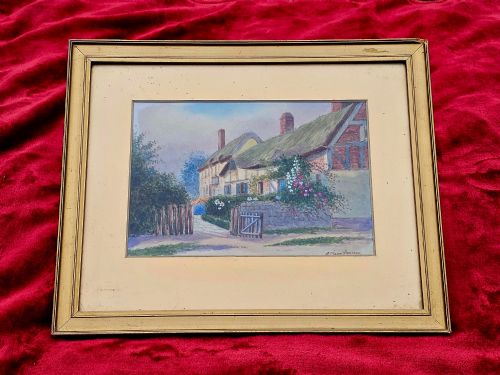
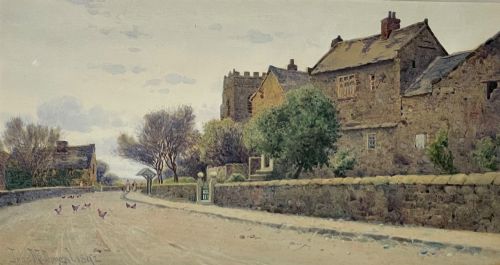
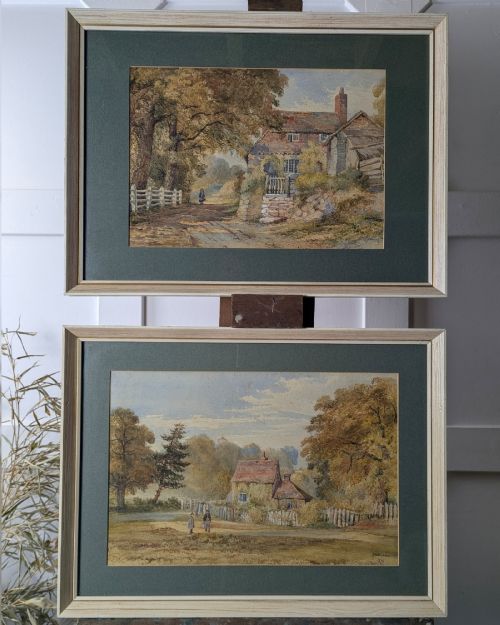
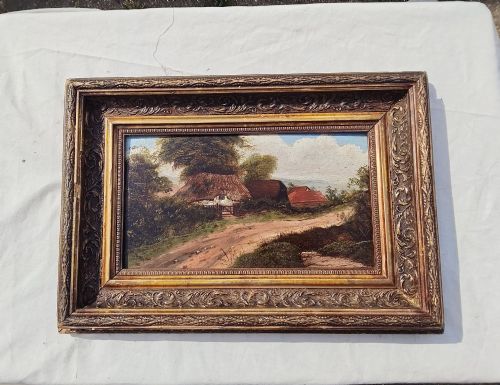
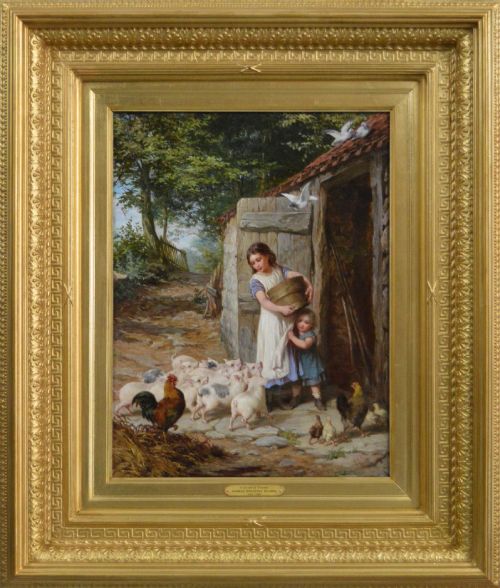
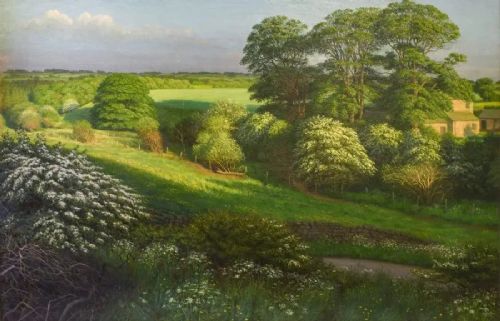
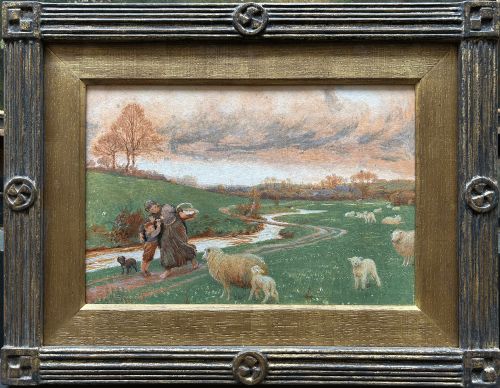
A rural english scene brings traditional countryside life into the interior through framed artwork, oil paintings, and watercolours. These pieces depict farming villages, thatched cottages, livestock, and local labourers at work across various nineteenth and early twentieth century periods.
The selection on this page consists predominantly of nineteenth century and Edwardian works attributed to regional English schools and named artists. Buyers encounter pastoral landscapes, river views, and agricultural genre scenes executed in oil and watercolour.
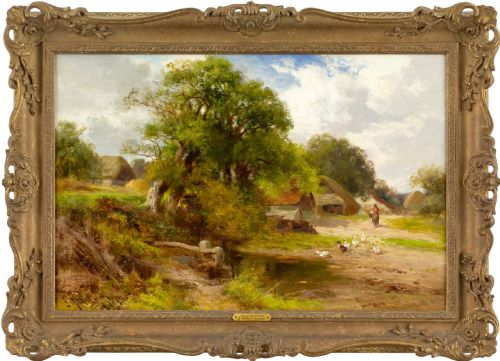
Subjects range from quiet Sussex hamlets and Yorkshire streams to farmyards filled with cattle, cart horses, and figures harvesting hay. Each work preserves a specific historic locality and vernacular way of life.
How they were made
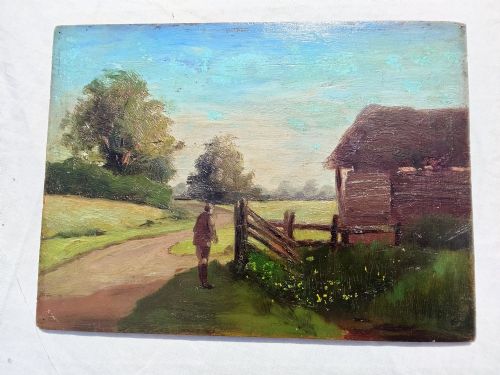
Artists painted these rural English scenes using oil paint or watercolour upon stretched canvas, wooden panel, card, and heavy paper. Works executed in oil often employ textured gesso frames to finish the piece.
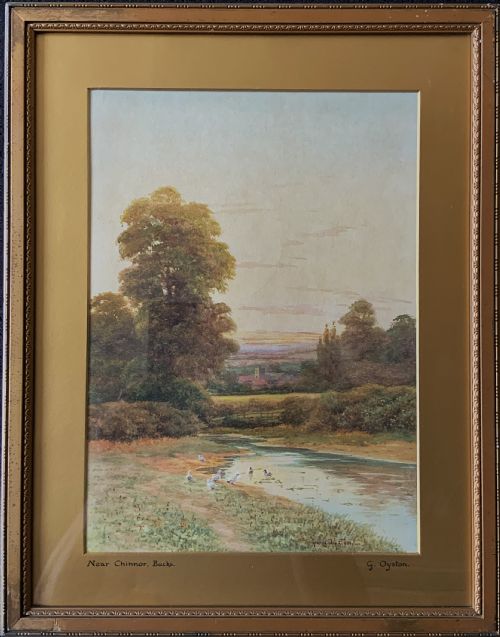
Watercolours rely on delicate washes of pigment applied to paper to capture atmospheric light in British landscapes. Oil paintings build up richer surfaces on canvas or board, sometimes signed by the painter or attributed to an English school.
Several watercolours meticulously record village ducks feeding by the pond while cows graze quietly nearby.
What varies in quality
Quality rests in the precision of brushwork and the artist's command of light, atmosphere, and naturalistic detail within the landscape. Stronger works render figures, animals, and foliage with distinct character rather than generic repetition.
The condition of the original paper, canvas, and gilt frame influences the overall integrity of the piece. Works retaining clear signatures, legible location notes, and well-preserved mediums command closer attention from collectors.
George Graham·Percy Lancaster·William Howard Hardy·A Marie Parsons·John McDougal·Robert A Nottingham·David Bates·John Horace Hooper·George Augustus Holmes·George Oyston·William Greaves·Miles Birkett Foster·Herman S Melville·Charles Edward Wilson·Sydney Yates Johnson·Herbert Royle·Ernest Higgins Rigg·James William Booth·Henry John Yeend King·Samuel Joseph Clark·M C Hider·James Hardy Junior·Robert John Hammond·Frederick James Knowles·Charles Vickers
The Rural English Scene Glossary
- Genre painting
- A depiction of everyday subjects and ordinary people engaged in common activities. These works often show domestic animals, farm labourers, or children by a cottage.
- British impressionism
- A style of painting that emerged in the late nineteenth and early twentieth centuries focusing on loose brushwork and natural light. Artists working in this manner sought to capture fleeting weather and outdoor atmosphere.
- English school
- A term applied to artists trained or working within Britain whose styles share regional characteristics. Many unsigned historic watercolours and oil paintings are attributed broadly to this group.
- Gesso
- A plaster-like mixture applied to wooden frames as a base before gilding. Elaborate moulded gesso frames frequently accompany nineteenth-century oil paintings.
- Watercolour
- A painting method where fine pigments are suspended in a water-based solution and applied to paper. This medium was widely utilised by British artists for landscapes and village views.
Rural English Scene: Frequently Asked Questions
What periods do these rural scenes date from?
The available works span the nineteenth century up through the Edwardian era and the early twentieth century. Most pieces originate from Victorian and Edwardian Britain.
Collectors will find dates ranging from the Georgian period through to the nineteen-twenties and beyond. Each era brings distinct framing styles and painting techniques.
How should I hang and light an oil painting?
Oil paintings on canvas or panel require stable indoor humidity away from direct sunlight and strong heat sources. Proper wall placement protects the pigment and the wooden stretcher.
Use picture lights designed to emit minimal ultraviolet radiation to preserve the colours. Ensure the wall structure securely supports the weight of the gesso frame.
Are watercolours more fragile than oil paintings?
Watercolour paintings on paper are sensitive to prolonged exposure to direct light and excessive moisture. They benefit from protective glass framing and acid-free mounts.
Oil paintings on canvas or board are generally more robust but still require careful handling. Both mediums should be kept in rooms with stable temperatures.
How can I identify an unsigned nineteenth-century landscape?
Unsigned works are often categorised under the English school based on their handling of material, subject matter, and palette. Stylistic cues such as brushwork and canvas preparation offer clues.
Historical framing, dealer labels on the reverse, and inscribed location names on watercolours frequently help narrow down the date and region.