



Edwardian Cottage Picture
An edwardian cottage picture captures rural life through watercolours and oils from the turn of the twentieth century, offering a quiet glimpse into pastoral scenes.
Edwardian Cottage Picture
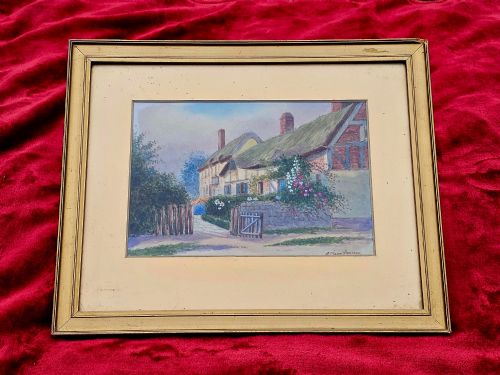
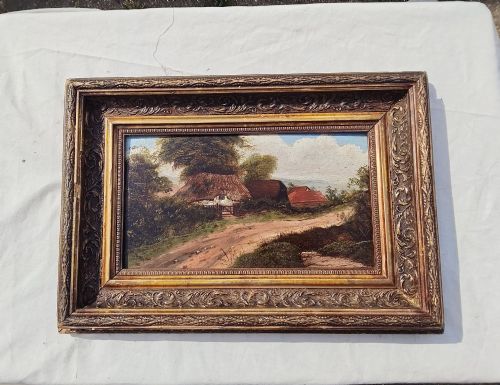
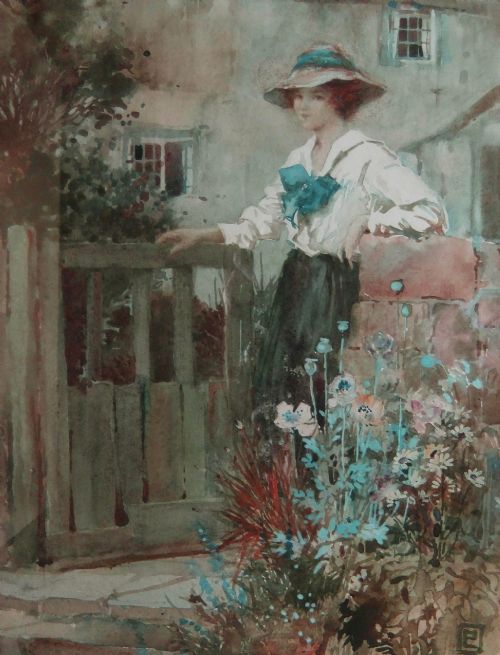
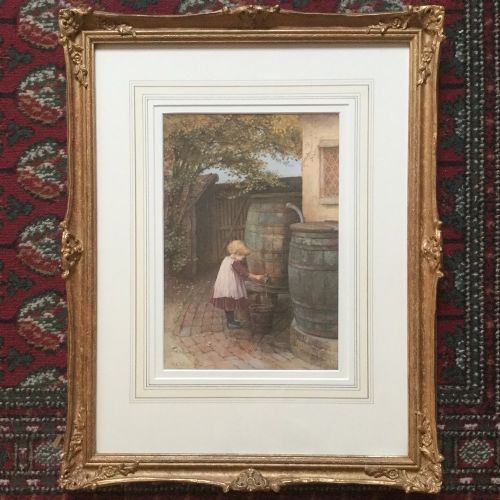
An edwardian cottage picture encompasses framed watercolours, oils, and lithographs depicting rural homes, gardens, and village streets. The listings here showcase works spanning the late nineteenth century through to the nineteen-thirties, reflecting a sustained artistic interest in British country life.
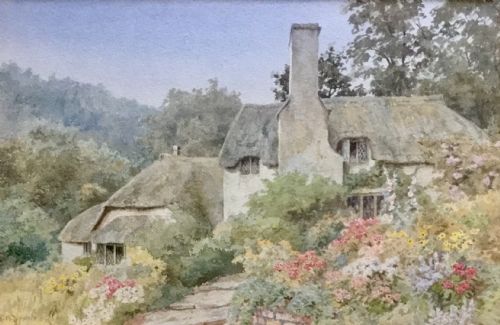
Watercolour on paper predominates among these works, often presenting detailed renderings of thatched roofs, stone walls, and garden flowers. Painters of this period frequently recorded specific locations across Devon, Somerset, and Hampshire, anchoring their rural scenes in recognisable English topography.
How they were made
Artists employed watercolour pigments on paper, sometimes building form through delicate washes and fine pencil underdrawings to capture the texture of weathered brickwork and foliage. Other pieces utilise oil paint applied to canvas, board, or card, allowing for richer surface texture and deeper colour saturation.
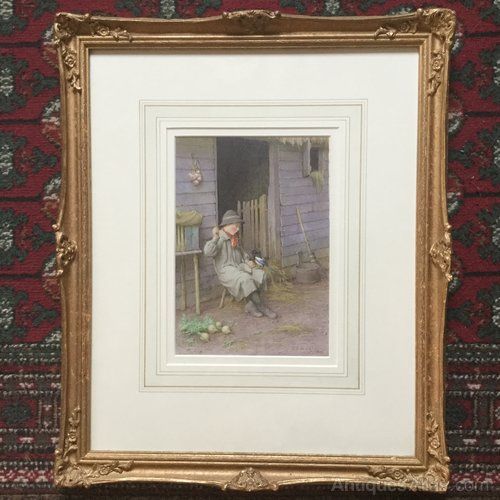
Many surviving examples retain their period frames, frequently constructed from wood with gilt enrichment to complement the tones of the artwork within. Crystoleum pieces involve hand-tinting a photograph placed beneath concave glass, creating a distinct luminous depth unique to that technique.
Several hens and calfs make regular appearances, immortalised forever waiting outside cottage doors.
What varies in quality
Quality in these rural scenes rests upon the artist's command of light and proportion, distinguishing works with atmospheric depth from stiffer illustrative efforts. Skilled hands capture the fall of sunlight across a cottage wall and the natural posture of figures tending gardens or livestock.
The preservation of the paper and pigment dictates the visual strength of a watercolour, as prolonged exposure to direct light can diminish delicate tones. Original framing also influences the character of the piece, with period gilt wood enhancing the overall integrity of the artwork.
A. Marie Parsons·Percy Lancaster·Charles Edward Wilson·Lilian Stannard·David Woodlock·Joseph Kirkpatrick·Arthur Claude Strachan·Walter Henry Sweet·Thomas Nicholson Tyndale·John Falconar Slater·James William Stamper·Benjamin D. Sigmund·Henry Silkstone Hopwood·George Frederick Nicholls·David Heward·Yeend King·Alfred George Stevens·Arthur H Buckland·Alfred Parsons·Sir Ernest Albert Waterlow
The Edwardian Cottage Picture Glossary
- Watercolour
- A painting method where fine pigment is suspended in a water-based solution and applied to paper. It allows for translucent washes of colour that mimic natural light.
- Crystoleum
- A Victorian and Edwardian technique where a photographic print is pasted face down onto glass, the paper backing rubbed away, and the remaining image hand-painted before sealing.
- Lithograph
- A print produced from a flat stone or metal plate treated to retain ink only in desired areas. Many prints from this era reproduced popular watercolours for a wider audience.
- Impressionism
- An art style focused on accurate depiction of light in its changing qualities, often visible in the looser brushwork of early twentieth-century landscape paintings.
- Genre art
- Paintings depicting scenes from everyday life, such as figures knitting outside a cottage or feeding hens in a yard.
Edwardian Cottage Picture: Frequently Asked Questions
Are these pictures originals or prints?
The majority of pieces listed are original hand-painted works in watercolour or oil executed directly by the artist. A smaller number comprise period lithographs produced after original paintings.
Examining the surface under magnification reveals the pigment resting on the paper fibres in originals, distinguishing them from printed reproductions.
How should I frame and hang my picture?
These works require mounting behind glass with conservation-grade materials to protect fragile watercolours and paper supports from atmospheric moisture. Period frames often complement the aesthetic but should be checked for structural stability.
Positioning the artwork away from direct sunlight prevents the fading of delicate pigments over time, preserving the original colour balance.
What subjects appear most often in these scenes?
Cottages with thatched roofs, walled gardens in summer, and rural lanes form the core subject matter of these paintings. Figures engaged in daily tasks like feeding hens or knitting outside complete the pastoral narrative.
Artists frequently recorded specific villages in Devon, Somerset, and Hampshire, capturing the vernacular architecture of the English countryside.