


Rural Canvas Art
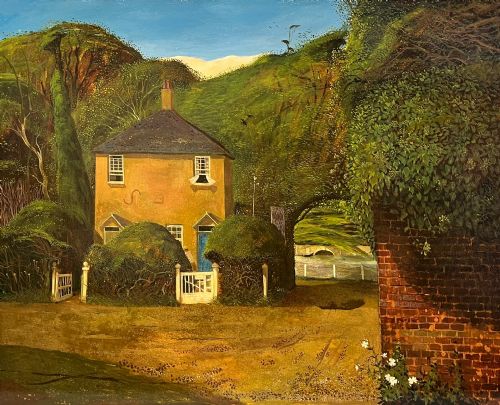
Rural canvas art brings nineteenth and early twentieth-century farmyards, harvest fields, and cottages into the home through oil paint.
Rural Canvas Art
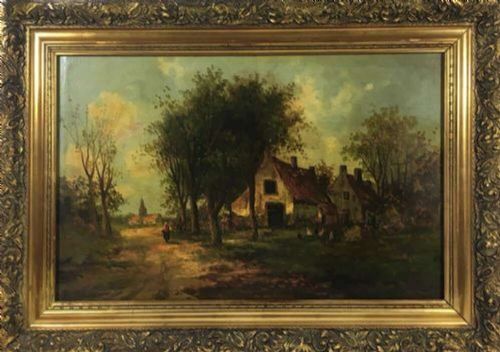
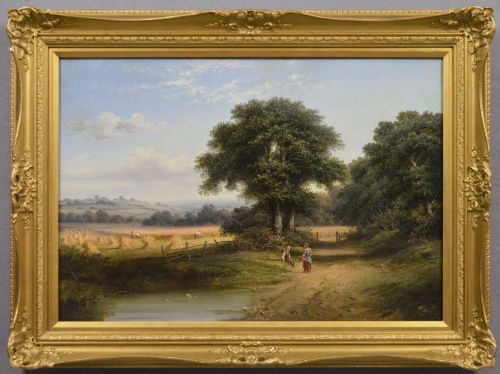
Rural canvas art comprises oil paintings depicting agricultural scenes, country cottages, river landscapes, and farm animals from the nineteenth and early twentieth centuries.
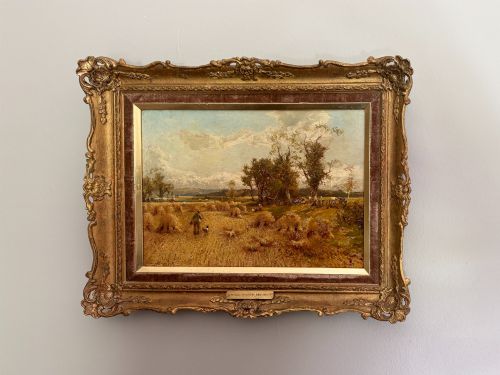
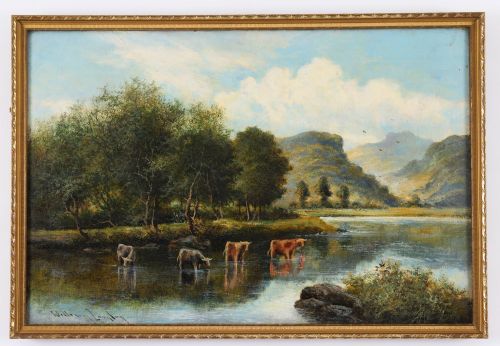
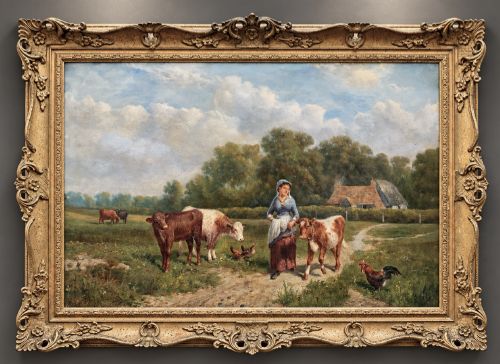
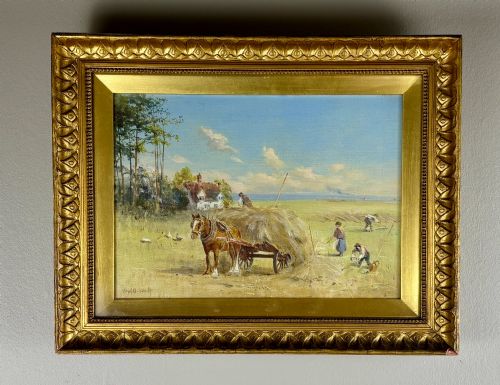
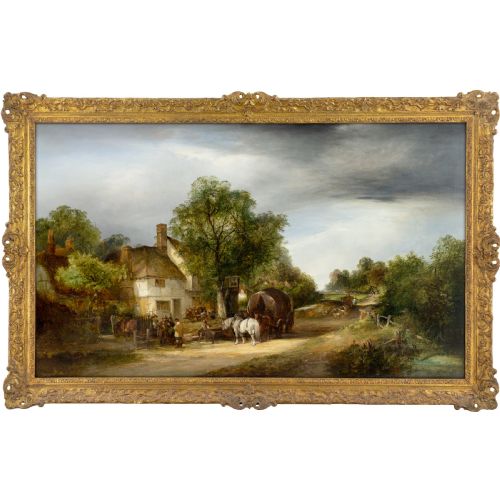
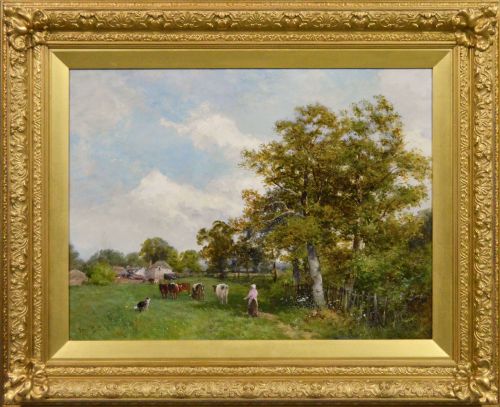
The most common examples on this page are nineteenth-century British school oils featuring cattle, sheep, harvest times, and village life.
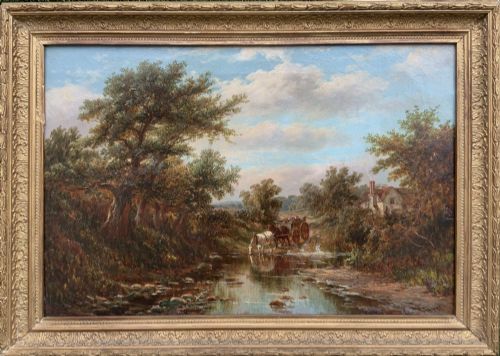
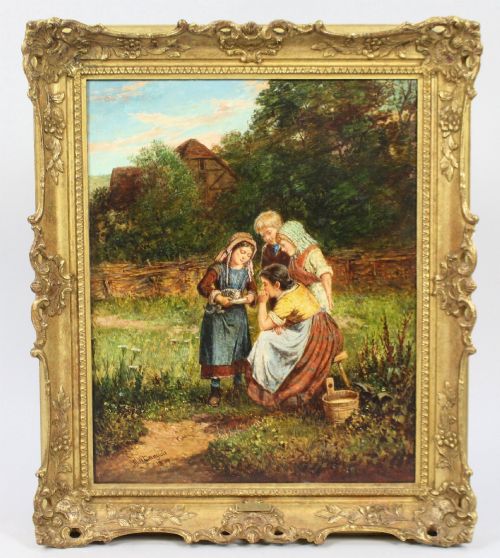
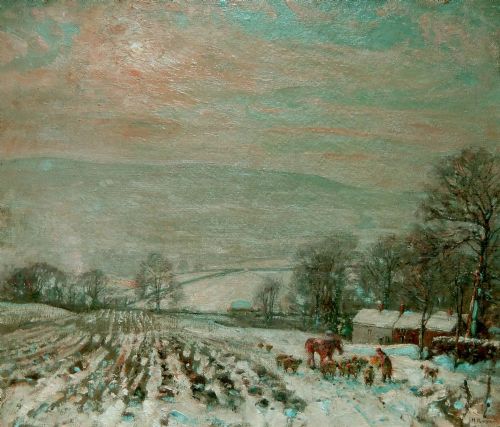
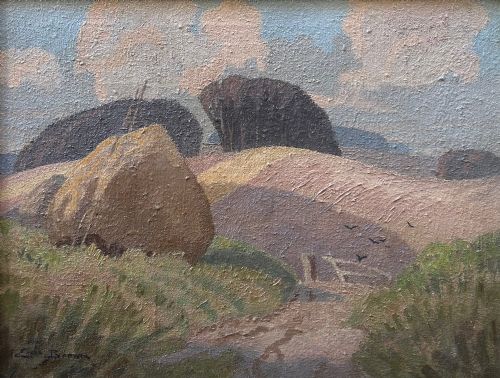
Works range from detailed Victorian genre scenes of figures outside cottages to looser impressionist and post-impressionist interpretations of fields and streams.
Materials and Techniques
These works are painted using oil paint applied to prepared canvas surfaces, occasionally utilising wood panels or board.
Frames are frequently constructed from wood finished with gesso and gold leaf or gilt wood highlights to complement the paintings.
Rural Canvas Art Retail Price Guide 2026
Typical asking prices for rural canvas art among the pieces listed under this phrase on Sellingantiques today, from the lower quarter to the upper quarter. They describe what is for sale here now, not the wider market.
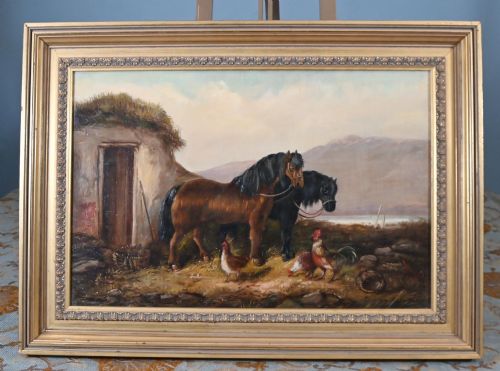
Several cows and a remarkably patient kitten share the canvas space with hardworking Victorian horses.
Evaluating Quality
Quality rests on the handling of light, brushwork, and the realistic depiction of figures, animals, and natural settings by the artist.
The sophistication of the framing, often combining period gilt wood and gesso moulding, contributes to the overall presence of the piece.
William Langley·Samuel Joseph Clark·Hugh Barry-Scott·William Manners·Thomas Thomas·Edward Charles Williams·William Shayer·George Whitton Johnstone·George Graham·Herbert Royle·Robert Morson Hughes·Mark William Langlois·David Bates·Robert John Hammond·Walter Heath Williams·John Horace Hooper·George Augustus Holmes·Raymond Booth·Eric Brown·Ernest Higgins Rigg·Edgar Hunt·Umberto Volpato·William Greaves·Sydney Yates Johnson·Owen Bowen
The Rural Canvas Art Glossary
- Canvas
- A heavy woven fabric stretched across a wooden frame to serve as a support for oil painting.
- Gesso
- A plaster-like mixture applied to wood frames to create a smooth surface for gilding with gold leaf.
- Oil Paint
- Pigment mixed with drying oils such as linseed, allowing for rich colour blending and textured application.
- Barbizon School
- A nineteenth-century movement focused on tonal realism and painting landscapes directly from nature.
- Genre Painting
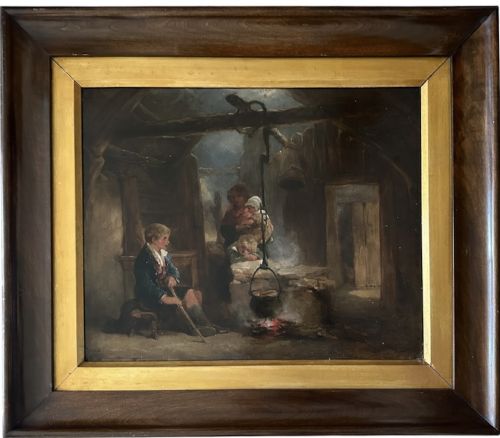
- Artworks depicting scenes from everyday life, including farm work and cottage interiors.
Rural Canvas Art: Frequently Asked Questions
What is rural canvas art?
Rural canvas art consists of nineteenth and early twentieth-century oil paintings depicting countryside scenes, farm animals, and agricultural life.
These works capture traditional rural subjects like harvest fields, cottages, and river landscapes through the mediums of oil paint and canvas.
How were these paintings displayed?
Most of these pieces are housed in their original or period wooden frames, frequently enhanced with gesso and gold leaf.
Such framing was designed to complement the rich tones of the oil paintings and suit domestic interiors of the period.
How do I identify the period?
Periods can be determined by the painting style, clothing of the figures, framing techniques, and recorded dates for the artists.
Victorian and Edwardian works often display specific techniques associated with British Impressionism or the Barbizon School influence.
Where were these scenes painted?
The subjects are primarily rooted in British and French countryside locations, depicting local villages, farms, and coastal regions.
Artists frequently worked plein air or referenced specific regional landscapes such as Yorkshire, Cornwall, and Normandy.