



Rural Animal Painting
Rural animal painting captures the traditional farmyard and pasture life of the Victorian era through oil and watercolour.
Rural Animal Painting
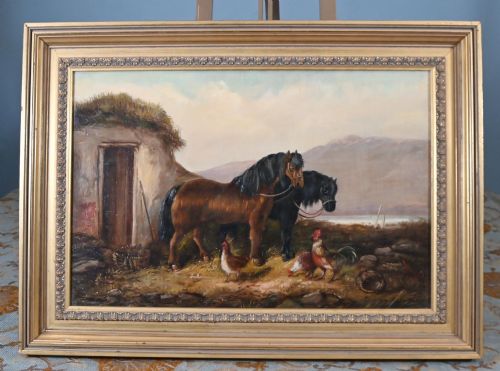
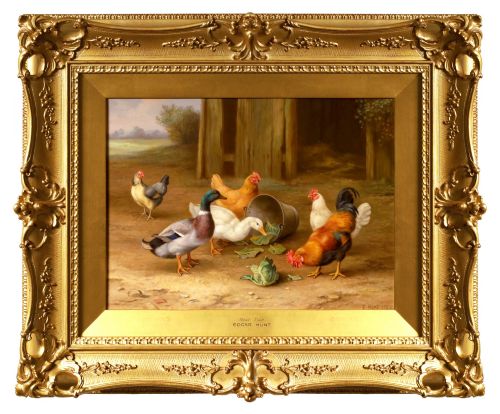
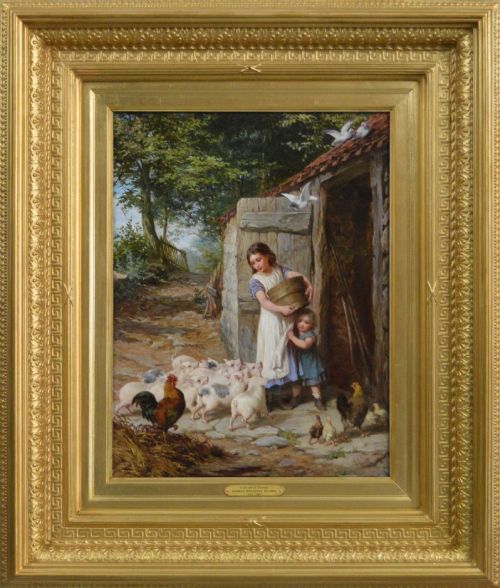
A rural animal painting depicts domestic livestock, farmyard scenes and pastoral landscapes typically created during the Victorian period. These works focus on cattle, sheep, pigs, horses and poultry placed within rural settings, often accompanied by figures or cottages.
The most common examples on this page are oil on canvas paintings and watercolour paintings dating from the nineteenth century. They range from intimate portrayals of livestock by streams and cliffs to lively farmyard genre scenes involving children and working animals.
The subjects reflect a nineteenth-century fascination with agrarian life, combining detailed animal portraiture with expansive British landscapes. Buyers encounter both signed works by known artists and unsigned atmospheric studies of farm animals.
How they were made
Artists painted primarily in oil on canvas or applied watercolour paint to paper, utilising traditional brushwork to capture the texture of animal coats and rural foliage. Canvases were stretched over wood frames and frequently housed within decorative giltwood frames finished with gold leaf.
The execution combines landscape traditions with precise animalier studies, requiring careful observation of anatomy and natural light. Pigments were applied in layers to build depth in farmyard scenes, pastures and coastal cliffs.
Rural Animal Painting Retail Price Guide 2026
Typical asking prices for rural animal painting among the pieces listed under this phrase on Sellingantiques today, from the lower quarter to the upper quarter. They describe what is for sale here now, not the wider market.
Listings feature nineteenth-century oil on canvas and watercolour paintings utilising giltwood framing and gold leaf.
What varies in quality
Quality rests upon the artist's ability to render the anatomy and individual character of the animals rather than treating them as generic background elements. Superior works demonstrate meticulous brushwork in the rendering of livestock, fur, and surrounding textures.
The handling of light and atmospheric depth in the landscape setting distinguishes finer paintings from simpler decorative farmyard views. Original framing, particularly period giltwood and gold leaf surrounds, also contributes to the standing of a piece.
George Augustus Holmes·Edgar Hunt·William Henry Mander·Thomas Sidney Cooper·Helena Maguire·John Frederick Herring Jnr·Henry Brittan Willis·William Sidney Cooper·Charles Hunt Jnr
The Rural Animal Painting Glossary
- Oil on Canvas
- A painting medium where pigments suspended in oil are applied to a stretched woven fabric support. This technique allows for rich colour blending and textured brushwork.
- Watercolour Painting
- A work executed with water-soluble pigments on paper. It offers a translucent quality well suited to light-filled pastoral scenes.
- Giltwood
- Wood that has been coated with gold leaf or a gold-coloured finish. It provides an ornate and reflective border for nineteenth-century artworks.
- Animalier
- An artist who specialises in the realistic portrayal of animals. The term often describes nineteenth-century painters who focused on livestock and sporting subjects.
- Genre Art
- Painting that depicts scenes from everyday life, including cottage interiors and farmyard interactions. These works tell a domestic story alongside the animal subjects.
Rural Animal Painting: Frequently Asked Questions
What subjects appear in these paintings?
These works feature cattle, sheep, pigs, horses, goats and poultry set within farmyards, riversides and coastal pastures. Many include figures such as farmers, children or cottage dwellers alongside the animals.
Scenes range from quiet resting livestock to busy farmyard feeding times and pastoral landscapes across Britain.
How do I date a nineteenth-century painting?
Dating relies on recorded artist lifespans, signature styles, period framing materials and canvas stamps. Nineteenth-century works often bear Victorian stylistic traits in both the clothing of figures and the pastoral composition.
Examine the stretcher frames, canvas type and any inscriptions on the reverse for clues regarding the exact decade of creation.
Where should I hang a rural painting?
These works suit traditional living spaces, studies and dining rooms where their warm tones and pastoral subject matter complement classic interiors. They pair effectively with wood furniture and traditional wall finishes.
Avoid placing oil or watercolour paintings in direct sunlight or areas of high humidity to protect the canvas, paper and giltwood frames.
What is the difference between oil and watercolour?
Oil paintings utilise pigment bound in drying oil on canvas, offering thick textures, deep colour saturation and a robust surface. Watercolours use water-soluble pigments on paper, presenting a lighter, more luminous finish that requires protective glass.
Oils are generally heavier and historically hung without glass, whereas watercolours depend upon paper supports and careful framing.