

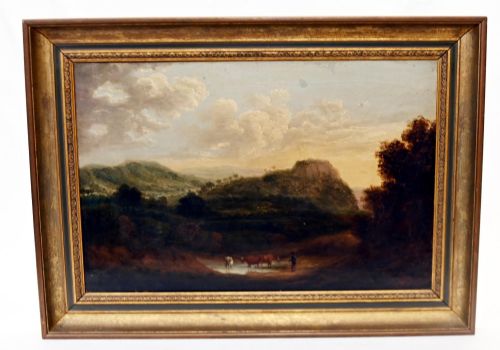
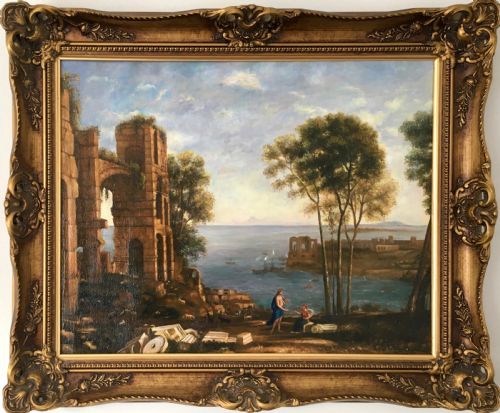
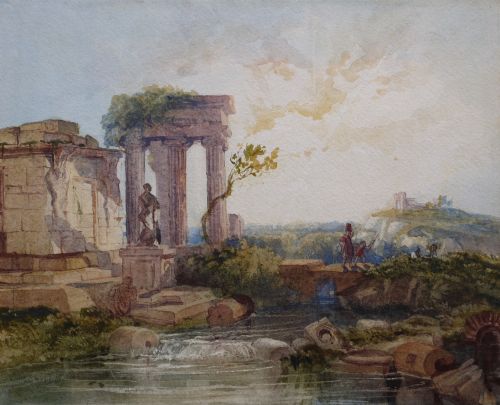
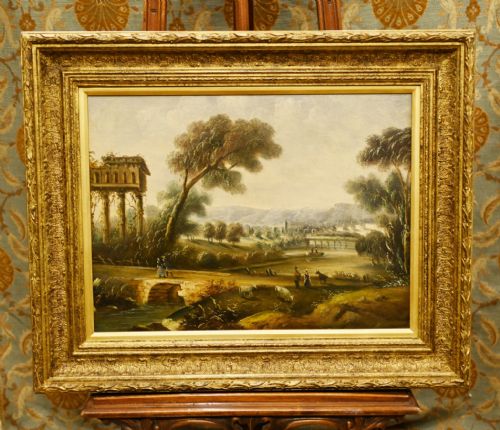


Ruins Artwork
Ruins artwork captures the romantic decay of classical arches, castles and abbeys in oil, watercolour and print.
Ruins Artwork
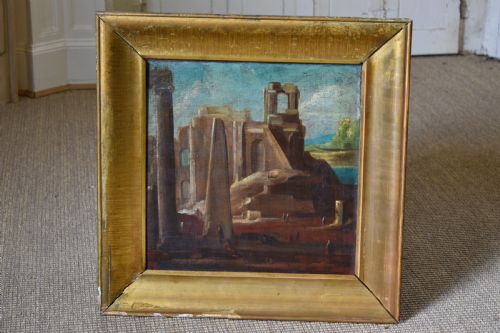
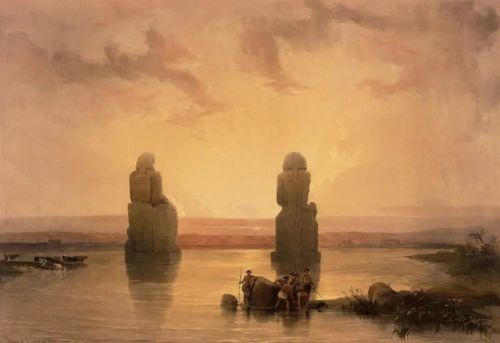
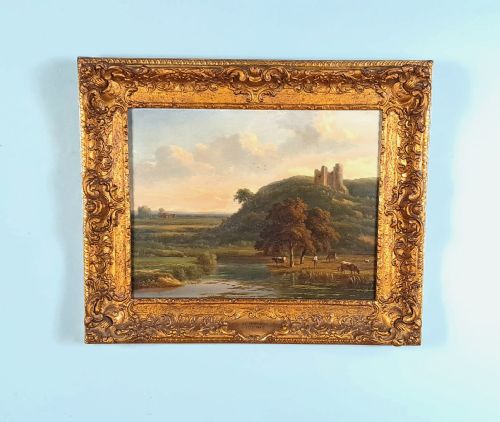
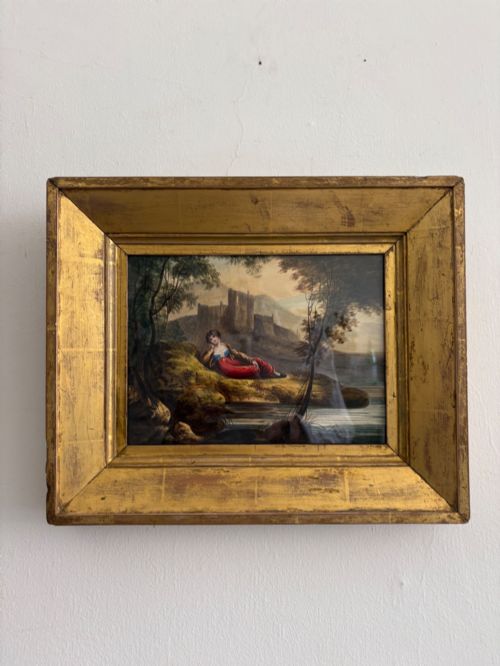
Ruins artwork encompasses paintings, watercolours, drawings and prints depicting the remains of classical, medieval and historic structures. Buyers seek these pieces for their atmospheric rendering of fallen columns, crumbling abbeys and weathered castles set within pastoral or coastal landscapes.
The selections available lean heavily toward nineteenth-century watercolours and eighteenth-century Grand Tour oils, capturing Italian and British scenes. Viewers frequently encounter depictions of Roman forums, Yorkshire abbeys and Mediterranean shorelines executed with meticulous topographical detail.
These works range from small exploratory pencil sketches on paper to large oil paintings on canvas framed in giltwood. Collectors select them to bring historical resonance and picturesque depth to domestic interiors.
How they were made
Artists rendering ruins relied primarily on paper and canvas supports, applying oil paint, watercolour, gouache or charcoal to capture texture and light. Watercolourists worked up transparent washes on paper to depict crumbling stonework, while oil painters built heavier impasto on canvas or wood panels to suggest overgrown masonry and weathered surfaces.
Frames played an integral part in the presentation of these pieces, utilising carved wood, giltwood and gold leaf to complement the romantic or neoclassical subjects. Many works retain their original frames, which range from simple moulded wood to elaborate Victorian gilt mouldings.
Ruins Artwork Retail Price Guide 2026
Typical asking prices for ruins artwork among the pieces listed under this phrase on Sellingantiques today, from the lower quarter to the upper quarter. They describe what is for sale here now, not the wider market.
Materials recorded across the inventory include oil paint, watercolour, gouache, charcoal, graphite, giltwood and gold leaf.
What varies in quality
The distinction between ordinary and exceptional ruins artwork lies in the artist's command of perspective, atmospheric light and structural proportion. Superior pieces render stonework with architectural conviction while maintaining a moody, romantic sense of scale.
Execution and medium density dictate the visual hierarchy. Finely detailed pen work beneath translucent watercolour washes elevates a sheet well above a stiff, formulaic topographical record, just as confident brushwork in an oil painting gives palpable weight to tumbled masonry.
Francesco Guardi·Richard Principal Leitch·Angelo Maria Crivelli·David Roberts·T C Hofland·Leopold Halvoet·Giovanni Paolo Panini·Claude Lorrain·Francesco Piranesi·Francesco Zuccarelli·George Gregory·Fred Lawson·Tom Dudley·William Crouch·Lamorna Birch·Everett Watson Mellor·George Graham
The Ruins Artwork Glossary
- Capriccio
- An architectural fantasy placing imaginary or real ruins in a fictitious harmonious landscape. This Italian compositional style was popular among eighteenth-century painters.
- Grand Tour
- A traditional extended journey of Europe undertaken by upper-class young European men of means to flourish their cultural education. Artwork acquired on these travels frequently recorded classical antiquities and Italian ruins.
- Gouache
- An opaque watercolour paint consisting of natural pigment, water, a binding agent and a deadening material. It produces a heavier, more solid matte surface than traditional watercolour.
- Giltwood
- Wood that has been treated with a thin layer of gold leaf or gold paint. It frequently surrounds nineteenth-century landscape paintings and prints.
- Neoclassical
- A Western cultural movement drawing inspiration from the classical art and culture of ancient Greece or Rome. This aesthetic governed many architectural landscape compositions of the eighteenth and nineteenth centuries.
Ruins Artwork: Frequently Asked Questions
What periods do ruins artworks come from?
These pieces originate primarily from the eighteenth and nineteenth centuries, reflecting Enlightenment and Romantic fascination with antiquity.
Examples span from seventeen-hundred landscape compositions through Victorian interpretations of British abbeys and Italian forums.
How were ruins artworks displayed historically?
Owners typically hung framed oils and watercolours in parlours, libraries and galleries to demonstrate classical learning and taste.
Grand Tour watercolours were often bound into albums or framed individually to commemorate travels through Italy and the Mediterranean.
How do I distinguish watercolours from gouache?
Watercolours rely on transparent washes that allow the white of the paper to provide highlights and luminosity.
Gouache incorporates chalky white pigments to create opaque, solid areas of colour with a matte finish.
What is a Grand Tour painting?
These are topographical or caprice scenes purchased by travellers visiting historic sites in Italy, Greece and Egypt.
They usually depict recognizable ruins such as the Colosseum, the Forum or the temples of Paestum.