



Ruby Halo Engagement Ring
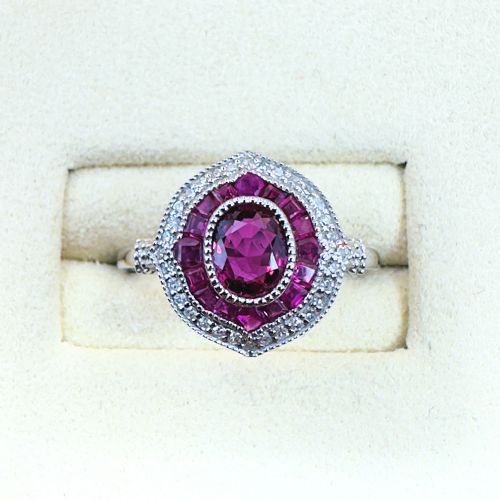
A ruby halo engagement ring centres a vibrant red stone within a sparkling border of diamonds, bringing together historic craftsmanship and lasting romance.
Ruby Halo Engagement Ring
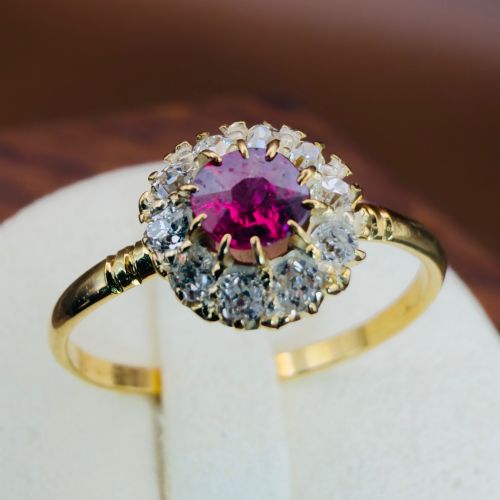
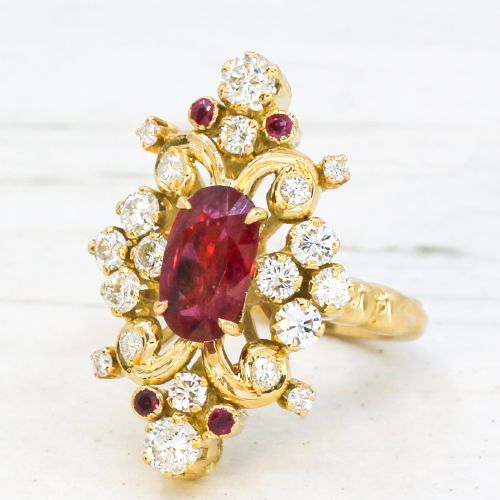
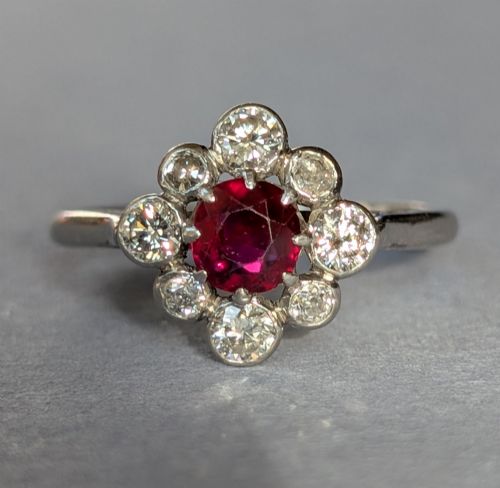
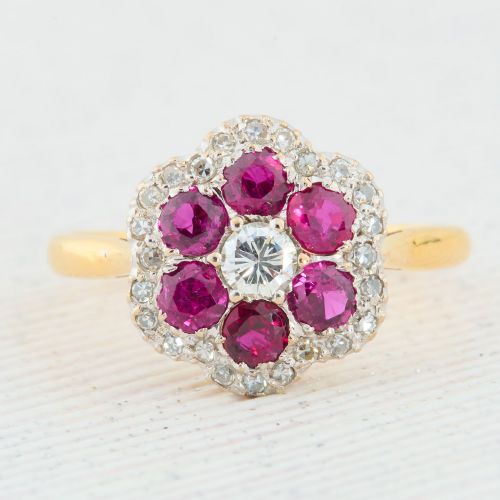
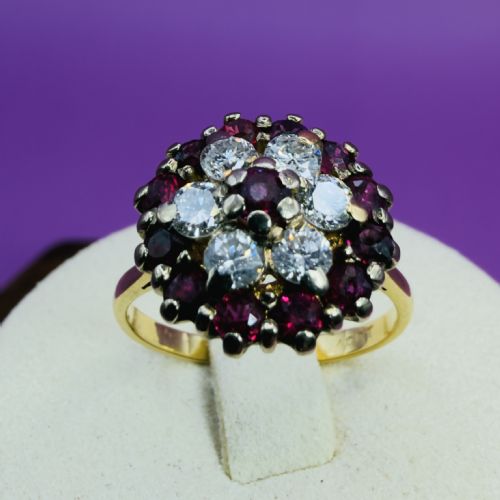
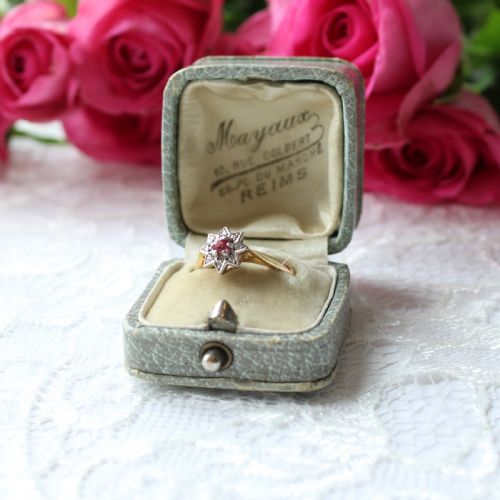
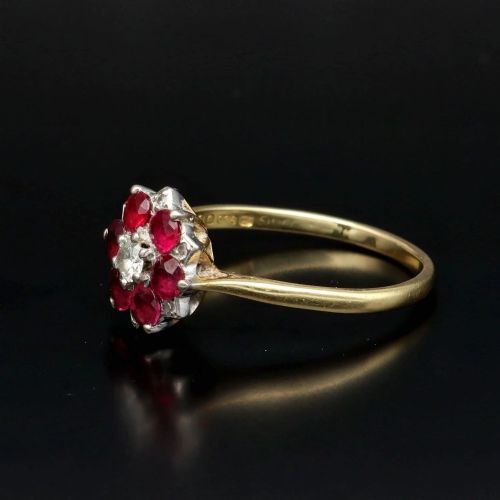
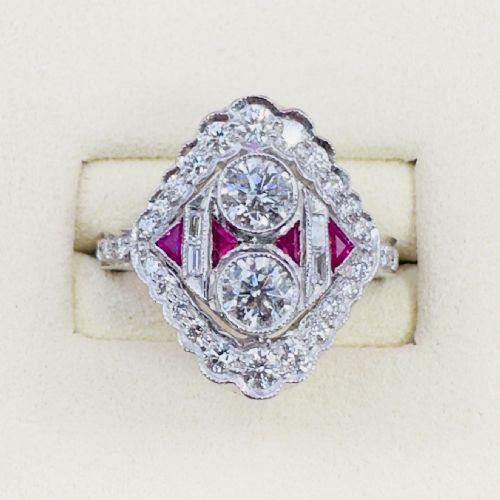
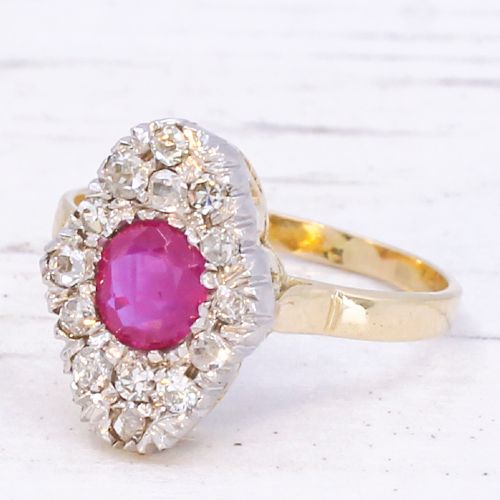
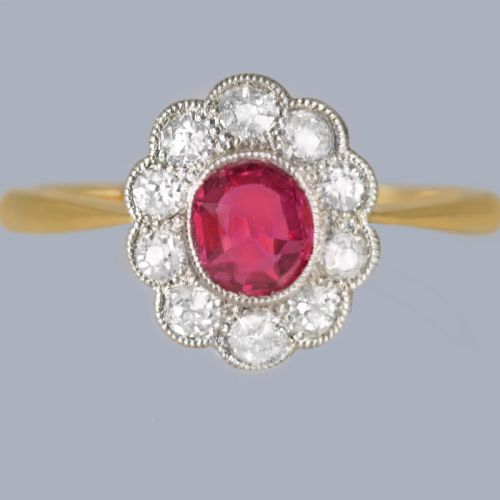
A ruby halo engagement ring is a distinctive piece of fine jewellery designed with a central red corundum surrounded by a circle of smaller diamonds. These rings span periods from the Victorian era through the Edwardian period and the Art Deco years up to the mid-century decades. The most common examples found here combine a central red stone set in yellow gold, white gold, or platinum with surrounding diamond clusters.
How they were made
Goldsmiths constructed these rings using precious metals including eighteen-carat yellow gold, eighteen-carat white gold, and platinum. Platinum gained favour in the twentieth century for its strength in holding delicate diamond settings, while yellow gold dominated earlier Victorian and Edwardian periods. Stones were secured by hand using claw, bezel, or flush settings that required precise metalwork.
The central rubies, often sourced from Burma, Mogok, or Mong Hsu, were paired with old-cut or brilliant-cut diamonds. Artisans shaped the metal to create floral, star, or geometric cluster silhouettes, ensuring each surrounding diamond caught the light to illuminate the central red hue.
Ruby Halo Engagement Ring Retail Price Guide 2026
Typical asking prices for ruby halo engagement ring among the pieces listed under this phrase on Sellingantiques today, from the lower quarter to the upper quarter. They describe what is for sale here now, not the wider market.
Materials recorded across the inventory include diamond, ruby, platinum, and various grades of gold.
What varies in quality
Quality in these rings is determined by the natural characteristics of the central ruby, including its colour saturation, clarity, and whether it shows evidence of heating. Burmese stones with unheated origins and vivid red tones sit at the upper end of the range, complemented by well-matched, bright white diamonds.
The precision of the metalwork also defines the tier of the piece. Superior examples exhibit harmonious proportions between the central stone and the surrounding halo, with secure, even setting work that has endured through the decades.
The Ruby Halo Engagement Ring Glossary
- Halo cluster
- A central gemstone encircled by a border of smaller diamonds. This setting style maximises the visual impact of the main stone.
- Navette
- A boat-shaped gemstone setting that tapers to points at both ends. It creates an elongated silhouette on the finger.
- Old-cut diamond
- A diamond cut by hand before modern machinery was standardised, typically featuring a small table and high crown. These stones exhibit a distinctive, softer scintillation under candlelight.
- Unheated ruby
- A corundum gemstone that has not undergone thermal enhancement to improve its colour or clarity. Such stones are prized by collectors for their natural properties.
Ruby Halo Engagement Ring: Frequently Asked Questions
What periods do these rings come from?
The pieces available span the Victorian era, the Edwardian period, the Art Deco years, and mid-century decades up to the 1960s.
Each period brings distinct metal choices and geometric arrangements that reflect the jewellery design trends of its time.
How do I care for a ruby ring?
Rubies are a durable gemstone ranking high on the hardness scale, making them suitable for daily wear when set securely in gold or platinum.
Cleaning requires warm soapy water and a soft brush, avoiding harsh chemical ultrasonic cleaners that might affect the surrounding metal or gems.
What metals are typically used?
Common metals include eighteen-carat yellow gold, eighteen-carat white gold, and platinum.
Victorian and Edwardian examples often feature yellow gold or platinum combinations, while mid-century designs frequently utilise white gold or platinum to enhance diamond brightness.
Are the rubies natural?
Many listings feature natural rubies originating from regions such as Burma, Mogok, and Mong Hsu.
Gemmological reports are often provided with specific pieces to verify the origin and whether the stones are unheated.